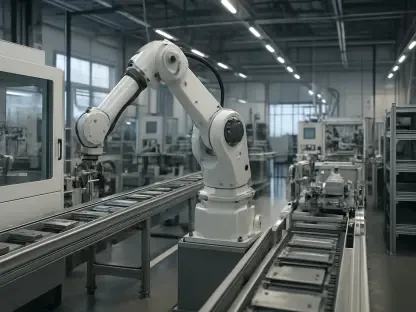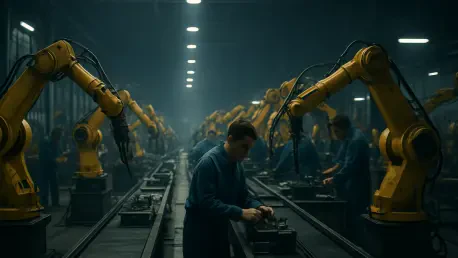

The new facility in Auburn Hills significantly expands regional training capacity by increasing the total number of classrooms from thirteen to twenty-eight. This 132,000-square-foot structure represents a massive $18 million capital investment designed to address the widening skills gap in American manufacturing. By providing a centralized hub for advanced technical education, the site effectively triples the capacity of previous operations, accommodating up to 17,500 participants annually. This initiative arrives at a pivotal moment as domestic industries grapple with the complexities of digital transformation and the need for rapid reskilling. The academy acts as a primary catalyst for industrial modernization, offering a direct response to the urgent demand for personnel capable of managing sophisticated robotic systems. As manufacturers turn to automation to bolster productivity, this facility stands as a critical pillar in the effort to secure a competitive edge in a global market that is evolving at an unprecedented pace.
Scaling Industrial Education: Facilities for a High-Tech Economy
Advanced Infrastructure: Providing Technical Mastery
The academy provides an immersive environment by housing over 160 operational robots and 40 CNC simulators, ensuring that every participant receives significant hands-on time with the latest hardware. This density of technology allows for a high instructor-to-student ratio, which is essential for mastering the nuances of machine vision, force sensing, and autonomous navigation. By mimicking actual factory conditions, the facility prepares technicians to troubleshoot real-world scenarios without the risks associated with on-the-job experimentation. Furthermore, the curriculum is structured to support a wide range of skill levels, from entry-level operators learning basic safety protocols to experienced engineers specializing in complex multi-axis motion control. This tiered approach ensures that the manufacturing hierarchy can benefit from the site’s resources, creating a more cohesive and knowledgeable workforce. The integration of high-fidelity simulations alongside physical equipment bridges the gap between theoretical knowledge and practical use.
Economic Impact: Strengthening the Regional Core
The opening of this academy marks a major milestone in a broader $200 million investment strategy focused on strengthening Michigan’s position as a leader in industrial automation. This financial commitment includes the operational West Campus, which represents a $110 million investment, and a specialized manufacturing facility valued at $90 million that is currently coming online. These integrated sites create a robust ecosystem where innovation and production happen in close proximity to one another. By utilizing Michigan-based contractors and local labor for the construction of these facilities, the project has already generated significant economic benefits for the surrounding community. Beyond construction, the academy is set to expand its impact by establishing a comprehensive customer support call center by 2027, further centralizing expertise within the region. This strategic clustering of training and manufacturing highlights a vision to stabilize the supply chain by fostering a local talent pool to maintain modern infrastructure.
Bridging the Educational Gap: Professional Readiness
Academic Pipelines: Moving From Schools to Factories
A primary driver of the academy’s mission is the Certified Education Training program, which currently supports over 1,700 schools across North America. This network ensures that roughly 60,000 students each year gain exposure to the same industrial tools used by major manufacturers, reducing the time required for post-graduation onboarding. By standardizing the curriculum across high schools and community colleges, the initiative creates a predictable pipeline of talent for employers looking to scale their automated operations. This collaborative model between industry and academia addresses the traditional disconnect where educational institutions often lack access to the current generation of machinery. The academy provides these schools with the necessary resources and instructor certifications to maintain high educational standards. Consequently, students entering the workforce are already proficient in the programming languages and safety protocols required by modern industry, which accelerates their career progression and increases their value to employers.
Strategic Development: Implementing Long-Term Workforce Solutions
The inauguration of the Auburn Hills Training Academy established a new benchmark for how corporate entities can actively solve the chronic shortage of skilled labor in the manufacturing sector. Industry leaders recognized that relying on traditional recruitment methods was no longer sufficient in an era defined by rapid technological shifts. By centralizing high-level training and forming deep ties with academic institutions, the facility provided a scalable solution that balanced immediate hiring needs with long-term talent cultivation. Manufacturers began to see the importance of investing in their own internal training structures while leveraging the standardized certifications provided by the academy. This proactive stance ensured that as new technologies like AI-driven diagnostics became standard between 2026 and 2028, the workforce remained capable of optimizing these tools. Organizations must now prioritize continuous education as a core component of their business strategy to maintain resilience and ensure technical staff remain updated on advancements.