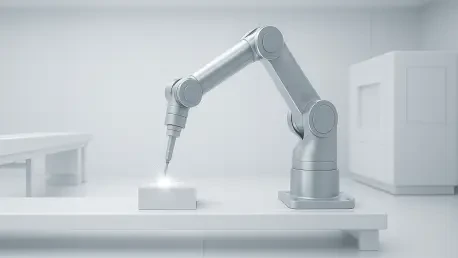

Hyundai and Kia are developing physical AI systems specifically designed to handle high-difficulty assembly tasks that have historically required human dexterity. This technological leap marks a significant departure from traditional robotic automation, which generally excels at repetitive, simple motions but struggles with the subtle tactile feedback needed for complex components. By integrating advanced sensors and machine learning algorithms, the automotive group is moving toward a future where software-defined factories act as living organisms that can adapt to new vehicle designs almost instantaneously. This initiative, recently showcased at the E-FOREST Tech Day, signifies a total overhaul of the production floor. The goal is no longer just to build cars more quickly but to create a system that learns from its own environment, identifying efficiencies that human engineers might overlook. This shift represents a fundamental change in how global supply chains operate, moving from rigid mechanical lines to fluid, data-driven ecosystems.
Centralized Intelligence: The Software-Defined Platform
At the core of this transition lies the consolidation of disparate manufacturing data and systems into a single, standardized global platform. Historically, automotive plants operated as isolated silos with varying software versions and data formats that made cross-plant optimization nearly impossible. By unifying these elements, Hyundai and Kia are streamlining the entire vehicle lifecycle, from initial model development and production planning to real-time quality control. This integration allows for a manufacturing environment that is capable of self-learning and independent evolution. When a software-defined factory identifies a minor bottleneck or a potential quality defect in one region, the solution is instantly shared across the global network. This centralized nervous system ensures that every plant operates at peak efficiency, regardless of its geographic location. Such a level of coordination effectively eliminates the lag time typically associated with manual process updates.
To support the human workforce during this transition, the group has introduced Polaris, a specialized AI agent designed to assist employees by searching and analyzing complex manufacturing data. Rather than replacing human workers, Polaris acts as a sophisticated digital assistant that handles routine troubleshooting and data retrieval. This allows employees to focus on high-value tasks, such as supervising the AI’s decisions or managing creative engineering problems. The tool is particularly effective in identifying patterns within massive datasets that would take a human analyst days to process. By providing instant insights into machine health and production metrics, Polaris helps maintain a steady workflow and reduces the stress associated with manual monitoring. This symbiotic relationship between human intelligence and machine processing power is a cornerstone of the new organizational structure. It ensures that the workforce remains agile and informed while navigating the complexities of an autonomous factory.
Virtual Simulations: Implementing Advanced Assembly Technologies
A fundamental pillar of this strategy is the collaboration with Nvidia to develop comprehensive digital twin technology. By creating a physical AI-based virtual replica of their actual production plants, the automakers can simulate every aspect of the manufacturing process in a virtual space. This enables engineers to train robots and test assembly lines before a single piece of heavy machinery is moved. This approach significantly reduces the need for physical test runs and accelerates the development cycle for new models, allowing the company to respond to market demands with speed. The long-term timeline for this transformation centers on the Innovation Center in Singapore as the primary global testbed. The goal is to establish a virtual-linked autonomous manufacturing system by 2030, which will serve as the blueprint for all operations. Progress made from 2026 to 2028 will be critical in validating the scalability of these AI systems and ensuring that the digital-to-physical transition remains seamless.
The group successfully introduced technical advancements like intelligent hand-gripper controls that mimicked human dexterity for high-difficulty assembly work. These grippers used force-feedback sensors to handle delicate components, while tunnel-type 3D vision systems conducted exterior quality checks with extreme precision. Automated path-generation tools were utilized for complex welding tasks involving over 1,700 points, ensuring that every weld was perfectly executed without manual programming. Industry leaders recognized that sharing these innovations with suppliers was essential to fostering a cohesive technological ecosystem. Stakeholders prioritized investment in digital infrastructure to keep pace with the rapid evolution of physical AI. Managers encouraged a culture of continuous learning, ensuring that the transition to automated systems benefitted both the bottom line and the workforce. Forward-thinking organizations established clear data standards to ensure long-term interoperability and growth.