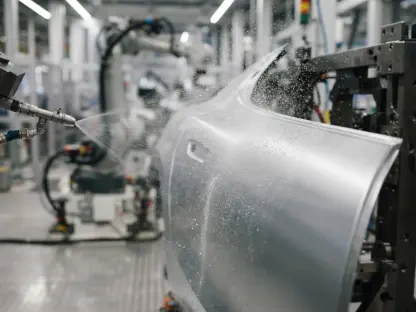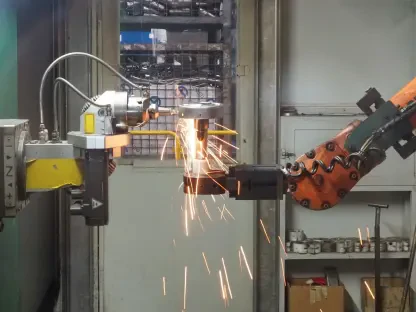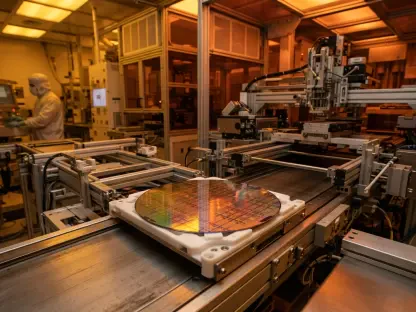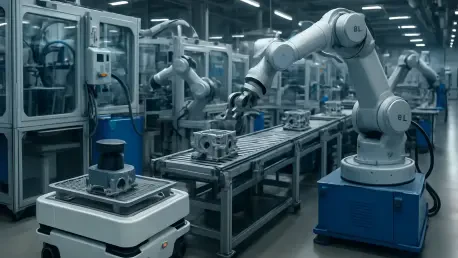

The silence of a high-tech assembly line used to signify a catastrophe, but today, that same quiet might actually represent the pinnacle of a machine making a perfectly calculated decision without human intervention. Factory floors are undergoing a quiet revolution where the rigid “if-this-then-that” logic of the past is being replaced by cognitive systems capable of genuine reasoning. Instead of a machine halting and waiting for a technician to decipher an error code, the hardware now analyzes the root cause, adjusts its own parameters, and continues operating toward its production goal.
This marks the rise of Agentic AI, a technology that moves beyond the early hype of digital assistants and into the visceral realm of physical operations. It is no longer just about identifying a problem; it is about the “reasoning” required to plan and execute a fix. As global markets demand extreme customization and labor markets tighten, this shift toward autonomous decision-making represents the next frontier in the race for truly “lights-out” manufacturing. This technology bridges the gap between digital intelligence and mechanical execution, promising a future where factories are as dynamic as the markets they serve.
Beyond the Alarm: When Factories Start Thinking for Themselves
Most factory managers are deeply familiar with the traditional cycle of crisis management: a system screams for help, the line stops, and a human expert rushes to intervene. This reactive model has been the standard for decades, but the emergence of Agentic AI is fundamentally altering this narrative. Unlike traditional automation, which follows a linear and inflexible script, agentic systems possess the ability to perceive their environment, evaluate potential outcomes, and act independently. This shift represents a transition from a factory that simply “does” to a factory that “thinks,” allowing systems to address anomalies long before they escalate into downtime.
The psychological impact on the workforce is equally profound, as the role of the industrial engineer shifts from a “firefighter” to a “system architect.” In 2026, the focus is no longer on monitoring individual machine health but on managing an ecosystem of autonomous agents. These agents do not just flag an overheating motor; they evaluate whether the heat is due to a seasonal temperature spike in the facility or a genuine mechanical failure. By cross-referencing multiple data points, the system can decide to reduce the load on the machine or reroute production to a sister line without needing human permission. This proactive stance ensures that the “alarm” becomes a relic of the past, replaced by silent, efficient self-correction.
The Shift from Generative Content to Autonomous Action
The manufacturing sector is currently navigating a pivotal transition from Generative AI to Agentic AI. While Generative AI dominated the early part of the decade by drafting emails, creating design prototypes, and summarizing technical manuals, it remained largely confined to the digital screen. In contrast, Agentic AI is designed to act. It is the difference between an AI that writes a maintenance report and an AI that autonomously orders the necessary parts, schedules the repair, and coordinates the logistics to ensure the production line remains balanced. This evolution is critical because modern supply chains have become too complex and volatile for manual oversight alone.
This technological pivot is largely driven by the increasing demand for “lot-size-one” customization, where every product on the line might have unique specifications. Traditional automation struggles with this level of variety, but Agentic AI thrives on it by managing the cognitive load of constant operational adjustments. As the industry moves through 2026 and toward 2028, the ability for a system to handle these micro-decisions becomes the primary differentiator between efficient plants and those plagued by bottlenecks. The ultimate goal is to move closer to a “lights-out” reality, where the software manages the physical workflow with minimal human presence.
Deconstructing the Capabilities of Agentic Intelligence
Agentic AI differentiates itself through its ability to navigate complex “reasoning loops” rather than following a fixed path. When an agent identifies a quality deviation on the assembly line, it does not just stop the conveyor belt. Instead, it initiates a multi-step investigation: it checks sensor calibration, reviews recent raw material batches, and analyzes environmental variables. Once the root cause is identified, the agent creates a plan—such as recalibrating a robotic arm—and executes it. This ability to reason through ambiguity allows the system to handle tasks that previously required years of human experience to master.
Another powerful capability lies in the orchestration of “chained agents.” By linking specialized agents together—one focused on quality control, another on logistics, and a third on maintenance—factories create a self-correcting ecosystem. For example, if a quality agent identifies a trend in sub-par components, it can immediately communicate with the procurement agent to pause a specific shipment from a supplier. Simultaneously, it alerts the production agent to adjust the assembly speed to compensate for the potential material shortage. This level of internal communication creates a seamless workflow that operates at a speed and scale that human teams simply cannot match.
Market Reality vs. Executive Hesitation
While the technological potential of autonomous systems is immense, the road to implementation is marked by a significant “trust gap” among industry leaders. As of early 2025, approximately 14% of organizations had deployed AI agents, with nearly a quarter of the industry running pilot programs. However, as the complexity of these systems became apparent in 2026, executive trust saw a notable decline, dropping from 43% to 27% in a single year. This skepticism stems from the high stakes of giving software control over expensive physical assets; an error in a digital warehouse is one thing, but an error in a steel mill can be catastrophic.
Market analysts at Gartner have noted that while the trajectory toward autonomy is clear, the pace is uneven. They suggest that while 15% of daily operational decisions will be autonomous by 2028, nearly 40% of current projects may face cancellation if they cannot demonstrate clear business value or safety reliability. This “pilot purgatory” is a significant hurdle, as manufacturers struggle to scale experimental agents into full-production environments. The challenge lies in proving that the AI’s reasoning is not only fast but also consistently safe and aligned with corporate risk tolerances.
Strategies for Safe Integration and Deployment
To bridge the gap between experimental pilots and full-scale production, manufacturers are adopting frameworks that prioritize safety and “stepped” autonomy. The primary strategy involves the implementation of Human-in-the-Loop (HITL) controls. For high-stakes decisions, such as altering machine safety parameters or placing high-value orders, the AI agent is restricted to a “drafting” role. It proposes a solution and provides the reasoning behind it, but a human engineer must provide a digital signature before the action is finalized. This ensures that human intuition and accountability remain at the center of the process.
Another critical strategy is the use of high-fidelity Digital Twin environments. Before an agent is given control over a physical assembly line, it is “stress-tested” in a virtual simulation, such as NVIDIA’s Omniverse. This allows engineers to predict every possible outcome of the agent’s decisions in a risk-free space. Additionally, manufacturers are starting with restricted system access, deploying agents in non-critical areas like internal logistics or administrative procurement before moving them into the heart of production. By establishing granular audit trails, companies can maintain a transparent record of every decision the agent makes, allowing for constant refinement and forensic analysis.
The industry recognized that successful integration required a cultural shift as much as a technical one. Manufacturers that thrived were those that viewed Agentic AI as a collaborative partner rather than a replacement for human staff. They focused on building a library of “proven behaviors” in virtual environments, which allowed for a much smoother transition to physical implementation. This approach minimized the risk of costly errors and helped rebuild the trust that had wavered during the early pilot phases. The move toward autonomy became a journey of incremental gains, where safety protocols were updated as quickly as the algorithms themselves.
The transition to agentic systems effectively redefined the competitive landscape of the manufacturing sector. By delegating the cognitive burden of routine decision-making to autonomous agents, companies allowed their human workforce to focus on high-level strategy and innovation. This shift provided a significant advantage in responding to supply chain disruptions and shifting consumer demands. Ultimately, the successful deployment of these systems demonstrated that the future of manufacturing was not just about automation, but about the intelligent orchestration of technology and human oversight in a balanced, resilient ecosystem.