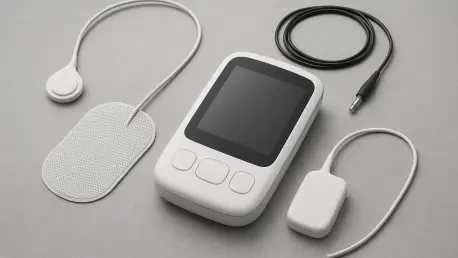

Digital health platforms now enable clinicians to monitor neurostimulation device performance and adjust therapeutic settings remotely without requiring an in-person office visit. This development marks a significant milestone in 2026, where the intersection of telecommunication and neurobiology has finally yielded practical solutions for millions of patients. The global neurostimulation market is no longer a niche segment of medical technology; it has evolved into a powerhouse sector currently valued at roughly $6.95 billion. Experts observe that this growth is largely propelled by a convergence of technological breakthroughs and an increasing clinical preference for neuromodulation over traditional pharmacological interventions. For many individuals suffering from treatment-resistant conditions like chronic pain or epilepsy, these devices represent a critical alternative to systemic medications that often carry heavy side effects. As of 2026, the trajectory toward a $20.64 billion market by 2035 is firmly established.
Market Expansion and Regional Trends
Financial Projections: North American Market Dominance
The economic momentum of the neurostimulation sector is underscored by a projected compound annual growth rate of 11.50% through the mid-2030s. North America currently commands a staggering 42% of the global market share, a position solidified by its sophisticated healthcare infrastructure and a robust ecosystem of research institutions. In 2026, the United States remains the primary engine of this growth, supported by favorable reimbursement policies that make expensive implantable technologies accessible to a broader patient demographic. The integration of advanced surgical robotics in major medical centers across the region has also reduced the barriers to entry for complex procedures like deep brain stimulation. Consequently, the valuation of the North American segment is expected to nearly triple over the next decade as these technologies transition from last-resort interventions to standard frontline treatments for a variety of movement disorders.
Furthermore, the stability of the regulatory environment in the United States and Canada provides a fertile ground for venture capital investment in neurological startups. By 2026, the market has seen a surge in collaborative ventures between traditional medical device giants and software firms focusing on cloud-based patient management. This synergy has streamlined the process of clinical data collection, allowing for faster iterations of device software and hardware. As chronic pain management shifts away from opioid-based protocols, neurostimulation has stepped in as a scientifically validated and safer alternative, further cementing its financial dominance. The regional market is not just expanding in terms of total revenue but is also diversifying its application base to include innovative treatments for gastrointestinal and cardiovascular ailments. This expansion ensures that North America will remain the focal point of neurostimulation innovation for the foreseeable future.
Emerging Opportunities: Asia-Pacific and European Trends
While North America holds the largest share, the Asia-Pacific region is emerging as the fastest-growing market with a projected growth rate exceeding 14% annually. Countries like China and Japan are investing heavily in their healthcare infrastructures to accommodate rapidly aging populations that are increasingly susceptible to Parkinson’s disease and other age-related neurological conditions. In 2026, regional governments have prioritized the local manufacturing of medical devices, which has significantly lowered the cost of neurostimulation units and improved their availability in rural provinces. This democratization of technology is a pivotal factor in the region’s aggressive market expansion. Furthermore, the rising disposable income in emerging economies like India has created a new segment of healthcare consumers seeking advanced medical interventions that were previously out of reach, driving high demand for both invasive and non-invasive units.
Europe maintains its status as a critical hub for neurostimulation through a different approach, focusing heavily on clinical precision and minimally invasive techniques. European medical centers have long been at the forefront of exploring neuromodulation for psychiatric conditions, such as treatment-resistant depression and obsessive-compulsive disorder. The regulatory frameworks in the European Union have adapted to support the rapid certification of wearable neurostimulation devices, which are becoming increasingly popular for migraine relief and sleep disorders. This proactive regulatory stance has encouraged a high density of specialized neurological clinics across the continent. Additionally, the cross-border collaboration between European researchers ensures a steady stream of clinical trials that validate the efficacy of new stimulation protocols. This collective effort ensures that Europe remains a competitive and highly innovative player in the global push toward $20 billion.
Technological Innovations and Strategic Leadership
Breakthrough Technologies: Personalization and AI Systems
The most transformative trend in 2026 is the widespread adoption of closed-loop neurostimulation systems powered by artificial intelligence. Unlike traditional devices that deliver a constant, pre-programmed electrical current, these smart systems monitor neural biomarkers in real-time to deliver stimulation only when the body requires it. This leap in technology has drastically improved patient outcomes by reducing the incidence of side effects and extending the battery life of implanted pulse generators. The ability of these systems to learn from a patient’s unique neural patterns means that therapy is now highly personalized, adapting to changes in disease progression without frequent manual adjustments. This automation has not only improved the quality of life for patients but has also significantly reduced the workload for specialized neurologists, who can now manage larger patient cohorts with greater clinical efficiency.
In addition to internal intelligence, the hardware itself has undergone a radical transformation toward miniaturization and enhanced compatibility. Modern leads and electrodes are now designed to be fully compatible with high-resolution magnetic resonance imaging, ensuring that patients do not have to choose between their life-altering implants and necessary diagnostic scans. The development of high-capacity, rechargeable batteries has also changed the patient experience, as current devices can now last for over a decade with minimal maintenance. On the non-invasive side, wearable headsets utilizing transcranial magnetic stimulation have gained significant traction for home-based use. These devices offer a gateway for patients who are hesitant about surgery, providing effective relief for chronic headaches and minor mood disorders. This tiered approach to technology ensures that neurostimulation can meet patients at every stage of their clinical journey.
Strategic Industrial Outlook: Leaders and Market Challenges
The competitive landscape is currently led by a core group of medical technology titans including Medtronic, Boston Scientific, and Abbott. These organizations have maintained their dominance by investing billions into research and development and by acquiring smaller, innovative startups that specialize in niche applications like vagus nerve stimulation. Medtronic remains a pioneer in deep brain stimulation, while Abbott has made significant strides in personalizing spinal cord stimulation through its focus on sub-perception therapy. These leaders are not just selling hardware; they are building comprehensive digital ecosystems that collect and analyze patient data to prove long-term clinical efficacy to insurance providers. This strategic focus on data-driven results is essential for navigating the complex global reimbursement landscape and ensuring that neurostimulation remains a cost-effective solution for healthcare systems.
The industry demonstrated that overcoming initial skepticism regarding high costs was possible through rigorous clinical validation and a shift toward value-based healthcare. By 2026, developers had successfully pivoted from hardware-centric designs to software-driven ecosystems that integrated predictive analytics into every pulse generator. This evolution suggested that future investments should prioritize interoperability between different neural platforms to maximize patient outcomes. Strategic moves by the leading entities indicated that the path forward involves the miniaturization of electrodes and the perfection of leadless systems. Stakeholders who embraced these data-driven methodologies found themselves better positioned to tackle the complex regulatory landscapes that previously hindered innovation. The focus ultimately shifted toward democratizing access to these therapies, ensuring that advanced neurological care became a standard rather than a luxury for those in need.