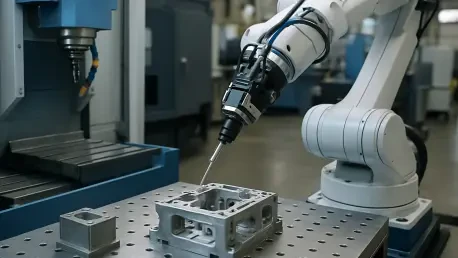

PrecisionForm Incorporated overcame the technical hurdles of random bin picking by implementing cobots that use advanced vision sensors to identify jumbled components. This achievement reflects a monumental shift across the industrial sector, where the once-exclusive domain of high-precision manufacturing is being opened to everyone. Historically, producing complex, high-tolerance parts was a luxury reserved for corporations with the massive capital reserves required for specialized machinery and highly specific environments. As of 2026, these barriers are rapidly dissolving due to breakthroughs in robotic accessibility and integration. This trend allows smaller and midmarket manufacturing firms to compete globally, achieving levels of accuracy that were previously considered impossible without a massive facility overhaul. The shift is not merely about having better machines; it is about a fundamental change in how precision is delivered, moving away from centralized industrial hubs toward a more decentralized and agile manufacturing ecosystem that empowers smaller local workshops.
The Technological Foundation: Efficiency and Intuition
The current surge in manufacturing accessibility is driven by the rise of economic and spatial efficiency within modern robotic designs. Many smaller shops previously struggled with the prohibitive physical footprints required by traditional industrial robots, but today’s systems are remarkably compact. This shift facilitates what is known as “brownfield” integration, enabling facility owners to drop sophisticated robotic cells into their existing floor layouts without the need for expensive structural renovations. By 2026, the total cost of ownership for these systems has plummeted, making the return on investment much more compelling for companies that operate on thinner margins. Furthermore, the reliance on specialized robotics engineers is fading as intuitive user interfaces become the industry standard. Through lead-through teaching and graphic-based programming, operators can reconfigure robotic movements with minimal training, ensuring that production remains flexible and responsive to ever-changing market demands.
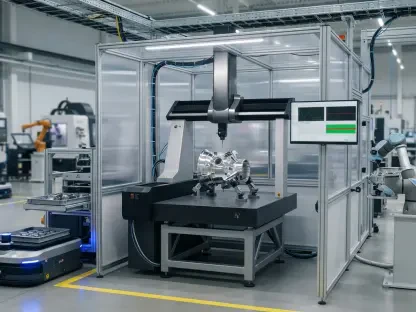
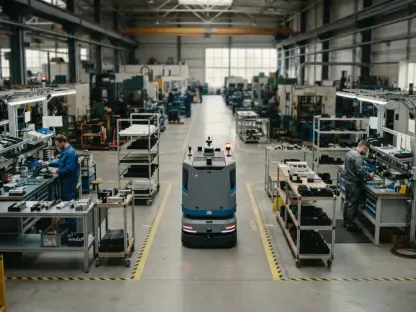
Adding to the accessibility is the integration of advanced artificial intelligence with vision systems and force-torque sensors, which provides robots with an artificial sense of touch and sight. This technological leap allows machines to react to environmental variables in real-time, enabling them to handle delicate parts or navigate complex geometries with a degree of precision that rivals human operators. In this context, collaborative robots, or cobots, have redefined the standard factory floor by removing the necessity for traditional steel safety caging. Because these units are power- and force-limited, they are capable of working alongside human employees in a shared workspace. This hybrid workforce model leverages the unique strengths of both parties: the tireless consistency and repeatability of the robot combined with the problem-solving skills and dexterity of the human worker. By 2026, this synergy has become a cornerstone of modern production, allowing for high-output environments that are safer and more efficient.
Mitigating Economic Strain through Collaborative Automation
These robotic innovations are far more than just technological upgrades; they represent a necessary survival strategy in the face of persistent macroeconomic challenges. Today’s midmarket manufacturers are grappling with a severe shortage of skilled labor, which makes it increasingly difficult to maintain high production volumes. At the same time, specialized industries like medical device manufacturing and aerospace engineering are demanding tighter tolerances than ever before. To address these conflicting pressures, firms are turning to robotic cells to mitigate labor gaps and maintain quality control. By automating repetitive or hazardous tasks, companies can transition their existing employees into higher-value roles that focus on oversight and strategy rather than manual labor. This strategic shift not only increases overall productivity but also enhances employee job satisfaction by removing the physical toll of monotonous factory work. Consequently, smaller shops are now finding they can sustain growth even while facing a tightening labor market.
Practical evidence of this transformation can be seen in the operations of Torneria Novoletto, an Italian firm specializing in components for the medical and pharmaceutical sectors. By utilizing advanced robotic handling and clamping systems, the company was able to transition to 24/7 unmanned operations. This allowed them to manage medium-sized batches with frequent changeovers, maintaining high precision while solving the problem of a limited skilled workforce. Similarly, Telesis has showcased how combining laser marking technology with collaborative arms creates a flexible identification system. Because cobots do not require complex safety enclosures, they can be integrated into tight spaces to provide consistent, high-quality marking across a wide variety of materials and geometries. This setup ensures superior traceability and quality control without the prohibitive costs typically associated with traditional robotic safety infrastructure. These examples illustrate how targeted automation can provide a massive boost to the operational efficiency and competitive edge of mid-sized organizations.
Strategic Integration: Maximizing Legacy Assets for Growth
In the United States, Northern Kentucky Machine has utilized industrial robots for CNC machine tending to implement what is known as “lights-out” manufacturing. This capability allows their production lines to continue running long after the human staff has finished their shifts for the day. By leveraging this level of automation, the shop has seen a dramatic increase in throughput, allowing it to scale up and take on larger, more lucrative contracts that were previously reserved for much larger competitors. Similarly, PrecisionForm Incorporated demonstrated that robotic integration does not always require the purchase of entirely new production machinery. By using vision-guided cobots to automate the loading of older CNC machines, they successfully handled the complexities of bin picking. This strategy allowed them to maximize the value of their existing assets while still benefiting from the accuracy of modern automation. This incremental modernization strategy proved especially effective for midmarket firms that needed to balance evolution with manageable capital expenditures.
In summary, the integration of robotics into midmarket manufacturing represented a fundamental shift in the global production landscape. By leveraging lower costs, easier programming, and advanced sensors, smaller operations successfully overcame the hurdles of labor shortages and high quality-control demands. The industry adopted a strategy where manufacturers first audited their most repetitive manual processes to identify high-impact automation candidates. This targeted approach allowed businesses to achieve significant gains in machine utilization without overextending their budgets. Furthermore, leaders prioritized the training of their existing staff on intuitive robotic interfaces, transforming traditional operators into automation managers. This evolution proved that the path to competitiveness lay in the strategic pairing of human expertise with robotic consistency. These actions established a new standard where precision was no longer a luxury but a baseline for survival. Ultimately, the successful transition relied on embracing incremental modernization and maximizing the utility of every asset on the shop floor.