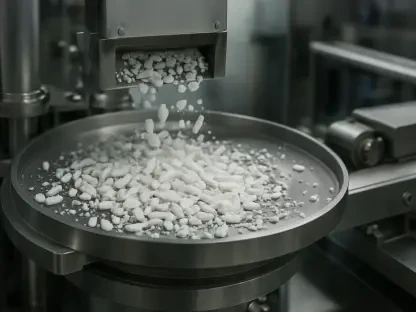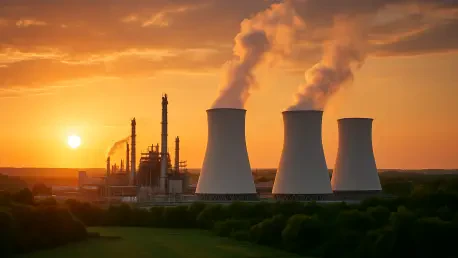

Configuring production formulas within an ERP system allows manufacturers to automatically calculate raw material consumption against final ethanol output to eliminate manual entry errors. This integration marks a departure from traditional, siloed manufacturing where production data lived on paper or in isolated spreadsheets. By 2026, the industrial landscape has shifted toward a paradigm where every sensor reading and machine vibration informs a broader business strategy. Operational excellence is no longer just about keeping machines running; it is about harvesting actionable insights that drive profitability while meeting strict environmental standards. Modern facilities now function as interconnected organisms, where data flows vertically from the factory floor to the executive board. This evolution enables manufacturers to respond to market fluctuations with unprecedented agility. The transition from basic automation to an intelligent, self-correcting ecosystem represents a fundamental change in how global manufacturing operates.
Transforming Production into a Sustainable Ecosystem
The Integrated Biorefinery: Resource Circularity in Action
The concept of an integrated biorefinery has moved from a theoretical ideal to a practical necessity for competitive industrial players. This model emphasizes that profitability and environmental stewardship are not mutually exclusive but are actually deeply interdependent components of a modern enterprise. By adopting a circular approach to resource management, facilities maximize the value extracted from every grain of raw material. Processing rice and maize for ethanol production naturally generates residues that were once considered waste. However, in an integrated system, these residues are meticulously processed into Distiller’s Dried Grains with Solubles (DDGS), which serves as a high-protein animal feed. This conversion transforms a potential waste-handling cost into a lucrative secondary revenue stream, buffering the facility against price volatility in the primary energy market. Such strategic resource utilization ensures that the manufacturing process is inherently resilient and highly efficient.
Beyond the immediate financial gains of by-product recovery, the integrated biorefinery model fosters a more sustainable relationship between industrial growth and the surrounding environment. As of 2026, the focus has expanded to include the total lifecycle of every input, ensuring that nothing leaves the site without being scrutinized for further utility. This approach reduces the reliance on external suppliers and decreases the overall carbon intensity of the final product. By closing the loop on material flow, manufacturers can significantly lower their environmental footprint while simultaneously reducing logistical complexities. The ability to generate multiple products from a single feedstock stream provides a significant competitive advantage in a global market that increasingly rewards sustainability. This paradigm shift requires a sophisticated understanding of chemical processes and a commitment to long-term infrastructure investment. Ultimately, the implementation of circularity proves that industrial processes can be ecologically responsible.
Environmental Stewardship: Achieving Net-Zero Operations
Achieving a net-zero operational footprint has become a central objective for leading manufacturers who wish to remain relevant in a carbon-conscious economy. Advanced facilities are now implementing aggressive carbon management strategies that go far beyond simple emission reduction. For instance, carbon dioxide generated during the fermentation phase is no longer vented into the atmosphere but is instead captured and liquefied. This high-purity gas is then sold to the beverage and food processing industries, turning a greenhouse gas into a valuable commodity. Similarly, solid waste products like boiler ash are being repurposed for use in the construction industry as a substitute for virgin materials. These initiatives demonstrate how a proactive stance on environmental responsibility can create new market opportunities and strengthen community relations. By treating every emission as a potential resource, modern manufacturing plants are redefining the boundaries of industrial efficiency and coexist with stringent climate goals.
Water conservation is another critical pillar of the sustainable manufacturing framework, particularly in water-stressed regions where industrial usage is under heavy scrutiny. Implementing Zero Liquid Discharge (ZLD) protocols represents the gold standard for responsible water management in 2026. This comprehensive strategy ensures that every drop of industrial wastewater is treated using advanced filtration and evaporation technologies, then cycled back into the production loop. By eliminating discharge entirely, facilities not only protect local ecosystems from potential contamination but also significantly reduce their dependence on municipal water supplies. This self-sufficiency is vital for maintaining operational continuity during droughts or regulatory changes. The infrastructure required for ZLD is complex, but the long-term benefits of reduced water costs and enhanced regulatory standing make it a sound investment. Through such rigorous conservation efforts, the manufacturing sector is demonstrating that it can operate as a closed-loop system.
Technical Foundations of Intelligent Control
Safeguarding Assets: The Role of Distributed Control Systems
At the heart of any modern high-performance manufacturing facility lies the Distributed Control System (DCS), a sophisticated network of controllers and sensors that provides real-time oversight. Unlike traditional monitoring tools that simply record data, a DCS offers proactive diagnostics and critical protective control that safeguards multi-million dollar investments. The system continuously tracks a wide array of parameters, including furnace temperatures, vibration levels, and turbine speeds, to ensure everything operates within safe limits. If any component approaches a predefined threshold, the DCS can initiate an automatic shutdown to prevent catastrophic mechanical failure. This immediate response is essential for protecting complex machinery like high-pressure boilers and steam turbines, where manual intervention might be too slow. By automating these safety protocols, manufacturers significantly reduce the risk of industrial accidents and prolong the lifespan of their critical assets. This reliability is the foundation for efficiency.
Navigating the increasingly complex landscape of environmental regulations requires a level of transparency that traditional manual reporting simply cannot provide. Smart automation addresses this challenge by establishing a direct link between plant sensors and regulatory bodies. Emissions monitoring equipment is now integrated into the plant’s digital backbone, allowing real-time data to be transmitted directly to state and national environmental agencies. This automation removes the possibility of human error or the intentional manipulation of data, fostering a culture of accountability and trust. For regulators, this provides a verifiable and continuous stream of information that ensures compliance with national standards. For the manufacturer, it reduces the administrative burden of manual record-keeping and eliminates the risk of hefty fines associated with reporting discrepancies. This digital transparency has become a prerequisite for obtaining and maintaining the social license to operate in today’s highly scrutinized industrial sector.
Vertical Integration: Connecting the Shop Floor to Management
The seamless flow of data from the shop floor to the executive offices, known as vertical integration, is the primary driver of modern operational agility. In this framework, the DCS acts as the sensory nervous system, while the Enterprise Resource Planning (ERP) system serves as the brain that handles high-level decision-making. Flow meters and sensors installed throughout the production line collect real-time data on everything from steam consumption to chemical usage. This information is funneled through the DCS and automatically uploaded into the ERP system, ensuring that financial and operational records are always in sync. This level of synchronization eliminates the need for manual data entry, which is often a significant source of accounting errors in large-scale manufacturing environments. By 2026, this digital bridge allows management to view the live cost of production for any given batch, enabling more informed pricing and procurement strategies. The factory floor is no longer a “black box” to the finance department.
The vast amount of data harvested by these integrated systems served as the primary catalyst for the industry’s move toward predictive maintenance and self-optimizing operations. By analyzing historical performance and real-time sensor data, manufacturers identified subtle inefficiencies that were once invisible to the naked eye. Advanced algorithms were deployed to forecast equipment failures weeks in advance, allowing for repairs to be performed during planned intervals rather than during costly emergency shutdowns. Furthermore, the integration of quality assurance hardware directly with procurement systems ensured that only the highest quality raw materials entered the production stream. If a batch failed to meet specifications, the system automatically generated a debit note, enforcing supplier accountability without manual negotiation. This proactive approach to asset management and quality control solidified the path toward a fully autonomous manufacturing ecosystem. The focus shifted toward actionable steps that prioritized long-term resilience and digital integrity.