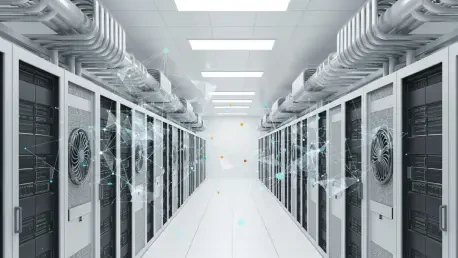

Vertiv’s recent unveiling of its production-grade digital twin for the SmartRun platform at the Computex 2026 event represents a significant advancement in the deployment of high-density AI factories. This tool, developed specifically to operate within the Nvidia Omniverse DSX Blueprint, addresses the critical challenges faced by operators who must support the rapid evolution of specialized hardware. By merging deep infrastructure expertise with sophisticated simulation capabilities, the platform enables a level of precision that was previously unattainable in data center planning. The primary objective is to synchronize the virtual workload with the physical environment, ensuring that complex power and cooling systems are fully validated long before the actual hardware reaches the facility floor. This shift from reactive to proactive design ensures that the physical space can handle the immense thermal loads generated by next-generation chipsets without requiring any costly post-installation adjustments.
Synchronizing Infrastructure and Innovation
The New Standard: Bridging the Gap Between Silicon and Steel
Innovation cycles for AI chips have accelerated to such an extent that traditional construction timelines simply cannot keep pace with the evolving demands of the hardware. While a new generation of GPUs or accelerators might arrive every few months, the physical infrastructure to house them often takes much longer to design and build. The digital twin bridges this gap by creating a persistent virtual representation of the facility that evolves alongside the hardware roadmap. By simulating the exact thermal footprints and power requirements of upcoming processors, engineers can finalize the layout and mechanical systems of a data center while the chips are still in production. This parallel development cycle significantly reduces the time-to-market for new AI services, allowing organizations to deploy computing power the moment the physical units are delivered. This creates a resilient supply chain where infrastructure is no longer the primary bottleneck for progress.
Furthermore, this synchronization allows for a more granular understanding of how various workloads affect the overall health of the facility. Traditional modeling often relies on worst-case scenarios that lead to over-provisioning and wasted capital, but the SmartRun digital twin offers a more dynamic perspective. It provides a real-time feedback loop where virtual simulations of specific AI training jobs are tested against the cooling system’s capacity in a digital space. This approach allows operators to optimize their environments for maximum efficiency without risking hardware failures or unexpected downtime. By moving away from static design buffers and toward data-driven, precise configurations, companies can maximize their return on investment while minimizing their environmental footprint. The integration of high-fidelity data into the early stages of planning ensures that every watt of power and every liter of coolant is used effectively, supporting the sustainable growth of computing.
Strategic Shifts: Moving Beyond Manual Processes and Fragmented Data
The transition toward sophisticated digital twins addresses a pervasive issue in the data center industry: the reliance on fragmented documentation and manual data handoffs between disparate teams. In conventional workflows, electrical engineers, mechanical designers, and IT professionals often work in isolation, using different tools that do not communicate effectively with one another. This lack of integration frequently results in design discrepancies that only become apparent during the physical installation phase, leading to expensive change orders and delays. The SmartRun platform eliminates these silos by providing a single source of truth where all physical and logical systems are represented in a shared digital environment. By using a model-based approach, the platform ensures that the original engineering intent is maintained from the initial concept through to commissioning. This unified vision allows for better collaboration and accurate decision-making during high-density development.
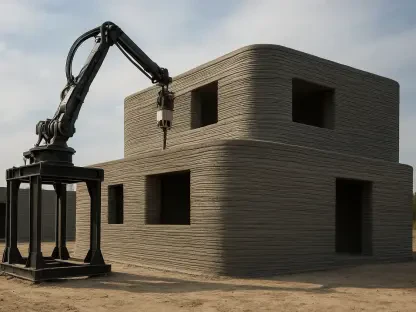
Central to this modernized workflow is the establishment of clear configuration rules and system dependencies within the virtual model. Instead of treating every component as an independent variable, the digital twin recognizes the complex relationships between power distribution, cooling efficiency, and server performance. If a change is made to the rack configuration in the virtual space, the system automatically calculates the impact on the cooling loops and electrical loads. This level of automation prevents the human errors typically associated with manual calculations and ensures that the facility remains within its operational limits. By validating these configurations digitally, operators can confidently order prefabricated modules and long-lead items, knowing they will integrate perfectly once they arrive on-site. This shift toward industrialization allows for a more predictable and scalable construction process, catering to the expansion needs of modern AI clusters.
Technical Integration and Strategic Outlook
Core Collaborations: Leveraging Strategic Partnerships for Industrial Scale
The success of this digital twin initiative is rooted in a deep technical collaboration between Vertiv, Nvidia, and Dassault Systèmes, each bringing a specific layer of expertise to the stack. Vertiv contributes the simulation-ready physical building blocks, providing high-fidelity models of power units, cooling systems, and structural racks that behave exactly like their real-world counterparts. Dassault Systèmes provides the underlying logical framework, which manages the complex metadata and ensures that the virtual model remains consistent across its entire lifecycle. Meanwhile, the Nvidia Omniverse environment acts as the central hub for large-scale simulations, utilizing OpenUSD technology to render physically accurate environments where thermal and power dynamics can be analyzed in real-time. This partnership creates a comprehensive ecosystem where the physical and digital worlds are linked, allowing for a level of operational transparency that was previously impossible.
This collaborative effort reflects a broader industry trend toward the industrialization of data center construction through modular and prefabricated platforms. By moving away from bespoke, manual on-site builds, Vertiv is championing a future where facilities are assembled from pre-validated digital components. These virtual models do not simply disappear once construction is complete; they remain active throughout the operational life of the data center. Operators can use the twin to run “what-if” scenarios, such as predicting how the introduction of a new liquid-cooling manifold might affect the existing air-cooled zones. This long-term utility helps facility managers anticipate maintenance needs and plan for future hardware refreshes with greater accuracy. As computational demands continue to soar, the ability to manage the physical infrastructure with the same agility as software will become a necessity for those seeking to maximize their overall efficiency.
Operational Excellence: Prioritizing Outcomes and System Efficiency
The practical implications of adopting a production-grade digital twin extend far beyond the initial design phase, directly impacting the long-term profitability and reliability of AI operations. By performing virtual validation, companies can identify and resolve electrical or thermal bottlenecks long before any physical installation begins. This preemptive troubleshooting prevents the need for costly retrofits that often plague high-density deployments where heat loads exceed traditional expectations. Furthermore, the use of a digital twin allows for the fine-tuning of control algorithms and monitoring systems in a risk-free virtual environment. This ensures that the facility is not just functional but optimized for the specific workloads it will carry, such as large language model training or real-time inference. The focus shifts from merely maintaining uptime to optimizing the actual computational output, treating data centers as high-performance engines rather than storage.
Ultimately, the shift toward digitally validated, high-density infrastructure allowed companies to prioritize metrics that truly mattered in the technological landscape. Instead of focusing solely on traditional power usage effectiveness, operators optimized for tokens per second per megawatt, a metric that directly linked infrastructure efficiency to AI output. The digital twin provided the visibility needed to balance the intense power requirements of GPUs with the mechanical limits of the cooling systems, ensuring maximum throughput. As the industry moved toward more sustainable practices, this level of precision became vital for meeting environmental targets without sacrificing performance. The adoption of these advanced tools provided a clear roadmap for organizations looking to scale their AI capabilities rapidly and responsibly. By integrating simulation into every stage of the lifecycle, the data center industry established a new standard for excellence that ensured hardware and software worked in harmony.