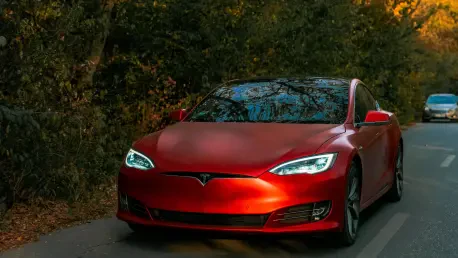

The automotive landscape experienced a seismic shift this month as the production lines at the Fremont Factory celebrated a milestone that was once considered impossible by industry skeptics. Reaching the ten-millionth electric vehicle is not just a numerical achievement for Tesla; it represents the culmination of a twenty-year journey that began with the reveal of the original Roadster prototype. This transition from an experimental startup to a global manufacturing powerhouse has redefined what consumers expect from their transportation, moving zero-emission vehicles from a luxury curiosity to the primary choice for the modern driver. The sheer scale of this operation has effectively silenced long-standing debates regarding the viability of battery-electric platforms over internal combustion engines. By focusing exclusively on sustainable propulsion, the company has established a new operational benchmark that legacy manufacturers are now scrambling to emulate. This moment marks the definitive end of the “early adopter” phase and the beginning of a mature era where high-volume, clean-energy transport is the global standard. The company has proven that it can scale at a rate that traditional automotive giants struggle to match, setting the stage for a future where autonomous mobility and massive-scale electrification are the norm.
Unprecedented Production Speed and Market Scale
The first half of 2026 demonstrated the incredible velocity of manufacturing growth, with global deliveries exceeding 830,000 units in just six months. To understand the magnitude of this achievement, one must consider that the brand is now moving approximately one vehicle every nine seconds when calculated against global retail operating hours. This surge in volume is not merely a result of increased factory capacity but is also supported by a massive order backlog that reached its highest point in years by June. The consistent rise in consumer demand suggests that market saturation is still far off, as more drivers transition away from fossil fuels in favor of the efficiency and performance offered by pure electric drivetrains. This momentum is a clear indicator that the production ramp-up is meeting a genuine global appetite for sustainable transport that shows no signs of slowing down. As the company continues to refine its logistics and delivery networks, the gap between order placement and vehicle delivery has narrowed, further enhancing the customer experience and cementing market dominance.
The exponential acceleration of manufacturing is perhaps the most impressive aspect of the current trajectory and highlights the success of the “Gigafactory” model. While it took over twelve years to produce the first million vehicles, the most recent million units were manufactured in a matter of months, showcasing a vertical integration strategy that prioritizes extreme efficiency. Unlike many legacy automakers that often include hybrid vehicles in their “new energy” statistics to inflate their numbers, Tesla’s figures consist entirely of pure battery-electric vehicles. This commitment to a singular, clean-energy platform has allowed for a streamlined manufacturing process that eliminates the complexity of dual-powertrain systems. The “Gigafactory” approach has been replicated across multiple continents, creating a resilient supply chain that can withstand regional economic fluctuations. By focusing on manufacturing as a product in itself, the company has created a blueprint for high-volume production that rivals the historic efficiency of the original assembly line, yet operates with the precision of modern robotics and software-driven automation.
Leveraging Global Hubs and Flagship Success
The global market dominance of the brand remains firmly centered on the continued success of the Model Y and the Model 3, which both continue to shatter sales records. As of mid-2026, the Model Y has secured its position as the world’s best-selling car across all fuel types for three consecutive years, with cumulative sales recently surpassing the 5 million unit mark. This achievement is a testament to the vehicle’s versatility, safety ratings, and the brand’s ability to maintain a competitive edge in a crowded crossover market. Similarly, the Model 3 remains the premier electric sedan globally, maintaining its segment lead for eight consecutive years while earning high marks for long-term reliability and owner satisfaction. These flagship models serve as the backbone of the company’s financial health, providing the necessary capital to invest in more ambitious projects. Their continued popularity in diverse markets from North America to Europe and Asia demonstrates a universal appeal that transcends regional preferences, proving that a well-engineered electric platform can succeed anywhere in the world.
A vital engine for this global supply is the Shanghai Gigafactory, which currently accounts for more than half of the total vehicle output and serves as the primary export hub. The facility has mastered the art of regional adaptation, recently launching the Model Y L—a six-seat luxury SUV specifically designed to meet the unique consumer needs of the local market. The success of this plant mirrors the rapid transformation of the regional landscape, where new energy vehicle penetration has climbed to unprecedented levels. The Shanghai operation has set a high bar for production quality and cost management, providing a strategic blueprint for how the company intends to dominate other emerging markets. By localized engineering and supply chain management, the factory has reduced lead times and shipping costs, making electric vehicles more accessible to a broader demographic. This regional focus ensures that the company is not just a global brand but a local leader that understands the nuances of different driving environments and consumer expectations, further solidifying its presence in the most competitive automotive markets.
Addressing Longevity Through Precision Engineering
As the electric vehicle market reaches maturity, the engineering focus has shifted toward addressing “durability anxiety” by emphasizing mechanical simplicity and robust design. While a traditional internal combustion engine contains over 2,000 moving parts that are subject to wear and heat stress, a Tesla powertrain contains roughly 20 moving parts. This reduction in mechanical complexity drastically decreases the potential points of failure and minimizes long-term maintenance requirements for the owner. The implementation of “gigacasting” has further revolutionized vehicle architecture by casting large sections of the frame as a single piece. This process not only increases structural rigidity and improves safety in the event of a collision but also makes the entire manufacturing process leaner and more sustainable. By reducing the number of welds and individual components in the chassis, the company has created a more durable vehicle that is less prone to the rattles and structural fatigue that often plague older cars. This focus on precision engineering ensures that the vehicle remains a high-performance machine for the duration of its lifespan.
Data regarding battery health further supports this commitment to longevity, with real-world reports indicating that the high-voltage packs typically retain 80% of their capacity even after 200,000 miles of use. This suggests a functional lifespan of over 15 years for the average driver, a metric that has been thoroughly validated by owners who have surpassed 400,000 kilometers on their original hardware. Such durability has directly contributed to industry-leading residual values, ensuring that these vehicles remain a strong financial investment in the secondary market. The longevity of the battery and drivetrain is a critical component of the company’s sustainability mission, as it reduces the need for frequent vehicle replacement and maximizes the utility of the raw materials used in production. This focus on building cars that last decades rather than years has shifted the consumer mindset, proving that electric vehicles are not disposable gadgets but long-term assets. By providing transparent data on battery degradation and hardware reliability, the company has built a foundation of trust that is essential for maintaining market leadership as the fleet of older electric vehicles grows.
The Infrastructure Ecosystem and Future AI Frontiers
The market position of the brand is fortified by an extensive ecosystem that encourages unparalleled brand loyalty, currently evidenced by an 87% loyalty rate among owners. Central to this ownership experience is the Supercharger network, which has expanded to include over 82,000 units worldwide, providing a seamless and reliable charging experience for long-distance travel. This infrastructure removes the primary barrier to adoption by ensuring that drivers are never far from a high-speed charging solution. Combined with top-tier safety ratings and advanced assisted driving technology that significantly reduces collision rates, the brand has created a comprehensive ownership model that extends far beyond the physical vehicle. The integration of software and hardware allows for continuous improvements through over-the-air updates, ensuring that a car purchased today will actually become more capable over time. This holistic approach to the ecosystem creates a “walled garden” effect where the convenience and reliability of the service network make it difficult for competitors to lure away existing customers, regardless of their vehicle offerings.
Looking toward the next ten million units, the company is rapidly pivoting from being a traditional automaker to a comprehensive AI and robotics firm. This shift was highlighted by the recent commencement of Cybercab production and the launch of autonomous ride-hailing services in several major metropolitan areas. These initiatives represent a move toward a “robotaxi” future where the cost of transport could drop significantly, fundamentally changing how society views vehicle ownership. Furthermore, the development of a dedicated production line for the Optimus humanoid robot indicates that the long-term vision lies in autonomous mobility and robotic integration across all aspects of life. The goal is to leverage the vast amounts of data collected from millions of vehicles on the road to train neural networks that can navigate complex real-world environments. This transition into AI-driven robotics promises to redefine the relationship between technology and daily life, positioning the company at the forefront of the next industrial revolution. The focus is no longer just on moving people from point A to point B, but on creating an autonomous ecosystem that enhances productivity and safety on a global scale.
Implementation of Advanced Autonomous Systems
The industry recognized that hitting the ten-million-unit mark was only a prelude to a more complex integration of autonomous systems into the global transport network. Stakeholders focused on the immediate expansion of the autonomous ride-hailing fleet, which served as a practical solution for urban congestion and rising transport costs. To maintain this lead, the focus shifted toward the refinement of end-to-end neural networks that allowed vehicles to make human-like decisions in unpredictable traffic scenarios. This technological leap required a massive investment in computing infrastructure, specifically in the development of custom AI training clusters that processed billions of miles of real-world driving data. The actionable next step for the sector involved the standardization of autonomous communication protocols, ensuring that the growing fleet of self-driving vehicles could interact safely with human-driven cars and city infrastructure. By prioritizing software-led innovation, the company moved away from the constraints of traditional manufacturing cycles, instead focusing on the rapid deployment of intelligence that could be updated in real-time across the entire global fleet.
The strategic shift toward robotic labor through the Optimus program provided a new perspective on manufacturing efficiency that extended beyond the automotive assembly line. These humanoid robots were deployed within the Gigafactories to handle repetitive and strenuous tasks, which reduced the physical strain on human workers and increased overall output. This integration of robotics into the production process became a case study for other industries looking to automate complex manual labor. The future considerations for the company involved the commercialization of these robotic units for external use in logistics and domestic assistance, effectively creating a new market category for autonomous helpers. As the cost of robotic hardware decreased through mass production, the accessibility of these systems increased, leading to a broader adoption of AI-driven labor. This evolution ensured that the company remained a leader in the technological landscape, proving that the lessons learned from building ten million electric vehicles could be applied to solve some of the most challenging problems in robotics and artificial intelligence.