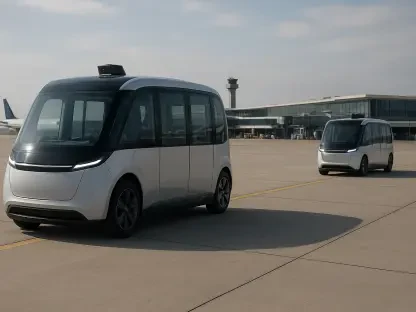

Before transitioning to fully driverless passenger services, Pony AI must navigate the rigorous safety protocols established by the UK’s Automated Vehicles Act 2024. This requirement serves as a critical milestone in the aggressive expansion within the British capital, where ride-hailing services are rapidly diversifying technological partnerships. By integrating seventh-generation autonomous platforms into the local network, the industry is transforming London into a high-stakes testing ground. The city’s dense architecture and unpredictable traffic patterns offer an ideal environment to stress-test these systems. This move follows a successful collaboration in Zagreb, signaling that the era of experimentation is shifting toward permanent operational integration. As the software begins to encounter the complexities of the West End and the narrow lanes of the City, the focus remains on whether these advanced sensors can outperform human drivers in one of the most demanding transit hubs in the world.
Strategic Fleet Diversification
The Multi-Vendor Model
The inclusion of a second major technology partner marks a deliberate shift away from a single-provider model, providing the platform with significant operational flexibility. By running these vehicles alongside the modified Ford Mustang Mach-Es currently managed by Wayve, the company can evaluate competing software stacks in real-time. This dual-vendor strategy prevents the platform from being tethered to a single manufacturer’s development timeline or specific technical limitations. Consequently, the operator can pivot more effectively if one system encounters specific hardware shortages or regional software bugs.
Furthermore, this competitive environment encourages both partners to optimize their performance metrics, particularly regarding passenger comfort and route efficiency. As the fleet scales across different boroughs, the ability to compare data between a vision-led approach and a sensor-heavy seventh-generation platform will be invaluable. This comparative analysis allows for the refinement of dispatch algorithms, ensuring that the most capable vehicle is assigned to the most complex routes. The objective is to create a seamless experience where the end-user remains largely indifferent to the specific technology driving their ride.
Navigating Urban Chaos
Navigating London presents a unique set of obstacles that are rarely encountered in the wide, suburban grid systems of North American testing sites. The capital’s roads are a labyrinth of historic layouts, intricate roundabouts, and high-density zones where pedestrians and cyclists frequently interact with motor traffic. For the latest robotaxi models, this deployment represents a significant leap in environmental perception capabilities. These systems must process data from hundreds of traffic signals and road signs while maintaining a safety buffer in extremely tight spaces throughout the day.
Moreover, the erratic nature of the local weather, ranging from heavy mist to sudden downpours, demands a robust sensor suite capable of maintaining clarity in low-visibility conditions. Unlike clear-sky environments, the North Sea climate tests the reliability of LiDAR and camera systems to their absolute limits. Successfully managing these factors is essential for establishing public trust, as any technical hesitation in heavy traffic could lead to unnecessary congestion or safety concerns. The expansion into such a challenging environment underscores the confidence that developers now have in their machine learning models.
Regulatory Safety Frameworks
Compliance and the AV Act
Achieving full operational status in the United Kingdom requires more than just technical proficiency; it necessitates strict adherence to the Automated Passenger Services framework. This regulatory structure is designed to hold autonomous vehicle operators to the highest safety standards, ensuring that every mile driven is logged and analyzed by government oversight bodies. Technology providers have committed to a transparent relationship with local authorities, sharing critical data regarding system interventions and hardware performance. This cooperation is vital for securing the licenses needed to move to revenue-generating trips.
The legal landscape under the 2024 Act also clarifies liability issues, which has long been a significant hurdle for widespread adoption. By establishing clear lines of responsibility between the technology provider, the vehicle owner, and the platform operator, the government has created a predictable environment for long-term investment. For ride-hailing giants, this regulatory clarity is a prerequisite for planning, as it allows for more accurate forecasting of insurance costs and operational risks. The focus now shifts to obtaining the final certifications that will permit these vehicles to operate without a driver.
Future Scaling and Growth
The arrival of new autonomous partners in London signaled a maturing market for mobility, where the focus transitioned from experimental trials to commercial viability. Stakeholders within the transportation sector moved toward a collaborative ecosystem, acknowledging that no single entity could solve the riddle of urban congestion alone. This shift encouraged city planners to begin reevaluating curbside management and charging infrastructure to accommodate a permanent fleet of robotaxis. The emphasis remained on integrating these vehicles into the broader public transit network rather than allowing them to operate in isolation.
To ensure continued progress, industry leaders prioritized the development of standardized communication protocols between different autonomous fleets. This step was crucial for preventing traffic bottlenecks and ensuring that various software stacks could interact safely on the road. As testing moved into the final stages, the focus shifted to educating the public on the benefits of automated transport, particularly regarding reduced accident rates. These strategic actions laid the groundwork for a future where autonomous mobility became a cornerstone of the regional transportation strategy.