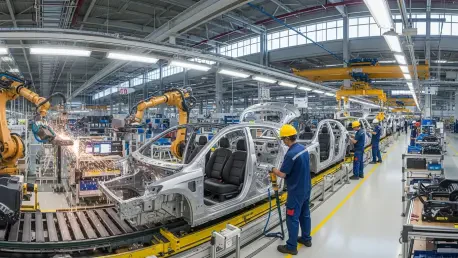

The hum of machinery at the Durban assembly line now represents more than just industrial output; it signifies a massive geopolitical pivot as global automotive power shifts toward the Southern Hemisphere. While several legacy Western automakers are currently reconsidering their manufacturing footprint in the region, India’s Mahindra & Mahindra is aggressively doubling down on its commitment to South Africa. The company is in advanced negotiations to overhaul its assembly facility, a move that could redefine its role in the regional economy and set a new standard for international investment.
This isn’t merely a minor equipment upgrade or a routine maintenance cycle; it is a calculated transformation from basic kit assembly to a sophisticated manufacturing model. By moving toward a more integrated production system, Mahindra is designing a defensive perimeter to protect its territory from an onslaught of global competitors. This expansion serves as a signal to the market that the Indian giant intends to transform from a guest importer into a permanent industrial pillar within the African continent.
The High-Stakes Race for the Durban Assembly Line
The South African automotive landscape is currently witness to a quiet but intense struggle for dominance as brands vie for the loyalty of a price-sensitive middle class. Mahindra’s decision to deepen its roots near Durban is a direct response to this pressure, moving beyond the simple assembly of semi-knocked down kits. The objective is to establish a facility capable of complex manufacturing that can sustain higher volumes and provide a more stable foundation for the brand’s popular “Pik Up” truck series.
Localizing production allows the company to insulate itself from the volatility of international shipping costs and currency fluctuations that often plague imported vehicles. As the Durban plant evolves, it is expected to become a central node in a network that links Indian engineering with African labor and resource management. This shift underscores a broader trend where emerging market leaders are filling the gaps left by traditional European and American brands that have pivoted toward luxury or electric niches.
Why Local Production Is the New Automotive Currency
The structural metamorphosis of the South African market is being driven by a surge in demand for affordable, mid-market vehicles that can handle the country’s unique terrain and economic climate. For Mahindra, the transition from semi-knocked down (SKD) kits to completely knocked-down (CKD) production is a strategic necessity rather than a luxury. This change allows for greater value addition within the country, which is increasingly vital as the local government explores new import tariffs to bolster the domestic industry.
Furthermore, the ability to manufacture locally has moved from a strategic advantage to a survival necessity for brands looking to avoid crippling trade barriers. By integrating more local components and labor into their vehicles, companies like Mahindra can qualify for various industrial incentives while ensuring their retail prices remain competitive. This model creates a symbiotic relationship with the local economy, making the automaker a stakeholder in the country’s wider industrial health rather than just a seller of foreign goods.
Neutralizing the Influx of Chinese and Indian Competitors
A primary catalyst for this expansion is the intensifying rivalry with emerging Asian giants that are rapidly filling the vacuum left by brands like Ford and Mercedes-Benz. Chinese manufacturers, including Chery and Great Wall Motor, have entered the fray with high-tech, low-cost alternatives, while fellow Indian rivals like Suzuki and Tata Motors are aggressively pricing their entries. Mahindra’s localized production of light trucks and potentially new passenger models is a preemptive strike to maintain its hard-won market share.
By bypassing the logistical and financial hurdles that come with high-volume imports, Mahindra aims to keep its “value-for-money” reputation intact. The competition is no longer just about who has the best engine, but who can get a vehicle to the showroom floor with the fewest supply chain interruptions. As these rival brands expand their own footprints, the ability to deliver parts and service through a locally grounded infrastructure becomes the deciding factor for long-term consumer trust.
Strategic Alliances and the Push for Industrialization
Mahindra’s growth strategy is deeply intertwined with South African state interests, specifically through its ongoing partnership with the Industrial Development Corp. (IDC). This collaboration aligns with broader industrialization goals, turning the Durban facility into a pivotal hub for both domestic supply and regional exports. This partnership provides the financial and regulatory scaffolding necessary to transform a simple assembly point into a full-scale manufacturing powerhouse that can serve nations as far as Mozambique.
Industry experts note that this shift toward CKD manufacturing represents a significant technological and financial commitment that proves long-term viability now requires a physical and industrial stake in the ground. The involvement of the IDC suggests that the project is seen as a matter of national economic interest, ensuring that the plant benefits from infrastructure support. This alignment of corporate strategy and government policy creates a fortified position that is difficult for purely import-based competitors to challenge.
A Blueprint for Defending Market Dominance in Emerging Regions
To successfully navigate this expansion, Mahindra implemented a multi-phase framework focused on supply chain localization and technological integration. This approach involved upgrading facility infrastructure to handle complex manufacturing processes while simultaneously training a local workforce to meet global quality standards. By prioritizing value-driven engineering and leveraging local partnerships, the company provided a specific roadmap for how international automakers could utilize South Africa as a gateway to the rest of the continent.
The strategy ultimately functioned as an insurance policy against global trade volatility and shifting geopolitical alliances. By embedding itself into the local industrial fabric, the automaker secured a more predictable cost structure and fostered a brand identity rooted in regional resilience. This shift moved the focus away from sheer sales volume and toward sustainable ecosystem building, ensuring that the manufacturing hub could adapt to future technological demands while maintaining its price competitiveness in a crowded market.