
The relentless pursuit of aerospace efficiency has pushed traditional metallic components beyond their physical breaking points, necessitating a fundamental shift toward advanced materials like NASA’s GRX-810. For decades, the industry relied on superalloys that were originally formulated for conventional casting and forging processes. While materials like Inconel 718 and Alloy 625 performed admirably in standard turbines, they often struggled when adapted for the unique thermal gradients found in 3D printing. Today, the focus has shifted to Oxide Dispersion Strengthened (ODS) alloys, which are engineered from the ground up to thrive within the localized melting and rapid cooling cycles of laser-based additive manufacturing.
Foundations of High-Temperature Metallurgy in Additive Manufacturing
Modern aerospace engineering demands propulsion systems that can withstand temperatures far exceeding the limits of legacy superalloys. NASA spearheaded this transition by developing GRX-810, an alloy specifically designed as an “AM-native” material. Unlike its predecessors, which were retrofitted for 3D printing, this new material incorporates stable oxide particles that prevent grain growth at extreme temperatures. By partnering with Linde Advanced Material Technologies (Linde AMT), NASA has transitioned this research into the commercial sector under the TRUFORM™ brand, providing a scalable solution for high-stakes environments.
In contrast, legacy alloys like Inconel 718 and Alloy 625 remain the workhorses of the industry due to their established supply chains and well-documented performance. However, these materials were never intended to handle the intense thermal management requirements of hypersonic vehicles or high-pressure engine environments. The shift toward ODS alloys represents a strategic move from utilizing “good enough” materials to adopting solutions that are fundamentally compatible with the physics of laser-based production.
Technical Performance and Structural Integrity
Thermal Resistance and Creep Strength Under Extreme Stress
The most significant differentiator between GRX-810 and legacy alloys is the ability to maintain structural integrity under prolonged thermal stress. Inconel 718 typically begins to lose its mechanical advantages as it approaches the upper limits of its operating range, leading to material softening and eventual failure. GRX-810, however, demonstrates remarkable creep resistance, which is the ability of a metal to resist slow deformation under high loads at elevated temperatures. NASA’s hot-fire testing has shown that ODS alloys can endure temperatures where single-crystal cast materials often become unstable.
This superior durability is largely attributed to the microscopic oxide particles dispersed throughout the metallic matrix of the TRUFORM™ GRX-810 powder. These particles act as barriers, pinning grain boundaries and preventing the structural degradation that plagues Alloy 625 in similar conditions. Consequently, components manufactured from this new alloy exhibit significantly higher thermal fatigue life, allowing for longer service intervals in propulsion systems that face repetitive thermal cycling.
Design Parameters and Additive Manufacturing Optimization
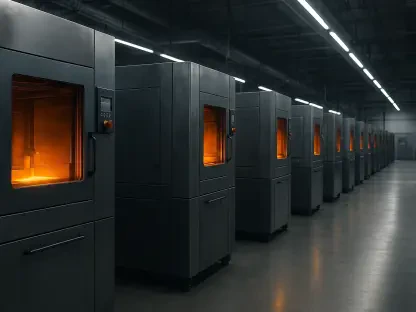
The manufacturing lifecycle for GRX-810 differs significantly from traditional alloys because its processing parameters are optimized for laser powder bed fusion. While legacy materials often require complex heat treatments to mitigate internal stresses caused by the printing process, GRX-810 is designed to handle these localized thermal spikes naturally. This reduces the risk of micro-cracking and delamination, which are common issues when trying to print complex geometries with alloys originally meant for forging.
Engineers utilizing Linde AMT’s TRUFORM™ GRX-810 benefit from a streamlined workflow that integrates seamlessly into existing additive manufacturing setups. The powder’s consistent particle size distribution ensures a stable melt pool, leading to more predictable mechanical properties across various build orientations. This level of optimization allows designers to push the limits of thin-walled structures and internal cooling channels that would be impossible to achieve with the more temperamental legacy superalloys.
Practical Application in Advanced Propulsion Systems
In the high-stakes world of hypersonic flight and Rotating Detonation Engines (RDEs), the limitations of material science often dictate the boundaries of performance. Dr. Timothy Smith and Dr. Paul Gradl have been instrumental in validating how GRX-810 enables architectures that were previously considered purely theoretical. By utilizing ODS alloys, researchers have successfully produced engine components that manage heat flux levels far beyond the capabilities of standard hardware.
Legacy alloys still have a place in auxiliary components or standard turbine parts where the thermal load is manageable. However, for the core of a next-generation propulsion system, the enhanced properties of TRUFORM™ GRX-810 provide a necessary safety margin. The ability to maintain usable strength at several hundred degrees higher than Inconel 718 allows for thinner, lighter designs that improve the overall thrust-to-weight ratio of the vehicle.
Engineering Challenges and Implementation Considerations
Transitioning from a laboratory-scale innovation to full industrial production involves overcoming significant hurdles in supply chain consistency and thermal management. While the technical advantages of GRX-810 are clear, the process of scaling up production of ODS powders requires precise control over oxide distribution. Industrial partners like Linde AMT have focused on ensuring that every batch of TRUFORM™ powder meets the rigorous standards required for aerospace certification, which is a more complex task than producing standard Inconel powders.
Furthermore, designing for hypersonic speeds introduces pressure and temperature variables that are difficult to simulate accurately. Engineers must account for the specific thermal expansion coefficients of GRX-810 when integrating it with other materials in a multi-component system. Moving from a proprietary NASA project to a commercially available product also requires a cultural shift within engineering teams, as they must learn to trust the higher performance benchmarks of a relatively new material over the familiar data of legacy alloys.
Strategic Selection and Commercial Outlook
The divergence between NASA’s GRX-810 and legacy alloys like Inconel 718 represents a clear evolution in material science for extreme environments. While legacy materials remain cost-effective for standard applications, TRUFORM™ GRX-810 emerged as the superior choice for high-performance propulsion and defense hardware. This alloy provided the thermal and structural leap required to make hypersonic travel and advanced detonation engines a reality rather than a research goal.
Choosing between these materials depended on the specific operational envelope and development timeline of the project. For hardware requiring maximum reliability under intense heat, the ODS alloy was the only viable path forward. The successful commercialization of these powders suggested that future aerospace designs would increasingly rely on AM-native materials to achieve goals in the energy and space sectors that were once thought impossible.