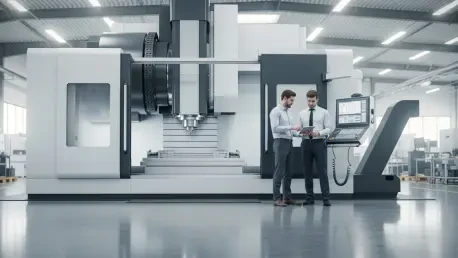

Kwame Zaire brings a wealth of experience to the table when it comes to the intersection of industrial hardware and digital security. As we navigate an era where portal milling machines are as much software-driven entities as they are massive mechanical structures, his insights into the shifting regulatory landscape and the practical application of “security-by-design” offer a roadmap for the future of smart manufacturing. This conversation explores how the industry is pivoting toward the 2027 compliance mandates, the transformative power of digital twins in reducing factory-floor risks, and the emerging role of artificial intelligence in safeguarding high-precision production environments. We delve into the necessity of protecting every networked IP address and how virtual simulations are stabilizing the most complex machining processes.
The Cyber Resilience Act and NIS 2 Directive represent a significant shift in manufacturing regulations. How are development cycles being restructured to meet the 2027 compliance deadline, and what specific steps ensure that security is treated as a core design element rather than a secondary feature?
The approach to manufacturing is undergoing a fundamental transformation because the 2027 deadline is no longer a distant target, but a looming milestone that dictates every current design decision. We have moved away from the era where cyber resilience was a voluntary “extra” to a reality where it is a regulatory obligation under the NIS 2 Directive and the Machinery Regulation (EU) 2023/1230. In practice, this means we are implementing a “security-by-design” philosophy that begins the moment a new portal milling machine is conceptualized on a digital whiteboard. We are restructuring our development cycles to include deep-dive software architecture reviews and rigorous documentation from the initial phase, ensuring that safety aspects are baked into the hardware’s DNA. This requires intense collaboration with external specialists and control manufacturers like Siemens and Heidenhain to bundle our regulatory know-how into practical, rugged solutions. By the time we reach the assembly stage, the security protocols are already as integral to the machine as the steel in its frame.
Every networked component with an IP address presents a potential entry point for unauthorized access. How do you segment internal networks to protect CNC systems and industrial PCs while assessing software vulnerabilities without hindering the high precision or dynamics of the machine?
Protecting a high-precision machine requires a surgical approach to networking because even a microsecond of lag can compromise the dynamics of a milling head moving at high speeds. We begin by analyzing the specific requirements of each machine configuration to create a segmented network architecture that isolates the main CNC and industrial PCs from the broader corporate network. This internal segmentation ensures that if malware were to strike an office computer, it wouldn’t have a direct path to the axes or drives of a million-dollar portal mill. We assess software vulnerabilities through clearly defined update processes that are tested in controlled environments to ensure they never interfere with the machine’s precision. It is a delicate balancing act where we minimize the digital attack surface while maintaining the raw performance and responsiveness that our customers expect for their most sensitive machining tasks.
Special machine construction involves unique configurations for milling heads, axes, and material handling equipment. How do you maintain consistent security standards across these custom topologies where mechanical differences must align with standardized cyber resilience protocols?
The challenge in special machine construction is that while every system might be based on a standard series, the actual execution is often a one-of-a-kind configuration of axes, channels, and peripherals. We handle this by creating a separate, individual topology for every machine based on its specific electrical plan and the mechanical equipment it carries, such as custom material handling units. Each axis requires precise parameterization, and because these mechanical differences directly influence the control behavior, our security protocols must be flexible enough to wrap around these unique setups. We don’t use a “one-size-fits-all” security patch; instead, we integrate cyber resilience into the existing structures of the machine’s safety functions. This ensures that even a highly specialized machine with a unique milling head remains compliant with standardized European resilience protocols without sacrificing its specialized purpose.
Virtual environments allow for collision checks and software adjustments to be performed before a machine even reaches the factory floor. How does this digital twin approach specifically reduce commissioning time, and could you share how simulation helps stabilize a process?
The digital twin acts as a “virtual parallel world” where we can push a machine to its limits and iron out software kinks without the risk of a physical crash or costly material waste. By performing collision checks and parameter adjustments digitally, we can drastically reduce the time a machine spends in the commissioning phase on the factory floor, as many of the most complex tests have already been successfully “cleared” in the virtual realm. I recall scenarios where simulation allowed us to identify subtle control errors in the drive synchronization of a portal mill before the first bolt was even tightened. This proactive stabilization means that by the time the customer sees the machine, the processes are already reliable and the operators have often already been trained on the digital model. It creates a sense of confidence and process reliability that traditional manufacturing simply cannot match.
Artificial intelligence is now being used to analyze error messages and assist with programming through internal databases. How do you ensure the transparency and traceability of these AI-generated solutions, and in what ways will AI accelerate the creation of digital twins?
We are currently exploring the potential of AI through pilot projects that leverage our internal knowledge databases to generate faster solutions for complex programming and error analysis. To maintain transparency, we treat AI as a sophisticated assistant rather than an autonomous decision-maker, ensuring that every proposed solution is traceable back to verified data and can be audited by our senior software developers. This human-in-the-loop approach is vital for maintaining the high standards of precision required in our industry. Looking forward, AI will significantly accelerate the creation of digital twins by automating the more recurring and tedious aspects of structural development. This means we can move from a concept to a fully functional virtual model much faster, allowing us to implement structural improvements and security patches with far greater efficiency.
When production parameters are falsified or data is lost, the consequences for high-precision manufacturing can be severe. What training protocols have been established to help staff identify these subtle digital threats, and how has the role of the machine operator evolved?
The modern machine operator has evolved from someone who simply monitors mechanical tool wear to a digital guardian who must understand the nuances of a networked system. We have established targeted training protocols that teach our staff to recognize the “silent” signs of a cyberattack, such as subtle changes in production parameters or unexplained data loss that could lead to catastrophic part failure. These threats are often far more dangerous than a visible mechanical breakdown because they can go unnoticed for long periods while producing faulty components for sensitive applications. Our staff is now trained to view the machine as a holistic digital-mechanical system, where maintaining the integrity of the data is just as important as maintaining the sharpness of the milling bit. This shift in mindset ensures that our operators are the first line of defense against both physical and digital disruptions.
What is your forecast for cyber resilience in machine tool manufacturing?
In the coming years, cyber resilience will shift from being a technical requirement to becoming the very foundation of investment security for the entire manufacturing sector. As machines become more networked and dependent on AI-driven automation, the ability to guarantee the integrity of every byte of data will be the primary differentiator between a technology partner and a simple equipment provider. We will see a future where the digital twin is not just a luxury for commissioning, but a live, constantly updated security shield that monitors the physical machine in real-time. Ultimately, the integration of simulation, AI, and robust security protocols will redefine precision, ensuring that large-scale machining remains safe, efficient, and resilient against an ever-evolving landscape of digital threats.