
The rhythmic precision of a modern factory floor usually conceals a chaotic dance of logistical variables where every vehicle following the next might require a completely different set of components and configurations. Traditionally, automotive assembly lines have prided themselves on “mixed-model” flexibility, allowing a red sedan to be followed immediately by a silver SUV with entirely different specifications. However, as General Motors pivots toward a future dominated by electric mobility, the company is finding that this historical obsession with variety can be a bottleneck for the sophisticated demands of battery-electric technology. By reimagining the production flow at its Fairfax Assembly and Stamping Site, the automaker is proving that sometimes the most advanced way to move forward is to simplify the path itself.
Beyond the Mixed-Model Maze: A New Era for the Fairfax Assembly Plant
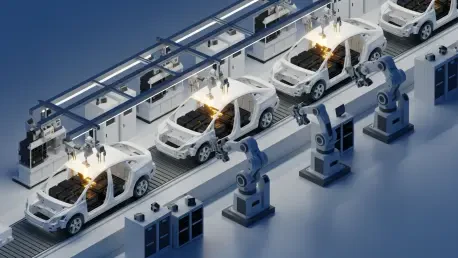
The traditional automotive assembly line, known for its constant juggle of different colors and trims, is undergoing a radical simplification at the Kansas City facility. Instead of a random assortment of vehicles, the line now focuses on the 2027 Chevrolet Bolt produced in unbroken sequences of 30 identical units. This shift from high-variance production to “batch building” represents a fundamental pivot in how the world’s largest automakers approach the transition to electric mobility. By grouping identical builds, the plant eliminates the split-second decision-making previously required for every vehicle, allowing for a more predictable and stable operational environment.
This transition marks a departure from the legacy systems that defined the internal combustion era, where consumer choice dictated a fragmented manufacturing process. At Fairfax, the focus has shifted toward refining the production of a single, high-demand EV model to ensure that every unit meets rigorous standards. The move away from the “mixed-model maze” is not just about convenience; it is a calculated effort to master the unique assembly requirements of the Bolt before expanding these efficiencies to other product lines.
Why Simplicity is the New Standard in Electric Vehicle Manufacturing
As the industry moves away from internal combustion engines, the complexity of vehicle architecture has skyrocketed due to advanced software and high-tech electrical systems. The “Winning with Simplicity” initiative addresses these challenges by prioritizing manufacturing stability over line variety. By reducing the number of variables on the factory floor, the company can protect build quality and lower the high costs typically associated with scaling new EV technology in a competitive global market. This strategy acknowledges that the real value in modern vehicles lies in their seamless software integration and battery performance rather than an endless array of minor hardware variations.
Furthermore, the initiative serves as a buffer against the volatility of the global supply chain, which often struggles to keep pace with hyper-customized production schedules. By standardizing the build process, the facility can optimize its inventory management and reduce the likelihood of line stoppages caused by missing specialized parts. This streamlined approach ensures that the assembly process remains fluid, allowing the company to maintain a steady output even as it navigates the complexities of a rapidly evolving technological landscape.
Breaking Down the Batch Build System: Color, Trim, and Consistency
The core of the Fairfax pilot program lies in its rigid adherence to a 30-unit sequence, where every vehicle in a batch shares the exact same trim—either LT or RS—and the same exterior paint color. This methodical approach has already produced measurable gains in paint shop efficiency and floor space utilization. By eliminating the need to purge paint lines between different colors, the facility significantly reduces chemical waste and energy consumption. This consistency allows the mechanical systems to operate at peak efficiency, ensuring that the finish on every Bolt is uniform and high-quality.
Most importantly, it allows workers to master a specific configuration before switching, which has led the plant to successfully meet its “electrical first-time quality” targets. This metric is a vital indicator of success for modern EVs, as the intricate circuitry and sensor arrays require absolute precision during installation. When technicians handle the same wiring harnesses and modules for an extended period, the margin for error shrinks. This focus on consistency ensures that the high-voltage systems powering the Chevrolet Bolt are reliable from the moment they leave the assembly line.
Leveraging Global Expertise and Leadership to Secure Market Dominance
This manufacturing shift is a direct reflection of CEO Mary Barra’s vision for a future defined by zero crashes, zero emissions, and zero congestion. By integrating the insights of leaders like Plant Director Michael Youngs and supply chain head Shilpan Amin, the company is using the Fairfax facility as a blueprint for its 160,000-employee global network. The success of this batch-build model was designed to be exported to facilities in China, Mexico, and Korea, ensuring that the company’s 2.8 million annual vehicle deliveries maintain high standards of technological sophistication. This top-down commitment to manufacturing excellence reinforces the brand’s position as a leader in the transition to sustainable transportation.
The leadership team recognized that staying competitive in the global market required a fundamental rethink of how vehicles are brought to life. By leveraging the expertise of engineering and sustainability departments, the company created a feedback loop that allowed the lessons learned at Fairfax to inform future facility upgrades worldwide. This collaborative environment ensures that the company does not just build cars, but also builds the most efficient systems for producing them, securing its dominance in an increasingly crowded electric vehicle marketplace.
Core Strategies for Scaling High-Volume EV Production
To replicate the success of the Fairfax pilot, the organization focused on a specific framework that harmonized hardware and software integration. This included synchronizing supply chain logistics to deliver parts in bulk for specific batches and reducing the friction caused by frequent tool changes on the line. By applying these streamlined strategies to high-volume models like the Silverado and the Bolt, the company ensured it could produce sophisticated electric powertrains at scale. This methodology allowed for a seamless transition where the complexity of the vehicle did not translate into complexity on the assembly line.
Looking ahead, the next phase of this strategy involved integrating modular battery designs that could be easily swapped within the batch-build framework. Engineers analyzed the data from the initial pilot to refine automated robotics, ensuring that future facilities could switch between different batches with even less downtime. By prioritizing the reduction of manufacturing “noise,” the company positioned itself to pivot quickly to new technologies without the need for costly, time-consuming overhauls. The focus remained on creating a resilient, adaptable production ecosystem that thrived on the principles of simplicity and precision.