
The 2021 cyber-attack on JBS Foods, which resulted in an $11 million ransom payment, served as an early warning that centralized digital infrastructure can become a catastrophic point of failure for global meat supplies. Since that pivotal moment, the global food and beverage sector has arrived at a dangerous crossroads where the pursuit of digital efficiency has significantly outpaced its security protocols. While the industry has historically focused on production speed and physical safety, a recent sophisticated ransomware attack on Australia’s Mackay Sugar has exposed deep-seated vulnerabilities that threaten the stability of regional economies. This incident served as a wake-up call, proving that in an increasingly interconnected global economy, a single digital breach can jeopardize national food security. The shutdown at Mackay Sugar highlighted a systemic paralysis that extended far beyond the company’s internal servers, affecting over a thousand independent growers and logistics providers. This “aftershock” effect demonstrates that the primary target of a cyberattack is rarely the only victim; rather, the failure of a central digital heartbeat can effectively cripple the economic health of an entire geographic area. As manufacturers continue to integrate advanced automation and cloud-based analytics, the distance between a corporate data breach and a physical supply chain collapse continues to shrink.
The Strategic Appeal and Interconnectivity of Food Production
Biological Clock: Leveraging Perishability
Cybercriminals are increasingly drawn to the food sector because of the unique psychological leverage provided by the biological clock. Unlike data in the financial sector, where frozen assets remain numerically intact, food products are inherently perishable and time-sensitive. Milk spoils, fresh crops deteriorate rapidly after harvest, and livestock cannot be held indefinitely without massive overhead costs and logistical complications. Attackers understand that the physical urgency of preventing massive inventory loss makes food manufacturers much more likely to pay a ransom quickly to restore operations. During peak seasons, such as a harvest or a high-demand holiday period, a delay of even forty-eight hours can result in a total loss of raw materials, effectively wiping out a year’s worth of profit. This forced urgency creates a high-pressure environment where executive leadership often prioritizes immediate restoration of services over lengthy forensic investigations, making the industry a prime target for extortion-based attacks that capitalize on the decaying nature of the product itself.
The pressure exerted by these biological timelines is further magnified by the global nature of just-in-time delivery models. When a major processing facility is forced offline, the ripple effects are felt instantly across international borders, as downstream retailers and distributors face immediate shortages. This interconnectedness means that a local production delay in one region can trigger price spikes and scarcity in markets thousands of miles away. Hackers have refined their timing to coincide with these peak periods of vulnerability, ensuring that their demands carry the maximum possible weight. The industry is no longer just fighting against code; it is fighting against the fundamental expiration dates of the global food supply. By weaponizing the natural lifecycle of food, malicious actors have found a way to bypass traditional security negotiations, turning every hour of downtime into a tangible, irreversible financial loss that few organizations are equipped to absorb without significant preparation.
Digital Integration: The Vulnerability of Connectivity
This vulnerability is significantly exacerbated by the “connective tissue” of modern factory operations, where production scheduling, inventory management, and quality control are tied to shared digital platforms. Modern food manufacturing relies on the convergence of Information Technology (IT) and Operational Technology (OT) to maintain high-volume output and precise safety standards. Criminals no longer need to compromise specialized industrial machinery or manipulate physical valves to stop production; instead, they target identity management systems and resource planning software. When these central nervous systems are compromised, the manufacturer loses the ability to verify the safety or composition of its products. Without a trusted digital environment to guarantee the accuracy of ingredient ratios or pasteurization temperatures, manufacturers are often forced to suspend all physical operations as a containment measure, even if their hardware remains functional.
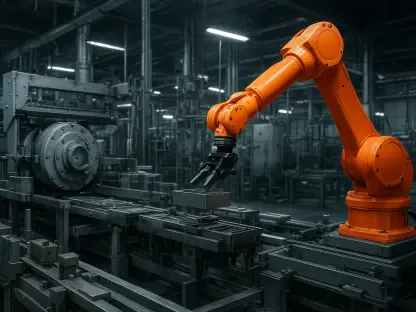
Furthermore, the expansion of the Industrial Internet of Things (IIoT) has created a vast attack surface that was virtually non-existent in previous decades. Sensors that monitor grain silo temperatures, automated sorting arms, and robotic packaging lines are now frequently connected to the same networks as corporate email and billing systems. This lateral connectivity allows a simple phishing email in the human resources department to potentially serve as an entry point for an attacker to pivot into the production environment. Once inside, they can deploy ransomware that encrypts the logic controllers responsible for the entire facility’s movement. The paradox of the modern food plant is that the very systems implemented to increase transparency and efficiency are the same tools being used to hold the facility hostage. As the industry moves toward greater automation, the reliance on a single, unified digital identity for all operations has turned the factory floor into a vulnerable node in a much larger, increasingly fragile global network.
Overcoming Structural Silos and Industry Misconceptions
Fragmented Governance: The IT and OT Divide
A primary obstacle to securing the food sector is the fragmented nature of its internal management, where responsibility for security is often siloed across disparate teams with vastly different priorities. Corporate IT departments are generally focused on data privacy and server uptime, while plant engineering groups prioritize physical safety and mechanical throughput. In many organizations, these two groups rarely communicate, leading to a situation where external maintenance suppliers and third-party vendors operate on separate platforms with no single department owning the end-to-end operational dependency. This lack of a unified defense strategy creates critical visibility gaps, allowing vulnerabilities in a minor third-party system to provide a lateral path into the core production network. For instance, a vendor’s remote access portal, used for routine troubleshooting of a packaging machine, might lack the multi-factor authentication required for corporate logins, creating an unmonitored back door for attackers to exploit.
Bridging this gap requires a fundamental cultural shift that integrates cybersecurity into the core of operational excellence. Engineering teams must begin to view digital security as a safety issue equivalent to physical machine guarding or sanitation protocols. Simultaneously, IT professionals must understand the unique constraints of the factory floor, where a standard security scan or an unannounced software patch could inadvertently crash a real-time production system. Organizations that have successfully navigated this divide often establish a cross-functional “Cyber-Production” task force that oversees the security of the entire lifecycle. By unifying these departments under a single governance framework, food companies can ensure that security updates are scheduled during planned maintenance windows and that every connected device, from a laptop in the office to a sensor on the assembly line, is accounted for and protected under a cohesive, organization-wide strategy.
Security Myths: The Fallacy of the Air Gap
These structural risks are further compounded by several persistent myths that leave facilities exposed to unnecessary danger. Many operators still believe their systems are “air-gapped,” meaning they are physically and logically isolated from the internet. This belief ignores the reality of modern cloud-based analytics, remote maintenance connections, and the frequent use of portable drives for software updates. In the current landscape, true air-gapping is almost impossible to maintain while remaining competitive, as manufacturers require real-time data to optimize energy usage and track supply chain logistics. When management operates under the false security of a supposed air gap, they often neglect fundamental protections like endpoint detection and network monitoring, assuming that an attacker cannot reach their systems. This overconfidence makes the eventual breach much more damaging, as there are no internal layers of defense once the perimeter is breached through a secondary connection.
Furthermore, there is a dangerous delusion that smaller or older facilities are too specialized or insignificant to interest professional hackers. In reality, modern ransomware groups use automated tools that indiscriminately scan the entire internet for any unpatched server or outdated access point. These attackers are not always looking for specific brands; they are looking for easy targets that will pay to avoid downtime. A small regional bottling plant or a medium-sized grain elevator is often more attractive to criminals than a global conglomerate because the smaller entity likely lacks a dedicated security team and sophisticated backup systems. The assumption that anonymity provides security is a relic of an era before the commoditization of cybercrime. Every facility, regardless of its size or the specific nature of its product, is a potential target in an automated campaign. Shifting the industry mindset toward a “zero-trust” model, where every connection is verified regardless of its origin, is essential for dismantling these myths and building a more resilient infrastructure.
Establishing a Framework for Operational Resilience
Technical Debt: Managing Legacy Systems
The reliance on legacy equipment presents a unique recovery crisis for the food industry, as many plants run on obsolete operating systems that are no longer supported or patched by their original developers. This technical debt creates a significant hurdle for incident response and disaster recovery. If a programmable logic controller (PLC) or a human-machine interface (HMI) running on an outdated version of Windows is wiped by ransomware, the company may find it nearly impossible to find compatible replacements or even the original source code required to restore functionality. The specialized nature of food processing equipment means that hardware can often last for twenty or thirty years, far outliving the digital systems that control them. This mismatch between physical longevity and digital obsolescence means that a single cyberattack can render a multi-million dollar production line useless, simply because the software required to run it no longer exists in a secure, restorable format.
To address this, organizations must move beyond simple IT backups and begin the process of comprehensive asset mapping and hardware redundancy. This involves identifying critical legacy components and developing “cold-standby” solutions that can be deployed if the primary digital systems fail. It also requires a more disciplined approach to system upgrades, treating the replacement of an old server as a critical capital investment rather than a minor IT expense. Companies that effectively manage their technical debt are those that prioritize the isolation of legacy systems from the broader network, using specialized firewalls and protocol converters to allow the machines to communicate without exposing them to the open internet. By acknowledging that legacy systems are a permanent fixture of the industrial landscape, the food sector can build specific defense-in-depth strategies that protect these vulnerable but essential assets from modern digital threats.
Critical Infrastructure: The Path to Future Defense
As the frequency and severity of attacks increased, stakeholders began to view major food processing facilities as critical national infrastructure rather than isolated private businesses. A prolonged outage at a major processor can destabilize markets and cause widespread shortages that affect dozens of other food categories, leading to social unrest. By recognizing the role of food production in national stability, the industry has justified the necessary investments in advanced security measures. This transition involved implementing rigorous network segmentation so that factory floors could continue to function independently even if the corporate network was compromised. Organizations moved beyond theoretical plans and began regularly testing their ability to restore industrial control systems from scratch, ensuring that their business continuity strategies were actually functional during a real-world crisis. This proactive testing allowed teams to discover bottlenecks in their recovery process before an actual attacker could exploit them.
Ultimately, the path toward a secure future required a shift toward a “secure-by-design” philosophy for all new manufacturing projects. This included the adoption of hardware-based security keys, encrypted communication between industrial devices, and the use of artificial intelligence to monitor network traffic for behavioral anomalies. The focus moved from simply keeping attackers out to ensuring that the facility could maintain a “minimal viable state” of production during an active breach. The industry also benefited from the creation of specialized information-sharing hubs where manufacturers could anonymously report threats and share indicators of compromise. By collaborating rather than competing on security, the food and beverage sector began to build a collective immunity to common ransomware variants. This holistic approach, combining technological innovation with a new understanding of the industry’s strategic importance, established a foundation for a more resilient and secure global food supply chain.
The food and beverage industry observed that traditional defensive perimeters were no longer sufficient to protect the complex, interconnected systems of modern production. Organizations realized that the most effective response to cyber threats involved a total integration of security protocols into the daily life of the factory floor. Moving forward from 2026 to 2028, the sector focused on implementing decentralized data architectures that prevented a single point of failure from halting an entire region’s output. Manufacturers also prioritized the training of specialized incident response teams who were equally comfortable with digital forensics and industrial engineering. By treating cybersecurity as a fundamental pillar of food safety, companies successfully reduced the impact of subsequent digital incursions. These efforts transformed the industry’s approach to technology, ensuring that future advancements in automation would be built upon a foundation of resilience and shared intelligence, rather than just speed and efficiency.