
The traditional automotive assembly line, a relic of the twentieth century, is finally facing a radical transformation as modular architectures redefine how we conceive of personal mobility and industrial efficiency. Unlike the rigid, monolithic structures of legacy manufacturing, modular electric vehicle production prioritizes flexibility and iterative design. This approach centers on a decoupling of the vehicle’s body from its functional core, typically referred to as a “skateboard” platform. By standardizing the chassis, manufacturers can adapt to shifting consumer preferences without the need for multi-billion-dollar retooling of factories. This shift has allowed agile startups to bypass the traditional barriers to entry, focusing on internal engineering prowess rather than massive capital expenditure.
This evolution is particularly evident in emerging markets, where localized, high-tech hubs are replacing the need for sprawling, centralized industrial complexes. These micro-factories or specialized plants focus on capital-efficient growth, emphasizing the development of proprietary technology before scaling up. The ability to build, validate, and certify a platform in a controlled, smaller environment ensures that when mass production begins, the product is already refined. This decentralized model not only reduces the carbon footprint of the manufacturing process itself but also empowers regional economies to become leaders in the global green energy transition.
Introduction to Modular EV Production and Proprietary Platforms
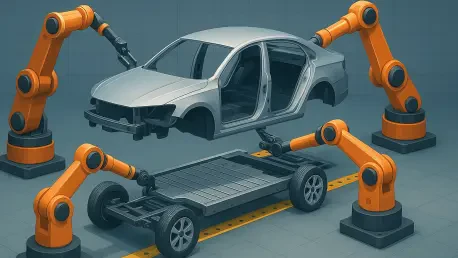
Modular manufacturing represents a fundamental departure from the fixed-path assembly lines that have dominated the industry since the days of Henry Ford. At its core, the methodology relies on a “skateboarding” architecture where the battery, motor, and drivetrain are integrated into a single, self-contained unit. This allows for interchangeable component systems, enabling a manufacturer to swap body styles or seating configurations without altering the underlying mechanical structure. Such versatility is essential in a market where technology evolves at a pace that traditional hardware cycles cannot match.
Specialized startups have leveraged this modularity to build internal capabilities that were once the sole domain of industrial giants. By focusing on proprietary platforms, these companies maintain full control over the electronic and mechanical integration, reducing reliance on third-party suppliers. This strategy has shifted the industry’s focus toward capital-efficient growth. Rather than sinking resources into massive infrastructure upfront, firms are prioritizing rigorous validation and certification. This ensures that the vehicle is not just a concept but a commercially viable product ready for the global stage.
Technical Architecture of Modern Modular Mobility
Proprietary Modular Platforms and Structural Integration
The structural integration of modern platforms, such as those utilized in the IN40 and VM4 models, showcases the power of unified chassis design. By using a single production line to output multiple vehicle iterations, manufacturers significantly reduce the time-to-market for new variants. The modular frame acts as a skeletal system that can be lengthened or reinforced depending on the intended use, whether it be a performance-oriented two-wheeler or a utility-focused delivery vehicle. This flexibility is the primary driver behind the reduced overhead costs seen in new-age manufacturing facilities.
AI-Ready Vehicle Control Units (VCU) and Connected Electronics
The centralized Vehicle Control Unit (VCU) serves as the “brain” of the modular system, replacing the dozens of independent electronic units found in traditional vehicles. This AI-ready architecture enables sophisticated energy management and real-time diagnostics, which are crucial for maintaining fleet efficiency. Because the VCU is integrated with the cloud, it facilitates over-the-air updates that can improve motor performance or safety features instantly. This level of connectivity transforms the vehicle into a living piece of software, capable of evolving long after it has left the factory floor.
Portable and Swappable Battery Ecosystems
Standardized power units are essential for overcoming the persistent limitations of fixed charging infrastructure. Modern modular systems often feature battery packs designed for portability and rapid swapping, allowing users to replace a depleted unit in seconds rather than waiting hours for a charge. This technical solution is particularly effective in high-density urban areas where private charging is often unavailable. By creating a swappable ecosystem, manufacturers ensure that their vehicles remain in constant motion, maximizing utility for both individual riders and commercial operators.
Emerging Trends in Industrialization and Process Discipline
The industry has moved decisively from a focus on pure research and development toward rigorous industrial-scale commercialization. This transition is marked by the adoption of global manufacturing standards, such as the Japanese 5S methodology. By implementing systems to sort, set in order, shine, standardize, and sustain, manufacturers ensure that quality remains consistent even as production volumes increase. This focus on process discipline is what separates successful industrial players from those who fail to move beyond the prototyping phase.
Capital efficiency has become the hallmark of successful growth models in the current landscape. Companies are now prioritizing the completion of the “Build → Validate → Certify” loop before attempting mass expansion. This disciplined approach minimizes the risk of large-scale recalls or production bottlenecks. Consequently, the focus has shifted toward creating repeatable manufacturing blueprints that can be deployed across different geographies with minimal overhead, ensuring that “Made for the World” is a tangible reality rather than just a slogan.
Real-World Applications and Global Market Positioning
Modular two-wheelers are seeing rapid deployment in dense urban environments, where their small footprint and agile handling make them ideal for personal commuting. The ability to customize the modular frame has also opened up significant opportunities in the last-mile delivery sector. Fleet operators can quickly adapt vehicles for cargo use, adding specialized racks or storage compartments that integrate directly with the chassis. This level of fleet customization allows businesses to optimize their logistics operations with unprecedented precision.
Indian manufacturers, in particular, are leveraging localized production to secure a dominant position in the global export market. By combining low-cost manufacturing with high-end modular technology, these companies are successfully competing with legacy brands in Europe and Southeast Asia. The focus on localized supply chains for components like motors and controllers further protects these manufacturers from global trade volatility. This strategic positioning has turned regional manufacturing hubs into vital nodes of the international electric vehicle supply chain.
Technical Hurdles and Market Obstacles
Despite the advantages of modularity, the industry faces significant challenges in supply chain localization, especially regarding high-grade electronic components and rare-earth magnets. Procuring these materials often involves navigating complex geopolitical landscapes and fluctuating commodity prices. Additionally, while modularity offers flexibility, it can introduce technical limitations in terms of weight. Every connection point or interchangeable interface adds a small amount of mass, which can impact the overall range and efficiency of small-scale electric vehicles if not managed through advanced materials.
Regulatory hurdles also remain a major obstacle, as battery safety standards and vehicle certifications vary significantly across different jurisdictions. A modular vehicle that is certified for one market may require extensive testing to meet the thermal stability or structural requirements of another. Balancing the desire for a “universal” modular frame with the specific safety mandates of diverse global regions requires a sophisticated understanding of international law and engineering. Overcoming these barriers is essential for any manufacturer aiming for a truly global presence.
Future Outlook and Long-Term Technological Impact
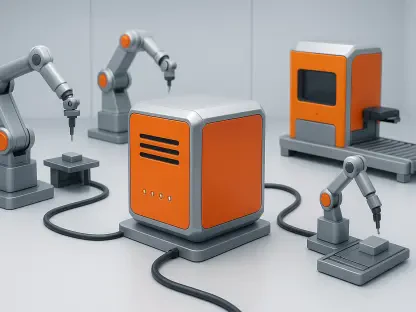
The potential for fully automated micro-factories represents the next frontier in modular manufacturing. These setups could be replicated globally with minimal manual labor, using robotic cells that can be reprogrammed for different vehicle models overnight. This would further reduce the cost of entry for electric mobility, making high-quality transportation accessible to a broader demographic. Furthermore, breakthroughs in solid-state battery technology are expected to be integrated into existing modular frames from 2026 to 2028, offering higher energy densities without requiring a total redesign of the chassis.
Long-term, the shift toward modularity will fundamentally alter the automotive workforce. As manufacturing transitions from mechanical assembly to software-integrated systems, the demand for traditional assembly-line skills will diminish in favor of expertise in electronics, AI, and systems engineering. This evolution will necessitate a massive reskilling effort across the industry. However, it also promises to create a more resilient and innovative workforce that is better equipped to handle the complexities of the modern green economy.
Summary and Assessment of Modular EV Evolution
The transition toward modularity demonstrated that the barrier to entry for high-performance electric mobility was lower than previously assumed. Industry leaders prioritized architectural validation over raw volume, proving that a disciplined methodology functioned as an effective safeguard against the volatility of emerging markets. This shift signaled that the success of transportation depended less on massive steel mills and more on the elegant integration of software and swappable power. The modular approach provided a blueprint for how a startup could mature into a fully integrated industrial manufacturer without the traditional waste associated with legacy production.
The next logical step involved the integration of cross-industry battery standards to ensure that modular units from different manufacturers could utilize the same swapping infrastructure. Furthermore, the adoption of circular economy principles became the primary metric for modular success, as components were designed for automated disassembly and recycling. This evolution moved the industry toward a state where the vehicle was no longer a static product but a dynamic, sustainable asset. The era of modularity successfully bridged the gap between technological innovation and mass-market affordability.