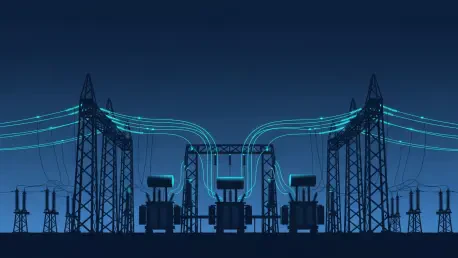

The rapid integration of internet-connected technologies into municipal utilities has created a paradox where convenience and remote accessibility directly compromise the physical safety and reliability of vital public services. In current times, the focus of international cyber warfare has undergone a profound transformation, moving away from simple intellectual property theft and toward the active manipulation of the physical environment. This shift is particularly evident in the strategic targeting of the United States, where critical infrastructure sectors like water, energy, and government services are now the primary front lines of geopolitical conflict. The stakes are no longer limited to the loss of digital data or financial records; instead, they encompass the potential for catastrophic failure in the systems that manage the most fundamental needs of American citizens. As these threats evolve, the boundary between digital and physical security continues to blur, forcing a nationwide re-evaluation of how essential services are protected against foreign actors.
National Security Warnings: The Actor Profiles
Federal Alerts: Addressing Targeted Infrastructure
In July 2026, a high-level coalition including the Federal Bureau of Investigation, the Cybersecurity and Infrastructure Security Agency, and the National Security Agency issued a joint advisory to address this growing threat. The report warns that Iranian groups are specifically targeting internet-facing hardware from major global companies like Siemens and Rockwell Automation, which are essential for industrial processes. These attacks are not just theoretical or speculative; they have already led to real-world disruptions in municipal services and the management of local infrastructure across several states. The government’s alert serves as a critical call to action for utility operators, emphasizing that the time for passive observation has passed and immediate defensive measures are required. By identifying specific hardware vulnerabilities, the advisory provides a roadmap for defenders to prioritize their patching and segmentation efforts before more permanent or widespread damage occurs to the national grid.
Infrastructure Safety: Assessing Global Hardware
The high-level warnings issued by federal agencies focus heavily on the extreme vulnerability of operational technology used throughout the water and energy sectors in the United States. Because these complex systems are often connected to the internet to facilitate remote management and monitoring, they provide an exceptionally broad and accessible attack surface for sophisticated foreign adversaries. Many utility companies utilize cellular modems and satellite links that, while efficient for operations, often lack the robust encryption and access controls necessary to deter state-sponsored hackers. Consequently, devices that were never intended to be accessible to the public are now visible on the open internet, leaving them open to probing and exploitation by malicious actors. This exposure highlights a fundamental disconnect between the engineering requirements of industrial systems and the security realities of the modern internet age, necessitating a shift toward air-gapped or more strictly controlled environments.
Advanced Persistent Threats: Identifying Key Groups
The primary groups behind these sophisticated operations are well-funded teams such as CyberAv3ngers, which maintains direct ties to the Islamic Revolutionary Guard Corps. These entities are not casual hackers but rather highly organized military or intelligence units that possess the technical skills necessary to penetrate and disrupt complex industrial networks. Their operations are characterized by a high degree of persistence, often remaining within a network for extended periods to gather intelligence before launching a disruptive strike. By leveraging state resources, these groups can conduct extensive research into the specific hardware and software configurations used by American utilities, allowing them to tailor their exploits for maximum impact. The involvement of the IRGC indicates that these cyber activities are an extension of traditional statecraft, used to project power and exert influence without the need for direct military confrontation. This level of professionalization makes them a formidable threat to national security.
Strategic Goals: Understanding Political Motivations
The motivations driving these sophisticated attacks are deeply rooted in geopolitical tensions and a persistent desire to retaliate against the United States and its regional allies. Other active entities, such as the group known as Handala and various operatives from the Iranian Ministry of Intelligence, participate in these campaigns to achieve specific strategic objectives. These groups are highly coordinated and often utilize encrypted communication platforms like Telegram to share tools, discuss successful exploits, and plan future operations against American targets. By combining open-source research with automated scanning techniques, they can identify and target vulnerable hardware with surprising speed and efficiency. Their goal is often to create a sense of insecurity among the American public by demonstrating the ability to interfere with essential services at will. This psychological component of cyber warfare is just as significant as the physical disruption, as it undermines trust in the government’s ability to protect critical infrastructure.
Technical Exploitation: The Observed Impacts
Technical Vectors: Analyzing Network Weaknesses
From a technical perspective, the attackers focus their efforts on finding specific devices like programmable logic controllers that are exposed through insecure communication channels. These controllers are the brains of industrial machinery, responsible for managing everything from water pressure in municipal pipes to the flow of electricity in a local substation. Attackers search for internet-facing hardware that relies on insecure cellular modems or satellite links, which often fail to hide sensitive management ports from public view. By targeting the specific communication protocols used by these industrial devices, the attackers can bypass traditional security layers and gain unauthorized access to the core logic of the system. Once inside, they have the ability to change the operational settings that control how machinery functions in the physical world. This capability allows them to induce mechanical failure, contaminate water supplies, or cause power surges that can physically damage the equipment beyond immediate repair.
Security Failures: Exploiting System Deficiencies
A significant number of these breaches are successful not because of novel zero-day exploits, but due to basic security failures such as the continued use of default passwords on critical hardware. When industrial devices are shipped from the manufacturer, they often come with standard administrative credentials that are easily found in public manuals and online databases. If operators fail to change these passwords before connecting the hardware to the internet, they are essentially leaving the door open for any motivated attacker. Once the adversaries have obtained administrative access, they often move to wipe the device’s firmware, which renders the hardware completely useless and necessitates a physical replacement. Furthermore, the attackers frequently create hidden accounts within the system to ensure persistent access, allowing them to return even if the initial point of entry is discovered and closed by administrators. This lack of basic credential hygiene represents a massive, preventable vulnerability in the nation’s defense.
Documented Incidents: Learning from Recent Breaches
The real-world consequences of these pervasive vulnerabilities have been clearly demonstrated in several documented cases where water utility controllers were breached by foreign actors. In these instances, the unauthorized access led to immediate operational issues, requiring manual intervention to prevent damage to the community’s water supply and infrastructure. Furthermore, recent security research has identified thousands of other American industrial controllers that remain visible on the public internet, making them prime targets for similar exploitation. These events confirm that the threat posed by Iranian state-sponsored actors is a current and pressing reality rather than a hypothetical scenario for the future. The ability of a foreign adversary to reach into small, rural utility systems just as easily as large metropolitan networks highlights the universal nature of this risk. These incidents serve as a stark reminder that even the most localized services are now interconnected components of a larger, vulnerable national ecosystem.
Protective Measures: Enhancing National Resilience
In response to these pervasive threats, utility operators and government agencies moved to implement more robust defensive strategies to safeguard essential public services. Organizations prioritized the implementation of multi-factor authentication and enforced strict credential management policies to eliminate the risk posed by default passwords. Administrators also worked to isolate critical operational technology from the public internet, utilizing virtual private networks and secure gateways to manage remote access safely. Public and private partnerships fostered a more transparent environment for sharing threat intelligence, which allowed for faster identification and mitigation of active campaigns. These collective efforts successfully improved the resilience of the national grid and water systems, though the need for continuous vigilance remained a top priority for security professionals. By treating cybersecurity as a fundamental component of infrastructure maintenance, the United States established a more proactive stance against foreign interference.