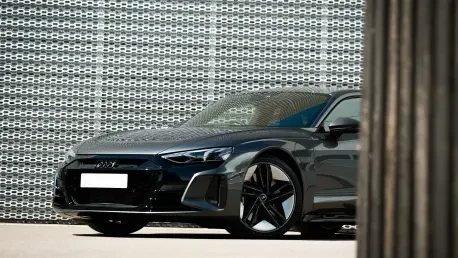

The 2026 A2 e-tron adopts a one-box silhouette that measures one hundred and seventy inches in length, balancing heritage design with modern proportions. This sudden arrival has stunned the industry, as Audi managed to pivot from a conceptual reveal to full-scale assembly at the Ingolstadt facility in just a matter of days. This accelerated timeline was achieved by slashing the typical development-to-production cycle by twenty-one months, a feat that sets a new industry standard for responsiveness in a crowded electric vehicle market. By leveraging advanced manufacturing logic, the brand has revived a nameplate that was once considered ahead of its time. The original A2 was a marvel of aluminum engineering, and its electric successor continues that tradition of innovation by focusing on urban efficiency and high-tech integration. This transition signifies more than just a new product launch; it represents a fundamental shift in how established automakers can compete with agile newcomers by streamlining internal processes and embracing a digital-first approach to vehicle assembly.
Engineering and Performance Capabilities
The Versatile MEB Architecture: Power and Range
Built upon the Volkswagen Group’s modular MEB platform, the A2 e-tron benefits from a shared architecture that underpins a wide range of successful electric vehicles, including the Q4 e-tron and international models. This structural foundation allows for three distinct battery configurations tailored to different consumer needs. The entry-level variant utilizes a 52 kWh battery pack, while mid-range versions offer 61 kWh. For those prioritizing long-distance travel, a flagship 84 kWh gross capacity unit provides substantial energy density. Charging efficiency is also a cornerstone of its technical appeal, featuring a peak DC fast-charging rate of 183 kW. This allows drivers to replenish the battery from ten to eighty percent in under thirty minutes. Range figures on the WLTP cycle start at 262 miles for the base model and scale up to 401 miles for the high-end variant, positioning the car at the forefront of its segment by balancing weight and aerodynamics for maximum efficiency.
Drivetrain Dynamics: Agility and Performance
In a strategic move to prioritize efficiency and city maneuverability, Audi has opted for a strictly rear-wheel-drive configuration at launch. While the brand is synonymous with its “quattro” systems, the decision to use a single-motor setup reduces weight and complexity, which is vital for an urban vehicle. Power delivery is stratified, beginning with a 168-horsepower motor that achieves a sixty-two mph sprint in 8.8 seconds. For enthusiasts seeking more spirited performance, higher outputs of 187 hp and 228 hp are available, with the latter dropping the sprint time to just 5.7 seconds. The performance flagship delivers a robust 321 hp, providing a punchy experience rarely seen in the compact segment. Top speeds are capped at 99 mph for entry models and 124 mph for higher-output versions to maintain battery health. This tiered approach allows the company to capture a broad market, from efficiency-minded commuters to those desiring more dynamic electric mobility.
Design Philosophy and Global Market Strategy
Evolutionary Aesthetics: Heritage and Technology
The visual identity of the A2 e-tron is a masterclass in evolutionary design, paying homage to the original model’s shape while introducing sleek, modern elements. Most notably, the iconic split-glass rear window has been retained, serving as a signature cue that bridges the past and the present. The exterior features ultra-slim LED lighting and a sporty rear diffuser to optimize airflow. Inside, the cabin embraces a minimalist aesthetic with an 11.9-inch digital cluster and a 12.8-inch central infotainment screen. Practicality is enhanced by moving the gear selector to the steering column, freeing up space for wireless charging pads. An innovative magnetic mounting system is located throughout the cabin to securely hold various accessories. Despite its compact size, the vehicle offers fourteen cubic feet of cargo space and a functional front trunk. These features ensure that the A2 e-tron remains a practical and tech-forward choice for the modern urban driver.
Market Availability: Pricing and Regional Focus
Positioned as the premium entry point for the electric lineup, the A2 e-tron starts at approximately 38,200 euros in Germany. This competitive pricing aims to capture buyers looking for a high-quality electric alternative to traditional hatchbacks. In the United Kingdom, order books are expected to open soon, with initial deliveries scheduled for the following year. While the European market is set to embrace the model, the outlook for North America remains uncertain, as current reports indicate no plans for a United States release due to the regional preference for larger SUVs. For the brand’s leadership, this model represents a vital component of the “renewal” strategy, demonstrating that high-tech manufacturing in Germany can successfully meet the demands of modern mobility. The vehicle serves as a concrete example of how to combine heritage with forward-looking engineering to maintain a competitive edge in a rapidly evolving global automotive landscape.
Strategic Implementation: Navigating the Electric Shift
The successful launch of the A2 e-tron demonstrated that established automotive manufacturers could drastically reduce development cycles through the strategic application of artificial intelligence and modular hardware. By integrating the new model into existing production lines and repurposing hundreds of robotic units, the company lowered its capital expenditure while maintaining a high level of precision. This operational shift provided a blueprint for future vehicle rollouts, showing that agility is possible even within large-scale industrial environments. Potential buyers should now consider the tiered battery and power options to best suit their specific range requirements and daily driving habits. Furthermore, industry observers should watch how these streamlined manufacturing processes are applied to larger, more complex models in the future. As the brand continued its renewal, the lessons learned from this rapid assembly project informed the next generation of electric luxury cars, establishing a new methodology for industrialization.