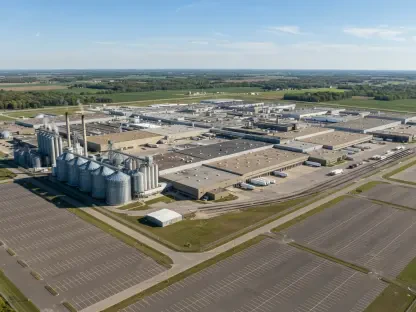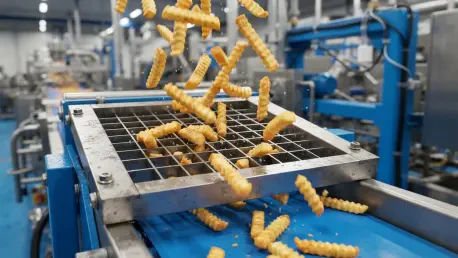

A history rooted in the canning era and the frozen food revolution provides the foundation for FAM STUMABO’s current leadership in high-tech industrial cutting. As the global demand for frozen potato products continues to climb, the industry faces a significant challenge in maintaining supply chain stability. To meet this pressure, the company recently inaugurated its third production facility, a move that effectively doubles its capacity for manufacturing high-precision French fry blades. This strategic growth is not merely a response to volume but a deliberate effort to eliminate bottlenecks that have historically plagued the sector. By securing a reliable flow of replacement blades, the Belgian manufacturer ensures that processing plants can maintain peak performance without the fear of prolonged downtime. This expansion allows for a more flexible approach to production, enabling the company to pivot between high-volume standard orders and complex, custom-engineered designs for specific industrial clients.
Navigating the Evolution: Specialty Potato Cuts
The modern potato processing landscape is shifting away from traditional straight-cut fries toward a diverse array of specialty shapes that offer higher market value. Consumers are increasingly drawn to novelty and texture, which has spurred a massive surge in demand for crinkle cuts, deep-ridged wedges, and innovative “scoop” fries designed for dipping. This trend places an immense burden on blade manufacturers to develop complex geometries that can withstand the high-velocity impact of hydrocutting systems. FAM STUMABO has responded by refining its metallurgical processes to ensure that even the most intricate blade designs maintain their structural integrity over millions of cycles. This transition toward diversification represents a fundamental change in how processors view their output, moving from a commodity-based mindset to one centered on product differentiation. By providing the tools necessary for these unique cuts, the company enables its partners to capture premium market segments.
Beyond the aesthetic appeal of specialty shapes, the industry is increasingly focused on maximizing operational efficiency and improving overall yield. Fluctuating raw material costs mean that every ounce of potato must be utilized effectively, making cutting precision more critical than ever. Inconsistent cuts or dull blades lead to excessive starch loss and irregular product sizes, which ultimately reduce the profitability of a processing line. The new capacity at the Belgian facility specifically addresses these concerns by providing blades with enhanced durability and superior edge retention. These advancements mean that processors can run their lines longer between maintenance intervals, significantly reducing the total cost of ownership. By integrating sustainability through longevity, the company helps processors minimize waste while maintaining the high-speed throughput required for global distribution. This focus on efficiency ensures that the scaling of production does not come at the expense of quality.
Implementing Innovation: Automation and Laser Systems
The technological infrastructure within the new facility marks a significant departure from traditional manufacturing methods, utilizing a hybrid model of automation. Fully automated lines have been dedicated to the production of high-volume, standard hydrocutting blades, which allows the company to maintain a massive inventory of replacement parts for the most common cutting systems. This automation ensures that tolerances are kept within microns, providing a level of consistency that manual processes simply cannot match. Meanwhile, semi-automated systems are employed for small-batch runs and highly specialized blade designs that require a more tailored approach. This dual-track manufacturing strategy provides the agility needed to serve both multinational corporations and smaller, boutique processors simultaneously. By balancing these two approaches, the company can rapidly scale its output without sacrificing the flexibility that has made it a leader in the industrial cutting field.
Central to this technological leap is the integration of state-of-the-art laser cutting systems and advanced forming machines capable of handling high-grade stainless steel with extreme precision. These tools allow for the creation of intricate three-dimensional blade geometries that were previously considered too difficult or expensive to manufacture at an industrial scale. The expansion also broadens the company’s focus beyond standard fry blades, bolstering the production of circular and cross-cut blades used in a wide variety of vegetable processing applications. This diversification ensures that the company remains a central hub for all industrial food-cutting needs, not just those related to the potato sector. The ability to form complex shapes with such accuracy means that processors can experiment with new product designs, knowing that the manufacturing capability exists to support them. As these technologies continue to evolve, the barrier between creative product development and mass manufacturing continues to shrink.
Synergistic Development: Engineering and Human Expertise
While the investment in advanced hardware is substantial, the success of the expansion relies heavily on the specialized knowledge of the company’s engineering teams. The partnership between FAM and STUMABO, which began nearly three decades ago, created a unique synergy where blade design and machine engineering are treated as a single, integrated discipline. This holistic approach means that blades are not developed in a vacuum; they are optimized for the specific mechanical stresses and hydraulic pressures of the machines they inhabit. Engineers work closely with food processors to solve complex cutting challenges, such as reducing breakage in fragile potato varieties or optimizing the flow of water in hydrocutters. This deep understanding of the intersection between metallurgy and mechanical engineering allows the company to innovate at a pace that keeps them ahead of market trends. Human insight remains the primary driver of these advancements, ensuring that technology is applied in ways that provide real value.
The sheer scale of the company’s portfolio, which includes over 3,500 active blade types and 75 different dimensions for square-cut fries alone, illustrates the complexity of modern industrial cutting. Managing such a vast array of components requires a sophisticated organizational structure and a commitment to long-term client partnerships. By operating as both a high-volume supplier and a confidential development partner, the company helps individual processors maintain a competitive edge through exclusive blade designs. These proprietary cuts are often developed under strict non-disclosure agreements, allowing processors to launch unique products that cannot be easily replicated by competitors. This level of service requires a high degree of trust and a shared vision for the future of food processing. As the industry moves toward 2027 and beyond, the ability to provide both standard reliability and exclusive innovation will remain a key differentiator. The expanded production capacity ensures that these collaborative efforts can continue to grow.
Strategic Decisions: Future Industry Growth
The decision to nearly double production capacity served as a definitive response to the heightening demands of the global food processing market. By establishing a third facility, the company effectively eliminated existing supply chain vulnerabilities and provided a stable foundation for international growth. This move was not merely about increasing numbers; it was a comprehensive overhaul of how industrial cutting tools were designed and delivered to a global audience. The integration of advanced automation alongside specialized human expertise ensured that the precision of the blades met the rigorous standards of modern hydrocutting technology. Furthermore, the commitment to developing proprietary shapes allowed processors to move beyond commodity products and explore high-margin specialty items. This strategic investment successfully addressed the immediate needs of the industry while paving the way for the next generation of food-cutting innovations that defined the sector’s trajectory.
Stakeholders who prioritized the early adoption of these advanced cutting solutions found themselves better positioned to handle the fluctuations of the potato market and rising operational costs. Evaluating existing cutting heads for compatibility with new high-precision geometries became a vital strategy for maintaining competitive throughput in a rapidly changing retail environment. Moving forward, processors looked toward collaborative design sessions to establish unique product identities that resonated with evolving consumer preferences. This proactive stance on equipment maintenance and design innovation secured long-term stability and fostered a culture of continuous improvement across the supply chain. By aligning manufacturing capabilities with strategic market goals, the company demonstrated that scaling production was as much about foresight as it was about physical expansion. These actions provided clear pathways for future success, ensuring that the industry remained resilient in the face of shifting global demands.