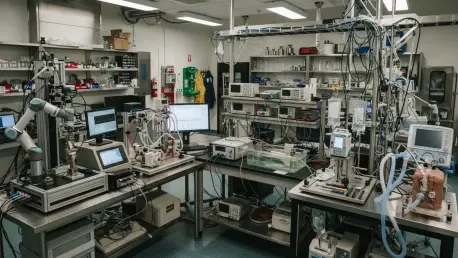

Brazil’s publication of recognized technical standards on September 1, 2026, provided a clearer roadmap for manufacturers navigating the safety requirements of RDC 848/2024. This regulatory development serves as a microcosm of a much larger global shift toward standardized, rigorous validation processes that are currently redefining the medical device landscape. As the industry moves through 2026, the reliance on independent laboratory testing, inspection, and certification services has transitioned from a supplementary luxury to an absolute operational necessity. The market, which reached a valuation of USD 11.3 billion just a year ago, is now adapting to an environment where innovation moves faster than traditional internal testing capabilities can manage. Manufacturers are increasingly pivoting toward specialized third-party experts to handle the complex scientific evaluations required for modern compliance. This trend is driven by the growing sophistication of medical technology, which now frequently integrates advanced materials, embedded software, and wireless connectivity into devices that were once purely mechanical. Consequently, the role of the testing provider has evolved into a strategic partnership, ensuring that every product, from a basic diagnostic kit to an AI-enhanced surgical robot, meets the stringent performance benchmarks demanded by global health authorities.
The Financial Outlook: Mapping Value Over a Decade of Growth
The economic trajectory of the medical device testing sector demonstrates a resilient and consistent upward trend, with market valuations expected to reach USD 12.3 billion by the end of 2026. This growth is not merely a reflection of increased manufacturing volume but is also a direct result of the rising complexity of individual test protocols. Over the next ten years, the market is forecast to expand to USD 28.1 billion by 2036, representing a massive absolute dollar opportunity of USD 15.8 billion in new value. This expansion is characterized by a Compound Annual Growth Rate of 8.6%, a figure that highlights the non-discretionary nature of these services. Regardless of broader economic fluctuations, the legal requirement for safety validation remains constant, providing a stable foundation for testing laboratories and certification bodies. As health systems across the globe demand more data-driven proof of efficacy and safety, the financial investment in pre-market and post-market testing continues to grow as a percentage of total product development costs.
This financial growth is further bolstered by the entry of new players and the expansion of existing service lines into emerging technological niches. Between 2026 and 2036, the industry is seeing a significant redistribution of revenue toward high-end analytical services such as chemical characterization and electromagnetic compatibility testing. These advanced services command higher margins than basic physical testing, reflecting the specialized equipment and doctoral-level expertise required to execute them. Furthermore, the recurring nature of post-market surveillance testing ensures a steady stream of revenue long after a device has initially launched. As manufacturers seek to avoid the catastrophic financial and reputational costs of product recalls, they are preemptively investing in more frequent and detailed safety assessments. This proactive approach to risk management has transformed the testing market from a final hurdle in the development process into a continuous lifecycle requirement that sustains long-term market vitality and investor confidence.
Regulatory Evolution: Aligning Global Standards for Safety
The regulatory landscape underwent a definitive shift on February 2, 2026, when the United States Food and Drug Administration officially implemented the Quality Management System Regulation. By incorporating the international standard ISO 13485:2016 by reference, the FDA has effectively harmonized the primary quality requirements for the American market with global norms. This alignment reduces the administrative burden for international firms entering the U.S. while simultaneously raising the bar for domestic manufacturers who must now adhere to more rigorous documentation and risk management practices. Furthermore, the partial recognition of the sixth edition of ISO 10993-1 in May 2026 has fundamentally changed how biological evaluations are conducted. Instead of simple checkbox testing, manufacturers must now provide a holistic biological safety evaluation that integrates material characterization with existing clinical data. This transition requires a level of scientific depth that many firms can only achieve through deep collaboration with specialized testing facilities that possess the necessary toxicological expertise.
In parallel, the European Union has continued to tighten its oversight through the phased implementation of the Medical Device Regulation. The mandatory activation of EUDAMED modules in May 2026 has introduced a new level of transparency and traceability across the continent. These digital tools allow regulators to monitor the performance of devices in real-time, often triggering the need for additional testing if adverse trends are identified. Moreover, the introduction of Commission Implementing Regulation (EU) 2026/977 has established uniform quality management rules for notified bodies, ensuring that the certification process is consistent regardless of where a manufacturer applies. This move addresses previous criticisms regarding the variability of assessments between different European member states. As these regulatory frameworks become more interconnected, the demand for testing services that can satisfy multiple jurisdictions with a single set of data has reached an all-time high, favoring large, multi-national testing conglomerates with global footprints.
Technological Complexity: The Convergence of Electronics and Biology
The modern medical device is no longer a static tool but a dynamic system that often combines biological interfaces with sophisticated electronic components. This convergence has created a significant challenge for traditional testing frameworks, necessitating the development of entirely new validation methodologies. For instance, the rise of connected wearable devices and remote patient monitoring systems requires rigorous testing for wireless coexistence and electromagnetic compatibility. In 2026, these devices must prove they can function accurately in environments crowded with other signals, such as home Wi-Fi networks or busy hospital wards. Testing laboratories have responded by investing heavily in anechoic chambers and simulation software that can replicate these complex environments. This technical evolution ensures that “smart” devices do not suffer from interference that could lead to diagnostic errors or life-threatening malfunctions in critical care settings, thereby maintaining the integrity of the burgeoning digital health ecosystem.
Beyond the electronic components, the materials used in medical devices have become increasingly advanced, incorporating bio-resorbable polymers and antimicrobial coatings. Testing these materials requires a level of chemical characterization that was unheard of a decade ago. Analytical techniques such as high-resolution mass spectrometry and nuclear magnetic resonance are now standard requirements for evaluating the potential for leachable and extractable substances. These tests are essential to ensure that devices do not release harmful chemicals into the patient’s body over long periods of use. The scientific complexity of these evaluations means that testing labs are now operating more like high-level research institutions than simple service providers. This shift has created a barrier to entry for smaller labs, as the capital investment required for such advanced equipment is substantial. As a result, the market is seeing a consolidation of high-end testing services into a few specialized centers of excellence that can provide the necessary scientific rigor for next-generation medical materials.
Market Segmentation: Defining the Drivers of High-Volume Growth
Within the diverse medical device testing market, the Class II device segment continues to serve as the primary engine for revenue generation, holding a 51.4% market share in 2026. These moderate-risk devices, which include essential equipment like infusion pumps, diagnostic imaging systems, and patient monitors, represent the bulk of the medical technology industry’s output. Because these products are manufactured in high volumes and require frequent design iterations, they generate a constant demand for performance and safety testing. The nature of Class II devices often involves a mix of mechanical, electrical, and software components, each requiring its own specific validation path. This multidisciplinary requirement makes the segment particularly lucrative for testing providers who can offer a comprehensive suite of services under one roof. As healthcare systems globally seek to modernize their equipment fleets, the volume of Class II devices entering the market is expected to remain high, ensuring steady work for the testing and certification sector.
Laboratory testing itself remains the most dominant service type, accounting for 48.3% of the total market share this year. This dominance is explained by the iterative development process where even minor changes to a device’s material supplier or manufacturing process can trigger a requirement for new test data. Unlike one-time certifications, laboratory testing is an ongoing activity that persists throughout the entire commercial life of a product. In contrast, the biocompatibility testing sub-segment has emerged as the most valuable niche within the laboratory category. With a 28.4% share of the testing market, biocompatibility is now driven by the strict requirements of ISO 10993-1, which emphasizes a risk-based approach to biological safety. This means that instead of a standard battery of animal tests, manufacturers must now engage in sophisticated in vitro studies and chemical analyses. The move toward reducing animal testing in favor of more precise chemical and cellular evaluations is a major trend in 2026, aligning with both ethical considerations and the need for more predictable scientific outcomes.
Regional Dynamics: The Engines of Global Testing Capacity
The United States maintains its position as the largest and most influential market for medical device testing, fueled by a massive domestic manufacturing base of over 29,000 registered establishments. The U.S. market is currently growing at a 10.0% Compound Annual Growth Rate, a figure driven by a relentless pace of innovation in the fields of surgical robotics and diagnostic AI. The recent shift to the Quality Management System Regulation has sparked a wave of internal audits and gap analyses among American firms, many of whom are turning to external consultants and labs to ensure they meet the new standards. This demand has pushed many domestic laboratories to their capacity limits, leading to significant investments in new facilities and automated testing systems. The U.S. market’s emphasis on early-stage innovation also means that a high percentage of testing is focused on research and development, providing a stable revenue stream even before products are ready for commercial launch.
In Europe, Germany stands out as the regional powerhouse, with an 8.7% growth rate that reflects its status as the continent’s leading exporter of high-tech medical equipment. The German testing market is currently responding to the massive documentation requirements of the Medical Device Regulation and the mandatory EUDAMED registration system. This has led to a strategic expansion of laboratory infrastructure in cities like Wiesbaden and Neu-Isenburg, where global testing firms are adding thousands of square feet of new cleanroom and laboratory space. Similarly, Japan is experiencing an 8.2% growth rate as it addresses the needs of its rapidly aging population. The Japanese market is increasingly focused on home-use medical devices and remote diagnostics, which require specialized testing for ease-of-use and ruggedness. The Japanese regulatory agency, PMDA, has become more active in streamlining the review process for innovative devices, further encouraging manufacturers to invest in comprehensive testing packages to speed up their regulatory submissions.
Strategic Partnerships: The Role of Third-Party Laboratories
The competitive landscape of 2026 is defined by a clear distinction between broad-based testing conglomerates and specialized life science laboratories. Large firms like SGS, Intertek, and UL Solutions have successfully positioned themselves as “one-stop shops” that can handle everything from basic electrical safety to complex global certifications. This business model is highly attractive to major medical device manufacturers who operate across dozens of different countries. By using a single global testing partner, these companies can achieve a level of consistency in their regulatory dossiers that is difficult to manage when working with multiple regional labs. Furthermore, these large providers are increasingly integrating digital platforms into their service offerings, allowing clients to track the progress of their tests in real-time and access digitized reports that can be directly uploaded to regulatory portals like EUDAMED or the FDA’s electronic submission system.
On the other hand, specialized laboratories like Nelson Labs, NAMSA, and Eurofins Scientific are thriving by focusing on the most scientifically demanding aspects of medical safety. These firms are the go-to experts for biocompatibility, sterility, and toxicological risk assessments. In 2026, Nelson Labs has notably expanded its rapid sterility testing services, allowing manufacturers to confirm the safety of their products in a fraction of the time required by traditional methods. This focus on speed is a critical competitive advantage, as a delay of even a few weeks in the testing process can result in millions of dollars in lost revenue for a device manufacturer. These specialized labs often act as consultants as much as service providers, helping manufacturers design their testing strategies from the earliest stages of product development. This collaborative approach helps to identify potential safety issues early in the process, avoiding costly redesigns later in the development cycle and ensuring a smoother path to market approval.
Operational Hurdles: Addressing the Constraints of Growth
Despite the optimistic growth projections, the medical device testing market faces significant operational challenges that could potentially limit its expansion. One of the primary hurdles is the immense capital investment required to build and maintain accredited laboratory facilities. A modern laboratory capable of performing high-level electromagnetic compatibility or chemical characterization testing requires millions of dollars in specialized equipment and highly controlled environments. As technology advances, these facilities must be constantly upgraded to stay relevant, creating a cycle of high capital expenditure. For smaller testing providers, these costs can be prohibitive, leading to a consolidation of the market where only the most well-funded organizations can compete at the highest level. This trend could potentially reduce competition in certain specialized niches, leading to higher costs and longer wait times for manufacturers.
Another critical constraint is the global shortage of highly skilled technical personnel. The transition to risk-based testing and complex chemical analysis has created a desperate need for toxicologists, microbiologists, and regulatory experts who can interpret data within a clinical context. In 2026, the demand for these specialists far outstrips the supply, leading to intense competition for talent among testing laboratories, manufacturers, and regulatory agencies. This labor shortage is not only driving up operating costs but also impacting turnaround times, as labs struggle to process the increasing volume of complex files. To mitigate this, many leading firms are investing in automated laboratory systems and AI-driven data analysis tools to increase the productivity of their existing workforce. However, the requirement for human expertise in making final safety determinations remains indispensable, ensuring that the human element will continue to be both a vital asset and a primary bottleneck for the industry for the foreseeable future.
Strategic Next Steps: Navigating the Path to 2036
The successful navigation of the medical device testing market through 2036 required a fundamental shift in how manufacturers perceived the validation process. The research conducted throughout the mid-2020s demonstrated that front-loading testing activities during the design phase significantly reduced the risk of regulatory rejection and post-market failure. Those organizations that adopted a “safety by design” philosophy were able to integrate compliance documentation into their core development cycles, effectively turning a regulatory requirement into a competitive advantage. This approach allowed firms to respond more rapidly to the evolving standards in Brazil, the United States, and Europe, as they already possessed the foundational data needed to satisfy new requirements. By viewing testing laboratories as strategic extensions of their own research and development teams, manufacturers successfully minimized the delays associated with the global laboratory capacity crunch.
The final analysis of the market’s evolution indicated that the most resilient players were those who prioritized digital integration and specialized scientific expertise. The industry moved past the era of manual data entry and paper-based reports, favoring labs that offered fully digitized, traceable evidence chains that could withstand the scrutiny of automated regulatory audits. Looking back at the strategic decisions made in 2026, it was clear that the investment in advanced chemical characterization and risk-based biological evaluation paid the highest dividends. These methodologies provided a more accurate prediction of long-term device safety than traditional methods, thereby protecting both patients and corporate reputations. For stakeholders entering the next decade, the focus must remain on maintaining high levels of scientific rigor while continuing to advocate for global regulatory harmonization to reduce redundant testing and accelerate the delivery of life-saving medical innovations to the global public.