
The transition toward software-defined vehicles is fundamentally altering the automotive supply chain, moving away from century-old mechanical linkages to sophisticated digital architectures. An aggressive revenue target of three hundred million yuan by 2027 reflects the company’s confidence in replacing international Tier 1 suppliers in the Chinese market. This ambition is not merely aspirational but is grounded in the rapid erosion of the traditional dominance held by Western giants like Bosch and ZF. These firms have historically controlled the high-end steering market, yet the sudden pivot toward electric and autonomous platforms has created a strategic vacuum. In this new landscape, Hading Intelligent has positioned itself as a pivotal player in physical AI, bridging the gap between hardware durability and algorithmic precision. By focusing on localized innovation from its headquarters in Wuhan, the company has successfully bypassed the rigid development cycles of legacy providers. This agility allows for the integration of advanced chassis controls that are essential for the next generation of autonomous driving. As the industry moves toward higher levels of automation, the ability to provide reliable, domestic-grown technology becomes a matter of national industrial security and competitive advantage. The automotive sector now values responsiveness and integration over historical pedigree, allowing emerging leaders to redefine the steering experience for a global audience.
Strategic Investment: Growth and Leadership
Capital Injection: Technical Validation
Securing tens of millions of yuan in a strategic financing round led by Hongrong Capital and supported by Desay SV marks a significant milestone in the company’s trajectory. This capital injection is specifically earmarked for two critical objectives that will define the next phase of the organization’s development. First, the funds are accelerating the transition to mass production for Steer-by-Wire (SBW) systems, a technology that represents the ultimate frontier in chassis control. Second, the investment supports a substantial capacity upgrade for high-end Electric Power Steering (EPS) units, ensuring that the company can meet the immediate demands of the domestic market while perfecting its future technologies. Such institutional backing serves as a powerful validation of the company’s roadmap and its potential to become a central node in the autonomous vehicle ecosystem.
By attracting major players like Desay SV, the company has secured more than just funding; it has gained a strategic partner with deep roots in the automotive electronics sector. This collaboration facilitates a more streamlined integration of steering systems with broader vehicle intelligence platforms. The synergy between financial support and technical expertise allows for a more aggressive research and development schedule, reducing the time required to move from prototype to commercial deployment. As manufacturers seek to simplify vehicle architectures, having the financial resources to develop modular, plug-and-play steering solutions provides a distinct competitive edge. This fiscal stability ensures that the company remains insulated from market volatility while it focuses on perfecting the complex redundant architectures required for modern safety standards.
Professional Pedigree: Market Entry
The leadership of founder Liu Zejin has been instrumental in navigating the complex regulatory and technical hurdles of the steering industry. With a two-decade career that includes senior roles at Dongfeng Motor and Nexteer, Liu brings a rare combination of local market insight and global technical standards. Under his guidance, the company achieved a remarkable fifty percent market share in the unmanned logistics vehicle segment within just four years. This rapid ascent was not accidental but the result of a tri-track business strategy that balances immediate revenue from traditional EPS products with long-term growth in the high-stakes SBW market. This approach ensures that the company remains profitable while simultaneously investing in the disruptive technologies that will dominate the coming decade.
This strategic vision emphasizes the importance of building a foundation in niche markets before tackling the broader passenger vehicle industry. By dominating the logistics sector, the leadership team demonstrated that their systems could handle the rigors of constant operation without human intervention. This success has built a high degree of trust among investors and potential automotive partners, who see the company as a proven entity rather than an unverified startup. The transition from industrial logistics to consumer-facing automobiles requires a sophisticated understanding of both mechanical engineering and digital software, a balance that the current leadership has maintained with precision. This professional pedigree ensures that the company’s expansion is managed with a focus on quality and reliability, which are non-negotiable in the automotive world.
Steering Solutions: A Comprehensive Product Portfolio
Precision Engineering: Mastering the Electric Power Steering Suite
Hading distinguishes itself by offering a full spectrum of steering solutions, ranging from basic Column EPS (C-EPS) to high-complexity Rack-assisted EPS (R-EPS). The successful mass production of R-EPS is a landmark achievement, as it breaks a long-standing technological barrier previously controlled by foreign capital. These systems are essential for modern passenger and commercial vehicles requiring precise mechanical assistance and high torque output. By mastering the intricate manufacturing processes required for R-EPS, the company has proven that domestic Chinese firms can match the performance and durability of international Tier 1 suppliers. This portfolio allows the company to serve a wide variety of vehicle platforms, from compact city cars to heavy-duty electric trucks.
Beyond mere mechanical assembly, the company’s EPS suite integrates advanced sensors and control logic that enhance the driver’s connection to the road. Each unit is designed to provide variable assistance based on vehicle speed and driving conditions, optimizing both comfort and safety. The move toward higher-end EPS systems is a response to the increasing weight and performance requirements of electric vehicles, which often demand more robust steering hardware than their internal combustion counterparts. By providing a localized supply of these critical components, the company helps domestic automakers reduce their reliance on expensive imports and lengthy international shipping schedules. This comprehensive product line serves as the stable revenue base that supports the more experimental and forward-looking digital steering projects currently under development.
Digital Transformation: Pioneering Steer-by-Wire Modules
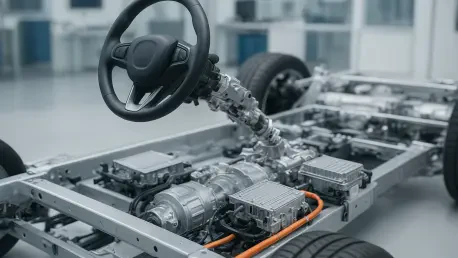
The pinnacle of the technical output is the Steer-by-Wire system, which completely eliminates the physical connection between the steering wheel and the tires. This technology utilizes a redundant safety architecture to meet the rigorous ASIL-D functional safety standards, ensuring reliability through dual controllers and independent communication paths. By removing the steering column, engineers gain unprecedented flexibility in cabin design, allowing for retractable steering wheels or entirely new interior layouts in autonomous pods. This shift from mechanical to digital control is a fundamental requirement for L3 and higher levels of autonomous operation, where the vehicle must be able to take control instantaneously and without physical resistance from a traditional steering assembly.
Furthermore, the research team is currently developing corner modules that allow for independent steering of each individual wheel. This innovation could revolutionize vehicle maneuverability, enabling maneuvers such as diagonal movement or a zero-turning radius, which are particularly useful in congested urban environments. These modules integrate the steering, braking, and drive systems into a single unit, simplifying the vehicle’s chassis and reducing overall weight. The move toward these integrated units reflects a broader industry trend toward decentralized control, where the traditional axle is replaced by intelligent, self-contained wheels. By staying at the forefront of this digital transformation, the company is positioning itself as a primary architect of the future vehicle chassis, moving beyond the role of a simple component manufacturer.
Commercialization Strategy: From Logistics to Passengers
Proving Ground: The Logistics Vehicle Training Sector
Rather than attempting to compete directly in the crowded passenger car market during its early stages, the company utilized the unmanned logistics sector as its primary entry point. Because these autonomous delivery vehicles lack a physical steering wheel, the steering gear must be exceptionally responsive and inherently reliable. Deploying over sixteen thousand units across three hundred cities has provided the company with massive amounts of real-world performance data. This data is invaluable for refining control algorithms and identifying potential failure points in diverse environmental conditions, from sub-zero temperatures to high-humidity coastal regions. The logistics sector served as a high-intensity laboratory where the technology could be stress-tested before being introduced to the public.
This focused approach allowed the company to iterate on its designs much faster than would have been possible in the highly regulated passenger vehicle sector. The constant feedback loop from fleet operators helped engineers optimize the durability of the steering actuators and the latency of the digital signals. By the time the technology was ready for broader applications, it had already logged millions of kilometers of successful operation. This extensive operational history provides a level of technical maturity that few competitors can match. The success in logistics also demonstrated the scalability of the manufacturing process, proving that the company could maintain high quality standards while producing units at volume. This phase of commercialization was critical for building the operational muscle necessary to compete on a global scale.
Global Expansion: Entry into the Passenger Market
With a solid foundation in the logistics sector, the company is now securing orders for domestic passenger vehicle models and expanding into international markets. A significant project for a major Southeast Asian brand is already underway for 2026, marking a transition toward becoming a global Tier 1 supplier. This pivot from niche logistics to mass-market passenger cars demonstrates a sophisticated and scalable commercialization strategy that prioritizes long-term stability over immediate, high-risk gains. By entering the passenger market with a proven track record, the company can negotiate from a position of strength, offering technology that has already been validated in demanding commercial environments. This expansion is supported by a growing network of sales and service centers designed to support international clients.
The strategy for global growth involves not just exporting hardware, but also offering integrated software solutions that can be customized for different driving preferences and regulatory requirements. For instance, the steering feel can be digitally tuned to meet the expectations of drivers in different regions, ranging from the light steering preferred in many Asian markets to the firmer, more communicative feel favored in Europe. This level of flexibility is only possible through a Steer-by-Wire architecture, where the mechanical characteristics are defined by code rather than physical hardware. As the company expands its footprint, it is also looking to establish localized research and development hubs to better serve international partners. This global outlook ensures that the company is not just a domestic leader but a significant participant in the worldwide shift toward intelligent mobility.
Technical Barriers: Overcoming Safety and Sensation Challenges
Architectural Safety: Ensuring Redundancy and Reliability
The primary challenge for Steer-by-Wire technology is ensuring absolute safety in the absence of a mechanical backup. To address this, the company has engineered a remarkably robust system characterized by multi-layered hardware redundancy and extreme environmental resilience. Each system includes dual independent power supplies, dual motors, and dual sets of sensors, ensuring that if any single component fails, the steering remains fully functional. This fail-operational capability is the gold standard for autonomous systems, providing the peace of mind necessary for passengers to trust their safety to a digital interface. The systems undergo rigorous testing, including exposure to extreme temperatures and electromagnetic interference, to ensure they perform reliably under all possible driving conditions.
Maintaining this level of reliability requires a deep integration of hardware and software, where the control logic can detect and compensate for minor anomalies before they become critical failures. The redundant architecture also extends to the communication protocols, utilizing high-speed data buses that are resistant to signal degradation. By achieving such a low failure rate, the company has satisfied the most stringent safety requirements of global automotive manufacturers. This focus on redundancy is not just about preventing accidents; it is also about building the institutional credibility required to lead the market. As vehicles become more reliant on digital systems, the companies that can guarantee the highest levels of uptime and safety will naturally emerge as the preferred partners for the next generation of transport.
Haptic Feedback: Recreating the Tactile Road Feel
Another significant hurdle in SBW development is simulating the road feel that drivers rely on for intuitive control and situational awareness. Since there is no mechanical link, the tactile feedback normally transmitted through the steering column must be generated entirely through complex software algorithms and feedback motors. The company’s ability to recreate realistic sensations—such as the change in resistance when driving on ice or the vibration of a rough road—is a key differentiator that improves the user experience. By using high-resolution sensors to monitor tire-to-ground forces, the system can calculate the appropriate feedback in real-time, delivering a digital experience that feels entirely natural to the driver.
This focus on haptic feedback is essential for building driver trust during the transition from manual to autonomous operation. If the steering feels disconnected or artificial, drivers are less likely to feel confident in the vehicle’s capabilities. The software allows for a high degree of personalization, where the driver can choose between different steering modes, such as a sport mode with heavy resistance or a comfort mode for easy urban maneuvering. This flexibility is a major advantage of the Steer-by-Wire system, as it allows a single vehicle to offer multiple driving personalities. By perfecting this digital simulation of physical reality, the company has bridged one of the final gaps between traditional automotive engineering and the new digital era. This mastery of haptics ensures that even as the mechanical connection disappears, the emotional and functional connection to the vehicle remains intact.
Industrial Evolution: Macro Trends and Future Capacity
Regulatory Support: Navigating Cost and Standards
Domestic electric vehicle manufacturers are under intense pressure to reduce costs while increasing technological sophistication, making a flexible and localized supply chain highly attractive. The recent relaxation of national standards in late 2025 has cleared many of the legal hurdles that previously restricted the use of Steer-by-Wire technology on public roads. This regulatory shift provides a clear runway for the mass adoption of these core innovations, allowing the company to move forward with large-scale deployment plans. By aligning its development with the latest government industrial policies, the company has ensured that its technology is not only technically superior but also legally and economically viable for widespread use. This alignment with broader economic trends is a crucial factor in the company’s sustained growth.
The ability to offer high-end steering solutions at a competitive price point is a direct result of the company’s vertical integration and local sourcing strategies. By controlling the design and manufacturing of critical sub-components, the company can avoid the markups associated with third-party suppliers. This cost efficiency is passed on to the automakers, who are increasingly looking for ways to maintain their margins in a highly competitive market. Furthermore, the modular nature of the steering systems allows for easier integration into various vehicle architectures, reducing the engineering time and costs for the automakers themselves. As the industry continues to evolve, the combination of regulatory support and cost-effective innovation will be the primary driver of market share gains for domestic technology leaders.
Scaling Production: Global Strategic Evolution
To support its rapid growth, the company established a comprehensive manufacturing expansion plan, targeting a tenfold increase in the monthly production of redundant steering systems. This increased capacity was designed to meet the surging demand for both domestic and international passenger vehicle projects. The strategic vision extended toward decentralized chassis control, where traditional components were replaced by integrated digital units. By maintaining independent research and development, the organization secured its place as a cornerstone of the national industrial framework. The focus moved toward creating a seamless interface between the vehicle’s brain and its physical movements, ensuring that the software-defined vehicle of the future would be built on a foundation of reliable, high-performance hardware.
In the final assessment of this industrial shift, the company implemented several key initiatives that solidified its market position. It expanded its technical team to include experts in artificial intelligence and cybersecurity, ensuring that the digital steering links remained protected from external threats. This proactive approach to system integrity helped establish a new benchmark for the industry. Furthermore, the organization fostered deep partnerships with battery and motor manufacturers to create a more holistic approach to electric vehicle design. These collaborative efforts resulted in a more efficient and responsive chassis, proving that the future of automotive technology lies in the integration of previously disparate systems. By successfully navigating these complex challenges, the company paved the way for a new era of intelligent, safe, and efficient mobility.