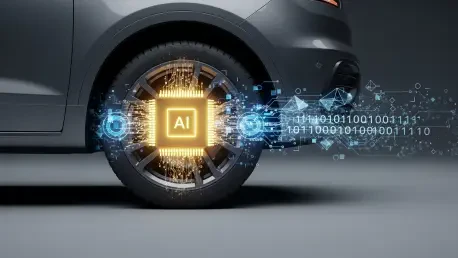

The integration of sophisticated artificial intelligence into the modern automotive landscape has effectively transformed vehicles from mere mechanical transport tools into highly perceptive digital entities capable of navigating complex environments. By utilizing a diverse array of sensors, including high-resolution LiDAR, thermal imaging, and ultrasonic arrays, contemporary vehicles are now able to construct a three-dimensional map of their surroundings in real-time, identifying hazards long before they become visible to a human eye. This technological shift is not merely about convenience or the luxury of hands-free driving; it represents a fundamental pivot toward a zero-fatality goal on global roadways. As neural networks become more adept at processing multi-modal data streams, the margin for human error—which historically accounted for over ninety percent of traffic accidents—continues to shrink. This evolution signifies a new era where safety is no longer a passive feature but an active, intelligent process that operates with a level of precision that humans simply cannot replicate.
Advanced Sensor Fusion: The Foundation of Algorithmic Safety
Modern AI driving systems rely on edge computing to make split-second decisions that involve complex variables like road friction, weather conditions, and the unpredictable behavior of other road users. Unlike human drivers, who may suffer from fatigue, distraction, or emotional volatility, these silicon-based systems maintain a constant level of vigilance and calculate millions of trajectory possibilities every second. This computational power allows for a level of precision in emergency braking and evasive steering that was previously unattainable through manual control. Furthermore, the implementation of transformer-based architectures in vision systems has drastically improved the ability of vehicles to interpret contextual clues, such as recognizing the difference between a child standing by the curb and a stationary mailbox. This nuanced understanding is critical for operating in dense urban environments where the interplay between pedestrians, cyclists, and motorists is most volatile and dangerous.
Building on this foundation of localized perception, the concept of collective intelligence through Vehicle-to-Everything (V2X) communication has emerged as a cornerstone of modern road safety protocols. Vehicles now function as nodes within a massive, interconnected network, sharing real-time telemetry data regarding road hazards, sudden traffic changes, or icy patches hidden around blind corners. This proactive sharing of information effectively extends the vision of an individual car miles beyond its physical sensor range, allowing the fleet to adjust speeds and routes collectively to prevent pile-ups. Moreover, this interconnectedness facilitates smoother traffic flow, which indirectly enhances safety by reducing the frustration and erratic maneuvers typically associated with heavy congestion. The synergy between high-speed 5G connectivity and localized AI processing ensures that this data exchange happens with millisecond latency, providing a safety buffer that makes the chaos of traditional traffic a relic of the past.
Strategic Evolution: Liability and Cybersecurity Standards
The transition toward AI-dominated driving necessitated a radical restructuring of legal frameworks and insurance models that were once centered entirely on individual human culpability. As the vehicle itself takes on the primary responsibility for navigation and obstacle avoidance, the focus of liability has shifted from the driver to the software developers and hardware manufacturers who design these intricate systems. This shift has encouraged a culture of extreme transparency and rigorous validation, where every software update must undergo billions of miles of simulated testing before being deployed over-the-air. Consequently, the industry has seen a rise in standardized safety benchmarks that prioritize the resilience of the AI under edge-case scenarios—those rare, high-risk events that are difficult for humans to handle correctly. By quantifying safety through algorithmic reliability, the legal system now provides a more predictable and data-driven approach to resolving disputes and improving overall vehicle integrity.
The industry recognized that the next phase of road safety required a rigorous focus on cybersecurity and universal data standards to protect the integrity of autonomous networks. Manufacturers integrated hardware-based encryption at the chip level to safeguard against external manipulation, ensuring that vehicle decision-making remained untampered. Legislative bodies established a centralized database for anonymized accident data, allowing companies to learn from collective failures and refine their algorithms across the board. Furthermore, the development of intuitive human-machine interfaces simplified the transition between automated and manual control, reducing operator confusion during critical moments. These efforts collectively shifted the focus from reactive safety measures to a model of predictive prevention. By prioritizing transparency and cooperation, the automotive sector successfully built a foundation where technological reliability was the primary driver of public confidence. These steps provided a clear roadmap for the continued evolution of autonomous mobility.