
The economic health of Ford Otosan is inextricably linked to the commercial vitality of Western Europe, with Italy, France, and Spain representing major market shares. This complex relationship has transformed what was once a regional joint venture into a definitive pillar of the global automotive landscape, specifically dominating the commercial vehicle sector. As operations have expanded, the company has masterfully blended Turkish industrial capacity with the logistical demands of a highly connected European continent. The result is a seamless cross-border flow where raw materials and high-tech components converge at massive assembly hubs to create the fleets that power modern delivery and logistics networks. This manufacturing ecosystem relies on a sophisticated digital and physical infrastructure that bridges the gap between Eastern European production and Western European sales. Every vehicle rolling off the line represents a calculated synchronization of international trade, proving that the modern automotive industry is defined by the efficiency of the networks that link its various parts.
The Logistics Framework: Building a Resilient Footprint
Ford Otosan’s manufacturing reach has expanded significantly, with an annual production capacity now exceeding 934,500 units across its core facilities as of late 2026. In Turkey, the Yeniköy plant serves as a specialized center for the Transit Custom, while the Gölcük facility manages the production of larger Transit iterations that form the backbone of urban logistics. Meanwhile, the Craiova plant in Romania has been integrated as a vital hub for the Transit Courier and the Ford Puma, effectively diversifying the company’s geographic risk and optimizing proximity to European buyers. This multi-site strategy ensures that the company can maintain high output levels even when regional supply chains face localized disruptions. Furthermore, the Eskişehir facility provides the necessary engineering self-sufficiency by focusing on heavy trucks and advanced powertrain technologies. By distributing these tasks across specialized plants, the company ensures that each model benefits from a streamlined assembly process that maximizes both quality and operational speed.
The complexity of modern vehicle assembly at these sites is best described as a mosaic of European engineering, where the final product is a sum of international parts. Although the physical assembly occurs in Turkey or Romania, more than 60% of the components in many van variants originate from outside Turkey. Engines and transmissions are frequently sourced from the United Kingdom, while the shift toward electric mobility has established deep logistical ties with battery manufacturing sites in Poland and Hungary. This interdependence requires a masterclass in coordination, as thousands of individual parts must arrive at the production line with surgical precision to avoid costly bottlenecks. Logistics providers must manage a constant intake of materials from across the continent, ensuring that every shipment aligns with real-time manufacturing schedules. This reality underscores that a Turkish-built commercial vehicle is actually a product of a unified European supply chain, highlighting the critical role that precision logistics plays in maintaining Ford’s market dominance.
Industrial Dominance: Harnessing Maritime and Trade Infrastructure
The sheer scale of Ford Otosan’s influence on the Turkish economy is reflected in its massive production and export statistics. Currently, the company is responsible for approximately 76% of all commercial vehicle production in Turkey and handles a staggering 80% of the nation’s commercial vehicle exports. This industrial dominance extends even further, with the company accounting for 42% of Turkey’s total vehicle exports across all categories, reaching 91 global markets. Within the broader European context, the network’s importance is undeniable, as 82% of all Ford commercial vehicles sold on the continent are products of the Ford Otosan ecosystem. This creates a scenario where the Ford brand’s market share in Europe is almost entirely dependent on the stability and efficiency of these specific manufacturing hubs. By acting as a primary engine for industrial growth, the company has cemented its position as a central node in global freight flows, demonstrating how a localized production base can effectively serve a vast customer network.
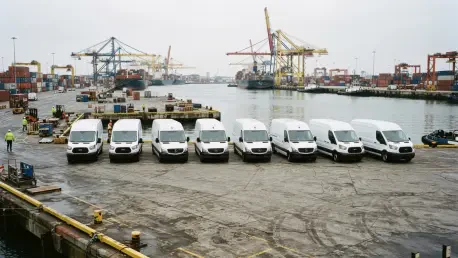
A major logistical advantage that sets the Kocaeli production site apart from its competitors is the integration of a dedicated maritime port. The Gölcük and Yeniköy facilities are positioned to move finished vehicles directly from the final assembly line onto international carrier vessels, significantly reducing transport times and local congestion. However, this maritime strategy introduces unique planning challenges that require sophisticated digital management tools. Because commercial vans like the Transit are substantially larger and heavier than standard passenger cars, they occupy significantly more space on cargo ships. While a specialized vehicle carrier might hold up to 8,000 compact cars, that same vessel’s capacity drops to between 800 and 1,000 units when transporting large commercial vans. Consequently, export planners must meticulously balance vessel scheduling against production volumes to ensure that no space is wasted and that vehicle deliveries remain consistent. This logistical nuance illustrates the hidden complexities involved in moving large-scale industrial output.
Strategic Agility: Managing Market Shifts and Distribution
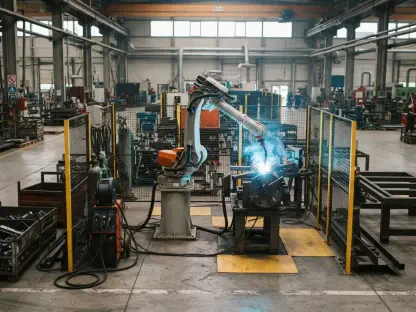
The Kocaeli operation’s success is largely attributed to its multi-powertrain assembly system, which ensures high levels of manufacturing agility. By designing production lines that simultaneously handle internal-combustion engines, plug-in hybrids, and fully electric vehicles on the same production floor, Ford Otosan has created a buffer against market volatility. This allows for an instant pivot in production mix based on shifting consumer demand or regulatory changes without requiring expensive retooling. When electric vehicle interest fluctuates, the plant modulates its output in real-time, ensuring that facilities remain fully utilized and profitable. This flexibility is a critical competitive edge in a transitioning economy, as it allows the company to remain responsive to the varied energy needs of different European markets. By integrating these diverse technologies into a single workflow, the company has demonstrated how modern factories can stay relevant by adapting their assembly intake to match the pulse of the international marketplace.
This responsiveness is further evidenced by sales patterns in primary markets like the United Kingdom and Germany. Currently, the UK represents 27% of total volume, while Germany follows at 18%, with significant contributions from Italy, France, and Spain. These figures highlight the deep integration between Turkish production hubs and Western European demand centers. To maintain this flow, inbound logistics teams must be capable of modulating component deliveries, such as battery packs or diesel engines, with extreme precision. The ability to align manufacturing output with the specific fleet requirements of these major economies ensures that Ford Otosan remains a dominant player. This coordination proves that success in the automotive industry is no longer just about the product itself, but about the speed and efficiency with which it can be delivered to a diverse international customer base. By maintaining this high degree of responsiveness, the company ensures that it meets the diverse needs of businesses across the entire European continent.
Forward Outlook: Evolving Logistics for Sustainable Success
The strategies established by Ford Otosan throughout the mid-2020s provided a comprehensive blueprint for how cross-border industrial integration functioned at its highest level. By merging the cost-efficiencies of Turkish production with the engineering standards of the United Kingdom and continental Europe, the company successfully bridged two distinct economic zones. This integration was not merely about moving parts from one location to another; it was about creating a unified technical language that allowed different regions to contribute to a single, high-quality product. The implementation of maritime-focused logistics and flexible assembly lines proved to be a decisive factor in maintaining market share during periods of economic uncertainty. These historical developments underscored the importance of resilience, as the company moved away from rigid production models toward a more fluid, data-driven approach. Agility and logistical precision became the primary metrics that determined long-term industrial viability.
Looking ahead, the lessons learned from this integrated model offer a clear path for future industrial developments in the automotive sector. The focus shifted toward even greater transparency in the supply chain, as manufacturers sought to replicate the real-time modulation of components that Ford Otosan perfected. Future considerations for the industry now prioritize the localization of high-value components, such as battery cells, to further reduce the carbon footprint of the logistics network. By analyzing the data from these successful operations, companies began to invest more heavily in modular factory designs that could transition between various energy types with minimal downtime. The actionable next step for regional leaders involves strengthening the digital links between suppliers and assembly hubs to create a predictive logistics environment. Ultimately, the transition focused on total network integration allowed the industry to thrive despite the various technological shifts that redefined the global economy.