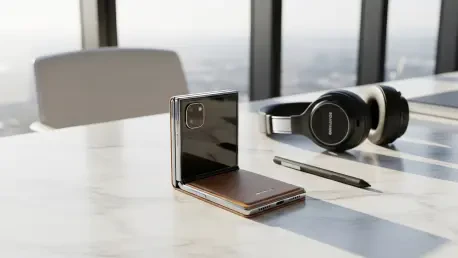

The transition from bulky, experimental hardware to seamless productivity tools has reached a critical juncture where the hardware no longer dictates the limitations of the mobile experience. Mobile professionals have long demanded a device that offers the expansive canvas of a tablet without the burdensome weight of a secondary gadget. The latest foldable flagship addresses these persistent pain points by integrating high-density materials with a refined mechanical architecture that feels remarkably natural in the hand. This evolution signifies more than just a reduction in thickness; it represents a fundamental change in how users interact with digital environments while on the move. By prioritizing a form factor that matches the thinness of traditional slab phones while providing nearly eight inches of screen real estate, the barrier to widespread adoption is finally falling. The result is a sophisticated tool that functions as a high-performance computer in a pocketable format, setting a benchmark for the industry during the current development cycle through 2028.
Structural Evolution: Design and Resilience
Engineering Progress: Durable and Ergonomic Frames
Ergonomics serve as the cornerstone of this engineering feat, characterized by a folded thickness of only 8.75mm that challenges the physical constraints of contemporary mobile design. This incredibly slim profile ensures that the device remains comfortable for one-handed operation while closed, mirroring the tactile familiarity of premium glass-sandwich smartphones. Achieving such a compact footprint required a complete rethink of internal component density and hinge geometry. The transition between the 7.95-inch internal display and the outer cover screen is handled with a level of fluidity that makes the mechanism feel invisible to the touch. This allows for a transformation from a standard mobile communication device into a sprawling digital workspace within seconds, facilitating deep multitasking without the physical strain often associated with larger hardware. The lightweight frame is balanced to prevent fatigue during long reading sessions, making it a viable replacement for both a phone and a small tablet.
Durability remains a primary concern for users investing in flexible screen technology, and the structural integrity of this device is reinforced by a specialized “Super Steel” hinge and advanced nano-coatings. These high-strength materials are engineered to withstand the rigors of daily use, boasting an industry-leading durability rating that covers up to 500,000 folds without mechanical degradation. Furthermore, the inclusion of dual IP68 and IP69 ratings provides a level of environmental protection rarely seen in the foldable category, ensuring the device survives immersion in water and high-pressure sprays. This rugged construction effectively mitigates the perceived fragility of foldable screens, offering peace of mind to users who operate in unpredictable or harsh environments. The specialized coatings applied to the exterior and the internal flexible layer also enhance scratch resistance, maintaining the aesthetic appeal of the device over years of heavy use. This combination of precision and strength defines the current standard for resilience.
Material Science: External Protection and Visuals
Beyond the mechanical hinge, the display technology provides a premium visual experience with its high-brightness AMOLED panels that peak at a remarkable 6,000 nits. Integrated features like adaptive refresh rates and ultra-high-frequency dimming minimize power consumption while significantly reducing eye strain during extended use. Additionally, an advanced anti-reflective coating ensures that the screen remains perfectly legible even under direct sunlight or harsh office lighting. This focus on visual health and clarity ensures that users can engage in extended video editing or document review sessions without the ocular fatigue typically associated with high-intensity mobile screens. The combination of these technologies creates a display that is not only bright but also incredibly color-accurate, meeting the needs of creative professionals who require precision in their work. Every aspect of the visual output has been tuned to provide a flagship experience that remains consistent across all lighting environments.
Supporting the visual excellence is a robust internal architecture featuring a state-of-the-art 3nm processor paired with a high-capacity 6,660mAh silicon-carbon battery. This combination provides the computational power needed for intensive tasks like 4K video editing and high-end gaming without sacrificing overall battery life. Fast charging options, both wired and wireless, ensure the phone remains operational throughout the most demanding workdays. Silicon-carbon technology allows for much higher energy density compared to traditional lithium-ion batteries, enabling the slim profile of the device without compromising on total capacity. This efficiency is critical for maintaining performance during long hours of multitasking where the large internal screen draws significant power. The thermal management system also plays a vital role, dissipating heat effectively during high-load scenarios to prevent throttling. This ensures that the user experience remains smooth and responsive regardless of how many applications are running simultaneously.
Intelligent Productivity: AI and Ecosystem Synergy
Software intelligence is a cornerstone of the user experience, with MagicOS 10 leveraging deep AI integration to streamline daily productivity. Tools like the AI Meeting Pilot and Google Gemini Live transform the device into a proactive assistant capable of summarizing long discussions and managing complex workflows. These features capitalize on the large internal screen to offer a desktop-style environment for users on the move, allowing for sophisticated multitasking that was previously impossible on a mobile device. The software intelligently organizes open windows and suggests relevant tools based on the current context, reducing the time spent navigating through menus. Furthermore, the integration of advanced photography algorithms through the AI Falcon Camera System ensures that every shot is optimized for clarity and color balance. This system provides professional-grade photography across various focal lengths, making it a versatile tool for both personal memories and professional content creation at any time.
The implementation of cross-ecosystem compatibility and high-performance hardware established a new baseline for professional mobile technology that required immediate strategic adjustments. Organizations that integrated these foldable systems into their mobile fleets realized significant improvements in remote collaboration by deploying the device as a singular workstation. To maximize these gains, technical teams prioritized the configuration of cloud-based synchronization and local AI processing to handle real-time data analysis without external latency. Professionals who utilized the seamless connectivity with Mac and iPhone environments solved the long-standing issue of fragmented file management across different operating systems. Moving forward, the focus shifted toward optimizing silicon-carbon battery cycles and expanding the utility of multi-focal camera systems for on-site documentation. This progress ensured that the mobile experience was no longer a compromise but a primary driver of high-level output.