
The demand for hemp and linen is surging in the United States and Canada, driving the need for more traceable and environmentally friendly textile sources. As international markets pivot toward natural fibers with lower ecological footprints, the establishment of Nau Verde, a €30 million joint venture, has signaled a transformative moment for European manufacturing. This strategic partnership combines the industrial prowess of a major Chinese conglomerate with the historical expertise of four prominent Portuguese firms. By moving beyond traditional synthetic reliance, this initiative targets a significant structural void in the regional economy, ensuring that the entire lifecycle of textile production—from cultivation to finished product—can occur within the continent.
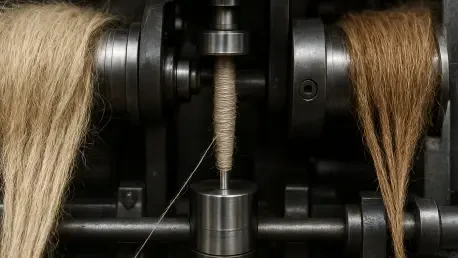
At its heart lies the Nafilux factory in Santo Tirso, a specialized spinning facility designed to repatriate the production of premium yarns and modernize the regional supply chain. This shift not only addresses logistical inefficiencies but also fortifies the resilience of a sector that has long been vulnerable to global disruptions. By focusing on premium linen and hemp yarns, the project seeks to bridge a significant gap in the European infrastructure. Historically, the continent has grown the necessary raw materials but lacked the domestic facilities to process them into finished yarns. The new facility, housed in a renovated 15,000-square-meter industrial space, serves as a cornerstone for what is now described as a vital pillar of the modern textile industry.
Strategic Realignment of the Fiber Supply Chain
Addressing the Transcontinental Logistics Gap
Currently, a profound imbalance exists between fiber cultivation and industrial processing within the European Union. While the continent remains the global leader in raw flax production, accounting for nearly 75% of the world’s supply, it has lacked the domestic infrastructure to convert these raw materials into high-value yarns. This disparity has forced a “back and forth” logistics model where approximately 68% of European flax is exported to Asian facilities for spinning before being shipped back as processed goods. This cycle creates massive overhead in transportation costs and complicates the industry’s ability to provide the transparent traceability now demanded by high-end fashion brands.
The Nafilux facility is specifically engineered to disrupt this inefficiency by providing a local alternative that keeps value-added processing on-site. By localizing the spinning of long-fiber flax and hemp, the project effectively streamlines the supply chain and significantly reduces the carbon footprint associated with global transit. This move allows European-grown materials to stay within the continent, meeting the rising demand for sustainable textiles in Western markets. The factory serves as a strategic intervention to break the long-standing dependence on distant processors, offering a localized alternative that improves transparency and reduces the environmental impact of textile production.
Operational Impacts: Revitalizing the Industrial Landscape
Located in a renovated industrial space in Rebordões, the Nafilux factory represents a cornerstone of contemporary industrial modernization. The facility is not merely a production site but a technological hub that integrates advanced automation with traditional fiber handling. This localization is essential for Western European markets that prioritize the speed of delivery and the ability to verify environmental standards at every stage of production. By housing the spinning process within Portugal’s traditional textile heartland, Nau Verde provides immediate access to high-quality yarns for regional weavers and garment manufacturers.
This proximity allows for a tighter feedback loop between yarn producers and fashion designers, fostering innovation in fabric textures and blends. The presence of such a large-scale spinning mill serves as a powerful incentive for the broader textile ecosystem to adopt sustainable practices, as it creates a stable, domestic market for high-grade natural fibers that were previously processed elsewhere. The factory is expected to generate 250 jobs, revitalizing the industrial landscape of northern Portugal through high-tech automation. This localized approach reflects a broader global trend where production is moved closer to both raw material sources and final consumers to mitigate rising costs and logistical risks.
Synergy Between International Scale and Local Heritage
Integrating Manufacturing Scale: East Meets West
The success of this venture relies on a sophisticated integration of global manufacturing scale and local industrial heritage. Kingdom Holdings Ltd., the Chinese partner, brings an immense production capacity and deep experience in the global flax market. Listed on the Hong Kong Stock Exchange, the company has historically operated massive facilities in China and Ethiopia, but its entry into the European market highlights a strategic shift toward regionalization as labor costs in Asia continue to rise. Their primary output remains flax yarn, but they have recently expanded into hemp, signaling a diversification strategy that aligns perfectly with the goals of the Portuguese venture.
On the other side of the partnership, the Portuguese consortium comprises four distinguished companies: Calvelex, Mundifios, Paulo de Oliveira, and Riopele. These firms bring nearly a century of combined expertise in yarn distribution, wool manufacturing, and integrated fashion production. This synergy ensures that the Nafilux factory has a direct pipeline to the luxury market, combining the efficiency of large-scale operations with the artisanal quality associated with European craftsmanship. This hybrid model allows the venture to navigate the complexities of both high-volume supply and high-end demand, securing a position at the forefront of the international textile trade.
Financial Framework: Investing in Long-Term Sustainability
The financial foundation of this project was secured through a combination of private capital and public support, specifically leveraging over €13 million from the Portuguese Recovery and Resilience Plan. This investment was part of the larger €111.5 million Lusitano Project, which aimed to create sustainable production chains for natural and recycled fibers. By establishing this capacity, the stakeholders demonstrated how regional agriculture could be revitalized by providing a clear pathway for textile-grade industrial hemp. The facility allowed the industry to insulate itself from the volatility of global logistics while aligning with the most rigorous environmental standards.
To maintain this momentum, industry leaders focused on building stronger ties with local farmers to transition from floral hemp production to fiber-centric crops. This move effectively protected the regional supply chain and helped satisfy the consumer preference for eco-friendly materials over synthetic alternatives. The initiative proved that localized, high-tech processing was the most viable solution for achieving economic sovereignty in the fashion sector. Moving forward, the industry prioritized the adoption of similar vertical integration models to ensure that environmental accountability remained a core component of commercial success, ultimately reshaping the future of the European textile supply chain.