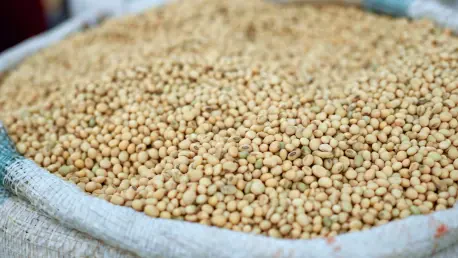

The staggering reality of modern agriculture is that while crops feed billions, the soil beneath them has historically acted as a leaking sieve for carbon dioxide, contributing to the very atmospheric instability that threatens global food security. In the current landscape of 2026, a paradigm shift is occurring where the focus of biotechnology is moving from the visible canopy to the hidden architecture of the root system. This review examines the engineered soybean, a crop no longer designed solely for its beans, but as a sophisticated biological tool for deep-soil carbon sequestration and climate resilience.
By reimagining the soybean as a carbon-capture device, scientists are addressing the fundamental limitation of traditional agriculture: the shallow carbon cycle. Most carbon captured by standard crops remains in the upper soil layers, where microbial activity and mechanical tilling quickly return it to the atmosphere. The emergence of deep-rooted varieties changes this dynamic, transforming the soybean from a seasonal plant into a long-term geological actor.
Root Architecture and Carbon Sequestration Principles
Deep-rooted soybean engineering operates on the principle that the deeper carbon is buried, the more stable it becomes. Traditional soybean varieties possess a lateral root structure that occupies the top six to twelve inches of soil. Engineered varieties, however, are programmed to ignore lateral cues and prioritize vertical descent, often reaching depths that double or triple those of their conventional counterparts. This verticality is essential for bypassing the “active” zone of the soil where carbon turnover is most rapid.
The environmental logic behind this architecture is sound. By depositing organic matter into deeper subterranean horizons, the plant utilizes the soil as a massive, natural reservoir. This process effectively removes carbon dioxide from the air through photosynthesis and physically relocates the resulting biomass into zones that are rarely disturbed by human activity. The result is a biological sequestration method that does not require the expensive machinery or energy-intensive processes associated with industrial carbon capture.
Core Technical Features of Engineered Soybeans
Enhanced Suberin Synthesis for Carbon Retention
At the cellular level, the most significant advancement in this technology is the upregulation of suberin production. Suberin is a complex, lipid-based polymer that acts as a protective barrier in root tissues, similar to the cork found in tree bark. Because suberin is exceptionally difficult for soil microbes to break down, it serves as a “biological plastic” that locks carbon into a durable form. By increasing the suberin content in soybean roots, researchers ensure that even after the plant completes its life cycle, the carbon remains trapped in the soil for decades.
This feature distinguishes engineered soybeans from other carbon-capture initiatives that rely on fast-growing biomass. While a tree might store carbon in its trunk, that carbon is released if the tree burns or rots. In contrast, the suberin-rich roots of these soybeans are buried in an environment with lower oxygen levels and fewer decomposers, maximizing the residence time of the sequestered carbon and providing a more permanent solution for atmospheric mitigation.
Vertical Root Gravitropism and Soil Penetration
The physical ability of these plants to reach deep soil layers is driven by modifications to gravitropism—the plant’s internal sense of direction relative to gravity. By fine-tuning the genetic pathways that control how root tips respond to gravitational pull, scientists have created “steeper” root angles. This modification ensures that the plant does not compete with neighboring crops for surface-level nutrients but instead explores untapped soil volumes.
Furthermore, these roots are engineered for higher penetration force, allowing them to push through compacted soil layers that would stop conventional varieties. This mechanical advantage is crucial for expanding the effective volume of the carbon sink. As the roots penetrate deeper, they also create biological macropores that improve soil aeration and water infiltration, creating a healthier soil ecosystem that can support more robust microbial life at depths previously considered sterile.
Latest Developments in Agricultural Biotechnology
As of 2026, the Salk Institute’s Harnessing Plants Initiative has moved into a critical phase of high-throughput field validation. Large-scale trials across the American Midwest are currently utilizing automated drought-simulation canopies and underground imaging technology to monitor root growth in real-time. These trials are essential for proving that the lab-grown traits can survive the unpredictable pressures of actual farm environments, such as varying soil pH and shifting moisture levels.
Moreover, the integration of multi-trait engineering is becoming the industry standard. Researchers are no longer just looking at carbon; they are bundling sequestration traits with advanced disease resistance and optimized protein profiles. This holistic approach ensures that the environmental benefits of the plant are integrated into a package that remains commercially competitive, preventing a situation where ecological goals are sidelined by the practical needs of global food supplies.
Real-World Applications and Industrial Integration
Climate Mitigation in Row Crop Farming
The most immediate application for deep-rooted soybeans is in the massive row-crop belts of North and South America. Because these regions already possess the infrastructure for large-scale soybean production, the transition to engineered varieties requires no new equipment or radical changes in farming behavior. If these traits were standardized across the industry from 2026 to 2030, the cumulative impact on atmospheric CO2 levels could reach the gigaton scale by the end of the next decade.
This scalability is the primary advantage of the technology. Unlike carbon-capture plants that require dedicated land, deep-rooted soybeans turn existing food production acreage into a dual-purpose landscape. This allows for a massive expansion of carbon-capture capacity without displacing food crops or natural ecosystems, providing a rare “win-win” scenario in the complex world of climate policy and land management.
Resource Efficiency and Runoff Prevention
Beyond the global climate, these plants offer significant local environmental benefits by reducing nutrient leaching. Standard soybeans often fail to capture all the nitrogen and phosphorus applied as fertilizer, leading to runoff that pollutes local waterways and causes toxic algae blooms. The deeper root systems of engineered varieties act as a “nutrient safety net,” intercepting these chemicals as they migrate downward through the soil profile.
By improving the efficiency of nutrient uptake, these crops help protect the health of marine ecosystems and reduce the need for excessive fertilizer application. This application is particularly valuable in the Mississippi River Basin and other regions where agricultural runoff has historically caused significant ecological damage. The technology thus serves as both a tool for global atmospheric repair and a mechanism for local environmental conservation.
Challenges and Technical Constraints
Yield Trade-offs and Metabolic Costs
The primary technical hurdle remains the metabolic “cost” of building a deep, suberin-heavy root system. Every gram of carbon used to build roots is a gram of carbon that is not going into the soybean pods. This energy diversion creates a potential yield penalty that could make the seeds less attractive to farmers who operate on thin profit margins. Balancing the carbon-storage capacity with the harvest volume is the central focus of current research.
To mitigate this, scientists are exploring ways to improve the overall photosynthetic efficiency of the plant. If the soybean can capture more total energy from the sun, it may be able to support a larger root system without sacrificing its bean production. However, achieving this balance is a delicate task that requires precise calibration of the plant’s internal resource allocation, and any failure to maintain high yields will likely stall the widespread adoption of the technology.
Regulatory Hurdles and Market Adoption
The deployment of genetically modified crops always faces a complex web of regulatory oversight and public perception. While the environmental benefits of deep-rooted soybeans are clear, they must still undergo rigorous testing to ensure they do not become invasive or negatively impact native soil microbes. Additionally, the global market for soybeans is highly sensitive to GMO status, and many international buyers remain cautious about modified traits.
Market adoption also depends on the development of economic incentives for farmers. For the technology to truly take off, the agricultural industry must see the value in carbon sequestration. This necessitates the creation of a standardized carbon credit system that pays growers for the CO2 they store underground. Without such a framework, the additional cost of engineered seeds might outweigh the practical benefits for the individual farmer.
Future Outlook and Scalability
The next phase of this technology will likely involve the development of “smart roots” that can sense soil conditions and adjust their growth accordingly. By 2027, researchers expect to begin testing varieties that can toggle their vertical growth based on moisture availability, effectively seeking out water during droughts while maintaining high carbon burial rates during wet seasons. This adaptive capacity will be vital as climate patterns become increasingly erratic.
Furthermore, the expansion of deep-root traits to other staples like corn and wheat is already underway. The goal is to create a standardized “biological sequestration kit” that can be inserted into various crop genomes. As the cost of DNA sequencing and synthesis continues to fall, the speed at which these traits can be adapted to local crop varieties will increase, allowing for a truly global implementation of deep-rooted agriculture.
Final Assessment of the Technology: A Path Forward
The review of deep-rooted soybean engineering indicated that the technology successfully merged agricultural productivity with long-term climate strategy. The transition from laboratory prototypes to Midwestern field trials during the 2026 season demonstrated that vertical root architecture and enhanced suberin levels were feasible in real-world conditions. Stakeholders identified that the success of this initiative relied heavily on the synchronization of biotech innovation with new carbon-market policies.
The evaluation concluded that for the technology to reach its full potential, a standard protocol for measuring deep-soil carbon needed to be established to provide transparency for environmental investors. It was recognized that the metabolic costs of root growth required further optimization to ensure that food security remained uncompromised. Ultimately, the development of these crops represented a necessary evolution in farming, suggesting that the future of the industry lay in the soil’s ability to act as a permanent guardian of the atmosphere. Proceeding with the integration of these traits into commercial seed catalogs became the next logical step toward stabilizing the global climate.