
The endurance of domestic manufacturing in an era dominated by globalized supply chains remains a rare achievement for American enterprises striving to maintain quality and speed simultaneously. England Furniture has navigated these complexities since its inception in 1964, transforming a modest family vision into a massive industrial presence that currently defines the economic landscape of Claiborne County, Tennessee. While many competitors shifted operations overseas to reduce costs, this organization doubled down on its regional roots, proving that a localized workforce can outperform international logistics through efficiency and specialized skill. This strategic decision allowed the company to maintain its hallmark promise of delivering custom upholstery within a three-week window, a feat that remains largely unmatched in the furniture industry today. By prioritizing a “Custom for you, Fast by us” philosophy, the business has successfully scaled its operations without sacrificing the artisanal touch. This dedication has created a robust ecosystem where traditional craftsmanship meets modern demand.
Operational Excellence: Scaling the Industrial Model
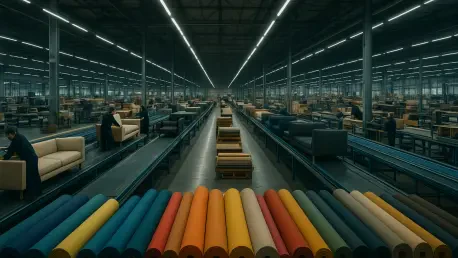
At the heart of this manufacturing empire lies Plant 8, a sprawling facility that spans the length of nearly three football fields and serves as the primary hub for assembly operations. Within these walls, twenty-seven distinct assembly lines operate with a rhythmic precision that allows for the production of approximately 1,400 individual pieces of furniture every single day. This scale is not merely a result of automation but is deeply rooted in the collective expertise of over 1,000 employees who manage the intricate process of transforming raw materials into finished goods. The facility manages a massive inventory of fabric and leather options, allowing consumers to personalize selections to a degree typically reserved for boutique workshops rather than high-volume factories. This integration of mass production with customizable features requires a sophisticated management system to track every order through the various stages of cutting and framing. By maintaining high throughput, the company ensures that its retail partners can offer rapid turnaround times to their customers.
Despite the impressive mechanical scale of the operations, the leadership maintains that the true engine of their success is the specialized skill set of the upholstery team. Upholstery is a craft that defies simple automation, as it requires a keen eye for detail and a steady hand to ensure that fabrics are perfectly aligned and secured over complex frames. New hires often undergo months of rigorous training before they are considered proficient enough to meet the brand’s exacting standards for quality and durability. This investment in human capital has resulted in a remarkably stable workforce, with many employees dedicating decades of their lives to the company’s mission. Some staff members have celebrated over forty years of service, passing down their techniques to younger generations and fostering a culture of pride in products labeled “Made in the USA.” This continuity of knowledge is vital for maintaining the structural integrity that customers have come to expect. The company’s ability to retain talent reflects a mutual commitment between the employer and the local community.
Logistics and Distribution: A Strategic Outlook
Maintaining a competitive advantage in the modern furniture market requires more than just high-quality production; it demands an airtight logistical strategy that minimizes delays and damage. England Furniture achieves this through a unique quadrant delivery system that utilizes a dedicated fleet of tractor-trailers to distribute goods directly to a vast network of dealers. By managing its own transportation division, the company bypasses the unpredictability of third-party carriers, allowing for precise scheduling and better handling of sensitive upholstery pieces. This vertical integration ensures that products moving from the Tennessee and Virginia facilities arrive at their destinations in pristine condition and within the promised three-week timeframe. Currently, this distribution network services over 1,000 dealers across the United States and Canada, including twenty of the top one hundred furniture retailers in the country. Controlling the final mile of the supply chain allows the organization to provide a level of service reliability that builds long-term trust with retailers.
To prepare for future industrial shifts, the leadership team prioritized several actionable steps that enhanced operational transparency and environmental responsibility. They audited the entire manufacturing process to identify areas where waste could be reduced, ultimately implementing a more sustainable fabric-cutting system that maximized material usage. Furthermore, the company invested in advanced digital tracking technologies that provided dealers with real-time updates on order status, significantly improving the communication flow within the distribution network. These improvements were designed to streamline the custom ordering process and ensure that the three-week delivery window remained feasible even as order volumes increased. Stakeholders were encouraged to maintain this focus on technological integration while preserving the hand-crafted quality that defined the brand. By fostering an environment of continuous improvement and community reinvestment, the organization solidified its position as a leader. These initiatives provided a clear roadmap for growth.