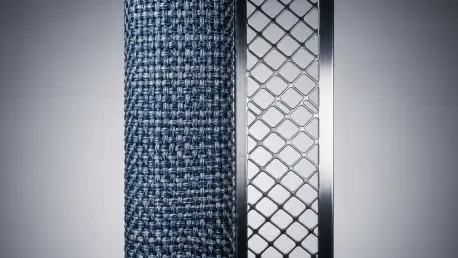

Every time a synthetic garment is manufactured or washed, it sheds microscopic plastic fibers that penetrate the deepest reaches of the planet’s oceans and soil systems, creating a pervasive environmental crisis that traditional filtration methods struggle to contain. Recent data from a collaborative study by EA Earth Action and The Nature Conservancy suggests that the scale of this leakage is staggering, with tens of thousands of tons of synthetic waste entering global ecosystems annually. Unlike the localized pollution seen in other industries, textile microfibers represent a systemic failure of current production cycles and waste management infrastructures. This research provides a data-driven framework designed to map the journey of these particles from the factory floor to the final environment. By pinpointing geographic bottlenecks and industrial vulnerabilities, the study shifts the burden of responsibility from individual consumers to the manufacturing sector, where the most significant interventions can be made.
Industrial Vulnerabilities: Mapping the Concentration of Leakage
The geographic distribution of microfiber discharge is remarkably uneven, with a significant majority of global leakage originating from a small number of industrial powerhouses that dominate the textile trade. Bangladesh, Pakistan, and China collectively account for more than half of all global production losses, reflecting their central role in the supply chains of international apparel brands. This concentration of pollution highlights a critical opportunity for targeted intervention, as improvements in these specific regions could yield disproportionately large benefits for the global environment. While high production volumes naturally lead to higher potential for shedding, the sheer scale of waste suggests that standard operational procedures in these hubs are currently insufficient to manage the microscopic byproduct of synthetic textile creation. Understanding the unique operational landscape of these regions is the first step toward implementing localized engineering solutions that can be scaled effectively.
However, the disparity between initial fiber loss during the manufacturing process and the actual amount that reaches the environment underscores the critical importance of local infrastructure. In regions with sophisticated wastewater treatment facilities, a large portion of the microfibers shed during fabric processing is intercepted before it can reach natural waterways. Conversely, in manufacturing hubs where infrastructure has not kept pace with industrial growth, the leakage rate remains alarmingly high. This reality shifts the focus from purely technical manufacturing solutions to a broader conversation about municipal investment and international support for infrastructure development. By analyzing these regional variations, researchers can better understand how to tailor mitigation strategies to the specific socio-economic and technological realities of each cluster. Strengthening the link between factory-level controls and municipal water management is essential for closing the loops that allow waste to escape.
Mitigation Strategies: Solving the Wastewater and Sludge Paradox
Addressing the wastewater paradox requires a nuanced understanding of how advanced treatment technologies interact with the microscopic nature of synthetic fibers. While modern tertiary treatment systems are capable of capturing up to 82% of microfibers from industrial effluent, this success often creates a secondary environmental hazard that is frequently overlooked. The process of filtration concentrates these pollutants into a dense material known as treatment sludge, which serves as a reservoir for millions of synthetic particles. If this sludge is subsequently used as fertilizer for agricultural land or disposed of in unlined landfills, the captured microfibers are not actually removed from the ecosystem; they are simply moved from one medium to another. Over time, rain and erosion cause these particles to migrate from the soil back into rivers and eventually the ocean, effectively nullifying the benefits of the initial water filtration. This cyclical nature of pollution necessitates a comprehensive strategy for solid waste management.
To solve this issue, industrial leaders must prioritize secure and controlled disposal methods that prevent the re-entry of captured fibers into the environment. Transitioning toward advanced incineration or secure containment facilities for treatment sludge offers a much higher reduction potential than merely increasing the volume of filtered water. In some cases, engineering the sludge into construction materials or using it in industrial applications where the fibers are permanently sequestered provides a viable alternative to traditional disposal. This shift in focus acknowledges that wastewater treatment is only the first step in a multi-stage containment process that must extend to the final resting place of the captured waste. By implementing rigorous standards for sludge management at the municipal and factory levels, the industry can significantly decrease the net leakage of microfibers. This approach transforms a potential liability into a manageable waste stream, ensuring that the progress made in water filtration is not undermined by poor practices.
Source Control: Engineering Standards and Strategic Pathways
Moving upstream in the supply chain reveals that the most effective way to mitigate pollution is to prevent shedding at the source through innovative textile engineering. A proactive strategy involves redesigning textiles to be inherently more stable and less prone to fragmentation during use and production. By optimizing fabric density and altering the way yarns are spun, manufacturers can create garments that retain their structural integrity better than traditional synthetics. Furthermore, the application of specialized chemical finishes and mechanical processing techniques can reduce synthetic shedding by as much as 90%. Researchers have identified that certain bonding agents and finishing treatments help to lock the fibers in place, preventing them from breaking loose during high-stress industrial dyeing and finishing. These engineering solutions are increasingly viewed as a core requirement during the product development phase. By incorporating these standards into the initial design briefs, brands ensure that every product meets a rigorous threshold.
The industry recognized that the path forward required a fundamental shift in how environmental accountability was integrated into the global supply chain. Stakeholders established clear benchmarks for microfiber reduction and implemented the technical optimizations needed to secure the future of synthetic textiles. By prioritizing upstream engineering and robust waste management, manufacturers effectively curtailed the flow of microscopic pollutants into the oceans. There was a growing consensus that the challenges posed by synthetic leakage were too large for any single entity to solve on its own, sparking a new era of collaboration. Competitors worked together to develop shared standards and invested in collective infrastructure projects to protect global ecosystems. As brands adopted these new standards, they fostered a culture of transparency that allowed for continuous monitoring of production methods. Ultimately, the industry moved toward a model where ecological protection was an essential component of operational success and long-term viability.