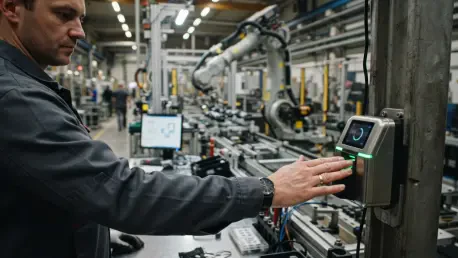

High-stakes factory environments require authentication solutions that integrate into the natural flow of work rather than acting as a barrier to physical output. The modern manufacturing landscape faces a growing paradox where the security measures intended to protect industrial assets have become significant drivers of operational risk. This “authentication friction” encompasses the technical and psychological strain placed on employees who must divert their attention from production to navigate complex login procedures and multi-factor authentication prompts. Recent industry data suggests that this friction is not a minor nuisance but a systemic vulnerability that compromises security hygiene across the factory floor. Because traditional password-based security models are often incompatible with the fast-paced environment of manufacturing, a breakdown in protocol is becoming common. When security becomes a barrier to performance, workers prioritize output over policy, leading to a disconnect between IT requirements and frontline realities that expands the attack surface.
The Intersection: Human Behavior and Cybersecurity
The central challenge in industrial security is the inevitable collision between rigid digital protocols and the practical demands of manual labor. Research indicates that when authentication processes become too cumbersome, workers do not simply accept the loss of productivity; they develop creative workarounds to keep the assembly lines moving. These bypasses, such as leaving shared terminals logged in or sharing credentials among team members, are now pervasive in the industry, with the vast majority of organizations observing such behaviors. The result is a dangerous erosion of the security perimeter that administrators believe they have fortified. Instead of a controlled environment, the shop floor becomes a network of “ghost sessions” where identifying the actual person performing a digital action is impossible. This behavioral shift creates a massive blind spot for cybersecurity teams who rely on logs to detect anomalies or breaches, ultimately rendering traditional defenses moot in a crisis.
IT departments often find themselves in a difficult position, layering on more security controls to combat sophisticated AI-driven threats that target industrial control systems. However, if these controls are not designed with the end-user’s specific workflow in mind, they inadvertently drive workers to find new ways to circumvent the system. This behavior effectively hides user activity from administrators, making it nearly impossible to maintain an accurate audit trail or identify legitimate internal threats. The increase in friction does more than just slow down the line; it actively encourages a culture of non-compliance where security is viewed as an antagonist to the mission. To bridge this gap, organizations must recognize that the frontline experience is the foundation of any successful security posture. Without buy-in from the people operating the machinery, even the most advanced encryption or firewall remains vulnerable to the simple human act of sharing a PIN or leaving a station unlocked.
Quantifying the Burden on Manufacturing Productivity
Manufacturing suffers from higher rates of authentication-related delays and risky security practices than any other commercial sector today. On average, a single frontline worker loses several hours every month to login issues, account lockouts, and repetitive authentication prompts. These delays represent a significant financial drain, as manufacturing leads all surveyed industries in credential sharing, a tactic often used as a survival mechanism to avoid production downtime. For a facility operating on thin margins or tight delivery schedules, five minutes lost to a forgotten password can cascade into an hour of missed throughput. This economic reality forces managers to look the other way when security rules are bent, prioritizing immediate shipment goals over long-term risk mitigation. The quantifiable cost of authentication friction is therefore measured not just in IT help desk tickets, but in the tangible reduction of overall equipment effectiveness and total manufacturing yield.
A significant portion of this burden stems from technological debt, as many organizations rely on legacy endpoints and applications that do not support modern, frictionless authentication methods. Furthermore, decision-makers are increasingly concerned about the rise of AI-enabled impersonation. As hackers use advanced tools to exploit the credential lifecycle, the combination of outdated hardware and frustrated employees creates a perfect storm for cyber-physical attacks. The gap between aging operational technology and the modern threat landscape is widening at an alarming rate. Many systems currently in use were never designed to be networked, let alone secured with multi-factor authentication, leading to clumsy retrofitting that only adds more friction. As manufacturing moves deeper into the era of hyper-connectivity, the inability to authenticate users quickly and securely without relying on shared or weak credentials becomes a critical failure point that could lead to widespread disruption.
Risks Inherent to Shared Workstations and Legacy Systems
Manufacturing environments are uniquely susceptible to security friction because they rely heavily on shared workstations rather than individual devices. In these settings, multiple users must cycle through the same system throughout a shift, making the cumulative delay of slow authentication intolerable. When the process for switching users is manual and slow, employees are incentivized to stay logged in under a single shared account to save time. This pattern is particularly prevalent in high-volume assembly lines where handoffs occur every few minutes. The physical layout of the plant floor often dictates that terminals are positioned in high-traffic areas where individual logouts are seen as an unnecessary hurdle. This reliance on shared hardware means that the traditional model of “one user, one device” is fundamentally broken in an industrial context, necessitating a shift toward identity solutions that can handle rapid, high-frequency user switching without forcing a full system reboot.
This environment creates fertile ground for insider threats and unauthorized access that can go undetected for months. When a terminal remains logged in under a generic or shared session, the ability to hold individuals accountable for specific actions is lost. If a malicious actor gains access to a pre-authenticated terminal, they can perform unauthorized actions without leaving a personal digital footprint, as the system perceives their actions as those of the authorized user who failed to log out. This lack of granular visibility is a major concern for compliance and safety, as many industrial processes require a verified operator to prevent accidents or ensure quality control. Without a definitive link between a physical human and a digital action, the risk of accidental or intentional sabotage increases exponentially. The erosion of individual accountability also makes it difficult to conduct effective post-incident forensics, leaving the organization vulnerable to repeated attacks.
Strategic Benefits of Moving Toward Passwordless Models
Cybersecurity experts increasingly agree that the industry must transition toward a passwordless future to resolve the tension between security and speed. Many manufacturing organizations are already beginning this shift, prioritizing the use of passkeys and phishing-resistant authentication methods. The goal is to integrate security seamlessly into the natural movements of the worker, allowing for rapid transitions between users and devices. By moving away from static credentials, companies can eliminate the most common attack vectors while simultaneously improving the user experience. This strategic shift involves the adoption of FIDO2 standards and hardware-based authenticators that do not require manual input. As organizations plan their infrastructure upgrades for the 2026 to 2028 period, the focus has shifted toward creating a unified identity layer that works across both legacy systems and new cloud-based applications, ensuring that the frontline worker’s journey is smooth and entirely secure.
While traditional biometrics like fingerprints may be impractical in environments where workers wear gloves or handle heavy machinery, alternatives like facial recognition and FIDO-standard passkeys offer a viable path forward. The primary benefit of these technologies is the ability to reclaim lost productivity by removing the need for manual input. Manufacturers can ensure that workers remain focused on their primary tasks while maintaining a high level of environmental security. Modern facial recognition systems are now sophisticated enough to operate in varying lighting conditions and even when workers are wearing safety gear like goggles or masks. By leveraging these touchless methods, companies can provide a high-security environment that feels invisible to the end user. This reduction in cognitive load allows employees to stay in the “flow state” required for complex manual tasks, which not only improves safety but also leads to higher quality output and fewer errors on the assembly line.
Achieving a Win-Win Model for Security and Output
The transition to passwordless systems represents a rare opportunity to improve both security posture and operational efficiency simultaneously. By eliminating passwords—frequently the weakest link in the security chain—companies can drastically reduce the risk of account takeovers and social engineering. At the same time, removing login barriers allows the frontline workforce to maintain its focus on production goals, fostering a more effective work environment. This dual benefit is particularly important as the industry faces labor shortages and the need to maximize the output of every employee. When security is designed to be frictionless, it stops being a “tax” on productivity and starts being a facilitator of safe operations. This alignment of IT and operational goals is essential for modern manufacturers who must balance the need for rapid digital transformation with the physical realities of the factory floor, ensuring that every technological investment serves the mission.
However, technology alone cannot solve the problem of friction; organizations must also manage the behavioral changes required for successful implementation. A new authentication method that is just as disruptive as the one it replaces will likely result in the same cycle of workarounds. Success depends on a user-centric approach that ensures increased security does not come at the expense of the end-user’s operational flow or the factory’s output. This requires deep collaboration between cybersecurity architects and shop floor managers to understand the physical constraints of the workspace. For instance, an authentication method that requires a smartphone might be useless in a “clean room” or a facility where mobile devices are prohibited for safety reasons. By involving frontline staff in the testing and selection process, companies can build trust and ensure that the new systems are adopted willingly rather than bypassed. The focus must remain on making the most secure path also the easiest path.
The Evolving Landscape of Industrial Identity
As threat activity in the manufacturing sector continued to escalate, the reliance on legacy, password-heavy systems became a liability that cost companies millions in lost time. The status quo exposed organizations to catastrophic ransomware and identity-based attacks that threatened to halt production entirely. Reimagining the identity lifecycle proved to be more than just an optional upgrade; it was a fundamental requirement for modern industrial survival. Moving forward, the most competitive manufacturers have recognized that they must prioritize the elimination of friction to protect their complex digital and physical environments. Strategic investments were directed toward phishing-resistant technologies and seamless biometric integration to ensure that the worker stayed productive. By viewing security as a core component of the production process rather than a separate hurdle, leaders successfully closed the gap between IT requirements and frontline realities, securing a more resilient and profitable future.