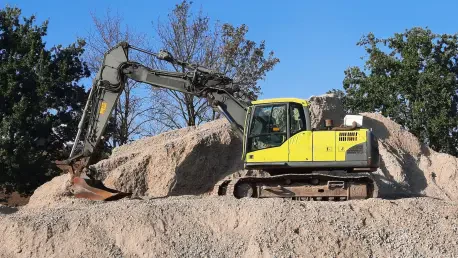

Parametric finite element modeling provides a controlled environment to isolate how various load intensities affect specific structural hot spots on a machine. This computational method has become the cornerstone of modern engineering efforts to refine the durability of hydraulic excavators, which serve as the primary mechanical force in global infrastructure development. In a comprehensive collaborative effort involving Shaanxi University of Technology, SANY Heavy Equipment, and Chongqing University, researchers focused on the intricate dynamics of a 20-ton backhoe excavator. This specific machine class represents the industry standard for versatility, yet it faces unique structural challenges when navigating the multi-directional stresses of high-density soil excavation. By analyzing the structural response of the working device, which comprises the boom and the stick, the study aimed to resolve long-standing discrepancies between theoretical load models and actual performance data observed on real-world construction sites.
Understanding Empirical Load Dynamics
Capturing the raw physical interaction between heavy machinery and varied terrain requires moving beyond the sterile environment of purely digital simulations. To achieve this, researchers recorded detailed compound digging trajectories performed by experienced human operators working in diverse field conditions. These maneuvers involve the simultaneous activation of multiple hydraulic cylinders as the bucket curls, drags, and cuts through the earth in a single fluid motion. Such complex trajectories are notoriously difficult to model because they create a multi-axial stress state that shifts dynamically throughout the cycle. By focusing on these high-intensity paths, the research team identified critical postures where the mechanical resistance from the soil reaches its peak. This empirical foundation ensures that the structural assessments reflect the actual stresses encountered on a job site, providing a more authentic dataset than simplified theoretical models that often fail to account for the grit and unpredictability of real-world excavation.
Developing Real-World Trajectories and Physical Models
Once the physical trajectories were established, the engineering team faced the challenge of translating these dynamic movements into a mathematical framework suitable for structural analysis. To bridge this gap, they utilized D’Alembert’s principle, a classic mechanic approach that accounts for the massive inertia inherent in the moving components of a 20-ton excavator. This method effectively treats moving parts as if they are in a state of static equilibrium by integrating inertial forces into the external load calculations at specific moments of peak resistance. By pinpointing the joint forces and reaction points acting on the boom and stick at these critical instances, the researchers could evaluate the structural integrity with unprecedented precision. This high-fidelity calculation method transforms the messy reality of physical acceleration and deceleration into a stable set of data points, allowing for a deep dive into how the steel structure absorbs and redistributes force during the most demanding phases of operation.
Capturing the Complexity of Compound Digging Motions
The identification of compound digging motions as the primary focus of the study was a deliberate choice to reflect the most punishing aspects of machine operation. Unlike simple vertical or horizontal movements, compound digging forces the excavator’s joints to manage overlapping vectors of resistance, which can lead to accelerated metal fatigue if not properly accounted for in the design phase. The research team meticulously monitored the interaction between the bucket teeth and the soil, noting how variations in operator technique could significantly alter the load profile. By distilling these field observations into specific numerical values, the study provided a bridge between the subjective experience of the operator and the objective requirements of the structural engineer. This process highlighted that the highest stresses do not necessarily occur at the point of deepest penetration, but rather during the transition phases of the curl and lift, where the geometric mechanical advantage of the hydraulic cylinders is at its most strained.
Comparing Load Schemes and Structural Hot Spots
The core of the structural evaluation revolved around a comparative analysis of three distinct load schemes, each representing a different philosophy in heavy equipment design. The first scheme utilized measured excavation resistance, which draws directly from sensor data collected during active field trials to reflect the true operational environment. The second scheme, known as conventional compound digging force, serves as a standard industry baseline that approximates the forces involved in a typical dig for machines within this weight class. Finally, the researchers applied a limit compound digging force scheme, which calculates the absolute maximum force the hydraulic system can generate before the machine loses traction or hits its pressure relief threshold. By applying these three divergent models to identical parametric geometries, the study was able to isolate exactly how the intensity and origin of a load impact the resulting stress profiles, offering a clear comparison between realistic operation and theoretical extremes.
Evaluating Stress Distribution across Design Philosophies
Analysis of the finite element models yielded a surprising and vital consensus regarding the structural response of the excavator arm components. Regardless of whether the applied load was a realistic field measurement or a theoretical maximum limit, the identified locations of peak stress—the so-called structural hot spots—remained remarkably consistent across all three schemes. This finding suggests that the fundamental structural architecture of the boom and stick is naturally predisposed to certain stress concentrations based on its geometry and hinge points. Engineers can therefore rely on these identified critical zones during the early design phases, knowing that they will remain the primary points of potential failure regardless of how aggressively the machine is operated. While the specific numerical intensity of the stress varied, the overall pattern of deformation remained stable, confirming that standardized design methods are effective at pinpointing where reinforcement is most necessary for long-term machine durability.
Consistency in Structural Hot Spot Identification
The study further demonstrated that the intensity of the stress varied significantly even while the locations remained fixed, with the limit compound digging force acting as an exceptionally conservative safety buffer. In every tested scenario, the limit load produced the highest equivalent stress levels, suggesting that any structure designed to withstand this theoretical maximum would inherently be safe for any real-world application. However, the gap between the measured field stress and the theoretical limit stress indicates that there is a substantial margin for structural optimization. By recognizing that field-measured loads are consistently lower than the hydraulic limits of the machine, engineers can begin to explore ways to reduce material weight in areas that are not designated as hot spots. This nuanced understanding of stress distribution allows for a more surgical approach to reinforcement, moving away from a blanket increase in steel thickness toward a more targeted application of high-strength alloys where they are needed most.
Component-Specific Responses to Operational Strain
As the research progressed into the specific behavioral patterns of individual components, a distinct divergence emerged between the boom and the stick. For the boom, the relationship between the magnitude of the applied load and the resulting structural deformation was found to be almost entirely linear. This means that as the excavator pushes toward its hydraulic limits, the boom bends and reacts in a predictable, proportional manner that can be easily mapped and managed by engineering software. This predictability is a major advantage for designers, as it allows for straightforward safety factor calculations and ensures that the boom’s behavior under extreme stress does not involve sudden, unexpected shifts in force distribution. The boom acts as a reliable structural anchor, absorbing the majority of the lifting and digging forces while maintaining a consistent mechanical response that simplifies the task of ensuring long-term structural health and fatigue resistance in the field.
Analyzing the Linear and Non-Monotonic Behavior of the Boom and Stick
In stark contrast to the boom’s predictable nature, the excavator stick exhibited a non-monotonic deformation pattern that challenged traditional engineering assumptions. In several tested postures, an increase in the applied digging force did not result in a corresponding increase in structural deflection; in fact, the stress levels sometimes plateaued or shifted unexpectedly. This unique phenomenon is attributed to the complex geometry of the digging arc, where the angle at which soil resistance strikes the bucket changes constantly as the stick moves through its range of motion. In specific orientations, the direction of the external force actually provides a form of geometric relief, creating counter-moments that partially neutralize the bending forces acting on the stick. This discovery highlights the fact that static stress analysis is insufficient for understanding the stick’s durability; instead, engineers must account for the spatial orientation of the component to accurately predict its structural behavior.
Geometric Relief and Arc Position Effects
The practical implications of these findings for the industrial design sector are substantial, particularly regarding the ongoing push for machine optimization. By confirming that various load models consistently identify the same critical stress zones, the study provides a green light for engineers to refine the amount of material used in less stressed areas. Historically, heavy equipment has often been over-engineered based on the limit load scenario, which represents a worst-case condition that may only occur in a fraction of the machine’s operational life. By utilizing field-measured data to guide reinforcement, manufacturers can significantly reduce the overall weight of the working device without compromising its safety or longevity. Lighter components mean reduced rotational inertia and lower fuel consumption, which are critical metrics for operators looking to maximize their return on investment in 2026. This move toward precision-engineered structures represents a shift from brute-force durability to sophisticated, data-driven mechanical design.
Implications for Industrial Machine Design
The collaborative study concluded by establishing a high-fidelity development pipeline that successfully merged empirical field data with advanced parametric modeling. The researchers demonstrated that by moving away from generic load cases, manufacturers could now create specialized excavators tailored for specific high-intensity tasks like quarrying or more delicate urban landscaping projects. The team identified that understanding the posture-dependent behavior of the stick was the key to unlocking new levels of efficiency, as it allowed for more nuanced structural reinforcements. These insights offered a clear path forward for the next generation of hydraulic machinery, where performance and durability were balanced through a precise understanding of mechanical strain. By validating the consistency of structural hot spots while highlighting the conservative nature of limit loads, the research provided a definitive guide for optimizing heavy equipment. Ultimately, this work ensured that future machines would be both lighter and more resilient, setting a new standard for excellence in construction.