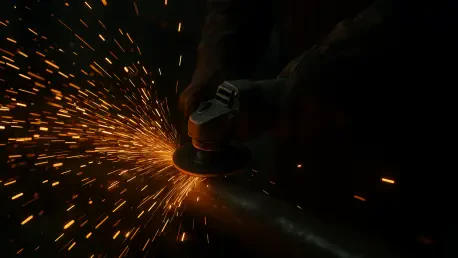

Heavy-duty industrial projects involving railroad tracks require specialized equipment like the A 924 SX Special to handle the extreme physical demands of the material. This demand for durability is reflected across the entire spectrum of industrial metalworking, where the selection of high-performance abrasives has become a cornerstone of operational efficiency. In the current 2026 landscape, Klingspor Abrasives has responded to these pressures by introducing a unified bonded cut-off wheel and grinding disc portfolio. This comprehensive collection is strategically engineered to support a vast demographic of professional fabricators and maintenance specialists who navigate the complexities of modern material science. By providing a single, coordinated source of abrasive solutions for angle grinders, gas-powered saws, and stationary machines, the company has effectively streamlined the procurement process. This centralization allows industrial users to simplify their inventory management while ensuring they have the exact tool for any task.
Precision Engineering in Cutting Technologies
Material-Specific Optimization: Carbon and Stainless Steel
The technical foundation of the Kronenflex cut-off wheel series emphasizes task-specific optimization to improve work cycles and reduce material waste. For high-performance stainless and carbon steel fabrication, the A 46 TZ Special utilizes ultra-thin technology to minimize the kerf, which is the width of the cut itself. By reducing the thickness of the wheel, the manufacturer has ensured that operators experience less resistance during the cutting process, leading to cooler cuts and a significant reduction in the formation of burrs. This level of precision is vital for industries where high-tolerance fitment is a daily requirement, such as container construction or aerospace maintenance. The synthetic resin design within these wheels provides the necessary stability to maintain high RPMs without compromising the structural integrity of the disc, ensuring that safety remains at the forefront of the cutting process while maximizing the speed of every individual operation in the shop.
Efficiency in modern manufacturing environments also depends on the ability to handle a rotating mix of metals without constant downtime for equipment changes. To address this need, the A 946 TZ Special serves as a premier multi-purpose solution that allows operators to transition between different steel types seamlessly. This versatility is crucial in 2026, where lean manufacturing principles demand the reduction of non-value-added time. Furthermore, the A 60 TZ Special has been developed to provide clean and efficient cuts on thin materials, making it an indispensable tool for repair work where material preservation is paramount. By utilizing specialized abrasive grains such as Aluminum Oxide, Klingspor ensures that these wheels provide a consistent cut rate throughout their entire lifespan. This consistency allows production managers to forecast tool consumption more accurately and maintain a steady workflow across large-scale fabrication projects without the interruptions of unexpected tool failure.
Challenging Materials: Non-Ferrous and Hardened Alloys
Working with soft or “gummy” metals like aluminum and copper presents unique challenges that standard abrasives often fail to address effectively. The A 60 N Supra has been specifically engineered with a soft structure and specialized bond to prevent the loading or glazing effect, where metal particles clog the abrasive surface and render it useless. In 2026, as aluminum becomes increasingly prevalent in lightweight automotive and maritime applications, having a wheel that maintains its aggression without overheating is essential. This specialized design ensures that the abrasive grains remain sharp and exposed, providing a consistent cut rate and preventing the thermal damage that can weaken non-ferrous alloys. By focusing on the chemistry of the synthetic resin, Klingspor has created a tool that balances material removal with surface integrity, allowing fabricators to achieve professional results on the most difficult-to-machine soft metals found in the industrial sector.
On the opposite end of the hardness spectrum, the industrial sector frequently encounters hardened steels and high-alloy stainless materials that require extreme penetration capabilities. The Ceramic K 960 TX Special and Alumina Zirconia Z 960 TX Special provide the aggressive cutting action needed for these demanding applications. These specialized abrasive grains are known for their self-sharpening properties; as the grains break down under pressure, they reveal new, sharp edges that continue to bite into the workpiece. This mechanism is vital for maintaining high throughput in heavy-duty production environments where time is a critical factor. Additionally, for intricate work in confined spaces, the portfolio includes small cut-off wheels like the A 660 R, which are designed for use with die grinders. This range of specialized tooling ensures that whether an operator is cutting through a massive structural beam or performing a fine trim on a delicate component, the abrasive grain and bond are perfectly matched to the resistance of the metal.
Advanced Surface Preparation and Grinding
Safety and Reliability: Technical Standards on the Shop Floor
Operational safety and technical transparency are fundamental components of the Klingspor bonded portfolio, ensuring that every operator can work with confidence. Every grinding disc and cut-off wheel features prominent “Max RPM” ratings and clear branding that aligns with international safety standards. This visual clarity is essential for preventing workplace accidents that occur when a tool is mismatched to a high-speed grinder’s power output. In 2026, safety managers increasingly prioritize equipment that provides clear instructional data directly on the product surface. By reinforcing their discs with high-strength synthetic resins and fiberglass mesh, Klingspor minimizes the risk of wheel breakage even under the intense lateral pressures often encountered during aggressive grinding. This commitment to structural durability not only protects the user but also preserves the expensive machinery used in the process, contributing to a more stable and predictable industrial environment across all fabrication sectors.
Beyond physical safety, the simplification of the supply chain through data-driven selection has become a major trend for industrial distributors and end-users. Klingspor utilizes a Bonded Abrasive Reference Chart that assists teams in selecting the correct wheel based on material type, machine power, and desired finish on the first try. This approach reduces the trial-and-error phase of purchasing, which often leads to wasted resources and project delays. The standardization of box quantities and the inclusion of clear item numbers across the entire range further support inventory management logic. By providing a structured and transparent catalog, the company enables procurement officers to maintain leaner stock levels without the risk of running out of specialized tools. This systematic organization ensures that the bridge between the technical specifications of the warehouse and the practical needs of the shop floor remains unbroken, leading to more cost-effective operations and streamlined workflows in high-volume production.
Industrial Synthesis: Performance Tiers and Strategic Implementation
The integration of advanced materials like Ceramic and Alumina Zirconia into a unified bonded portfolio demonstrates a successful bridge between high-speed industrial performance and user-friendly selection. By offering different performance tiers, such as the Special and Supra lines, the company allowed businesses to choose between general-purpose economy and high-tier productivity based on their specific budget and volume requirements. This tiered approach was particularly beneficial for large-scale operations that required a mix of high-performance tools for critical paths and cost-effective solutions for general maintenance. The availability of dual-purpose tools like the Duplex A 46 VZ further enhanced this efficiency by allowing operators to transition between cutting and light grinding without the need for frequent tool changes. This multi-functional capability reduced the physical burden on the worker and decreased the time spent on equipment setup, directly impacting the bottom line of the fabrication process.
Ultimately, the comprehensive range of bonded wheels and discs was adopted by industries seeking to modernize their metalworking processes through specialized engineering. The findings from various shop floor implementations suggested that the move toward thin kerf technology and material-specific grains led to a measurable reduction in energy consumption and material waste. Fabricators who switched to these optimized tools reported that the increased longevity of the ceramic and zirconia grains offset the initial investment by extending the time between wheel replacements. As a next step, industrial users looked to further integrate these abrasive solutions into automated robotic grinding cells, where the consistency of the bond and grain was essential for maintaining programmed tolerances. This transition to a more data-centric and specialized abrasive strategy provided a clear path toward greater industrial sustainability and precision. The final synthesis of these technologies proved that matching the abrasive to the task was the most effective way to optimize metalworking in a competitive global market.