
High-performance thermoplastics like PEEK provide a metal-free alternative for implants but necessitate strict temperature monitoring to prevent dimensional distortion during the milling process. As the healthcare sector shifts away from rudimentary handheld tools toward sophisticated robotic systems, the demand for extreme precision has never been higher. Engineers are now tasked with producing components that feature tolerances within single-digit microns, a requirement that pushes the boundaries of traditional machining capabilities. In this high-stakes environment, precision CNC machining serves as the essential bridge between advanced clinical theory and market-ready hardware. By prioritizing high-level engineering and strict adherence to international safety standards, specialized manufacturers can now meet the rigorous demands of a landscape that is increasingly defined by regulatory intensity and technological complexity. This evolution ensures that every component, from a simple bone screw to a complex robotic joint, functions with absolute reliability when a patient’s life is on the line. Consequently, the role of the machinist has evolved from a simple fabricator into a critical partner in the medical innovation lifecycle, providing the technical foundation upon which modern surgical breakthroughs are built. The ability to maintain these standards while scaling production is what truly separates industry leaders from the rest of the market in 2026.
The Evolution of Medical Engineering
Miniaturization: Navigating the Demand for Complexity
The rise of minimally invasive surgery and point-of-care diagnostic testing has fundamentally altered the blueprint of medical component design over the last several years. As devices shrink in size to minimize patient trauma and accelerate recovery times, the physical space available for internal mechanical components has nearly disappeared. This trend towards miniaturization means that even the slightest deviation in a part’s geometry can result in a catastrophic failure of the entire system. CNC machining provides the high-fidelity resolution required to create intricate geometries that maintain their structural integrity at a microscopic scale. This capability is paramount for modern surgical instruments, which must perform delicate maneuvers inside the human body while enduring significant mechanical stress. Without the precision of multi-axis milling, the tiny gears and actuators found in current surgical robots would simply be impossible to produce with the necessary consistency. Furthermore, the push for smaller devices extends into the realm of wearable medical technology, where lightweight but durable components are required for long-term patient comfort. By leveraging high-speed spindles and specialized cutting tools, manufacturers are able to carve out complex features in materials that were previously considered too difficult to work with at such small scales. This technical mastery ensures that the next generation of medical hardware is not only more portable but also significantly more effective in clinical environments.
Lifecycle Management: The Strategic Value of Design for Manufacturability
To stay competitive in the current landscape, manufacturers must adopt a lifecycle-management approach that begins long before the machines ever start running on the shop floor. Integrating Design for Manufacturability (DFM) early in the development cycle allows engineers to identify potential stress points or tolerance conflicts within a digital twin environment. By refining these designs during the prototyping phase, companies can ensure that theoretical concepts are actually viable for real-world use without incurring unnecessary costs. This proactive strategy reduces material waste, prevents expensive production delays, and ensures that the final product meets the clinical standards necessary for patient safety. When a design is optimized for the CNC process, it often results in a more robust part that is easier to inspect and validate. In 2026, the use of advanced simulation software has made it possible to predict how different tools will interact with medical-grade materials, allowing for the optimization of toolpaths to reduce wear and improve surface finish. This level of foresight is especially critical for startups that may only have a limited window to prove their technology to investors and regulators. By bridging the gap between an engineer’s vision and the machinist’s reality, DFM creates a streamlined path from the laboratory to the operating room, ensuring that innovation is never stifled by the limitations of the production line.
Overcoming High-Stakes Technical Barriers
Material Mastery: Machining Biocompatible and Exotic Substances
Medical-grade manufacturing relies heavily on specialized materials such as titanium alloys, cobalt-chrome, and implant-grade stainless steel to ensure long-term biocompatibility and structural strength. While these materials offer exceptional performance within the human body, they are notoriously difficult to process due to their extreme hardness and poor thermal conductivity. Precision CNC shops must employ advanced cooling techniques, such as through-spindle coolant and cryogenic chilling, to manage the intense heat generated during the cutting process. Failure to control this heat can lead to work hardening or changes in the material’s molecular structure, potentially compromising the safety of an implant. Furthermore, specialized diamond-coated or ceramic tooling is often required to maintain sharp edges and prevent the rapid wear that occurs when machining these tough alloys. Even a microscopic surface defect, such as a micro-burr or a slight scratching of the surface, can serve as a breeding ground for bacteria or cause a localized inflammatory response once the device is implanted. Therefore, the expertise required to machine these exotic substances goes beyond simple toolpaths; it involves a deep understanding of metallurgy and surface chemistry. By mastering these variables, manufacturers can produce bone plates, dental abutments, and joint replacements that integrate seamlessly with biological tissue, reducing the risk of rejection and improving patient outcomes across the board in the current 2026-2028 development cycle.
Advanced Infrastructure: Multi-Axis and Hybrid Solutions
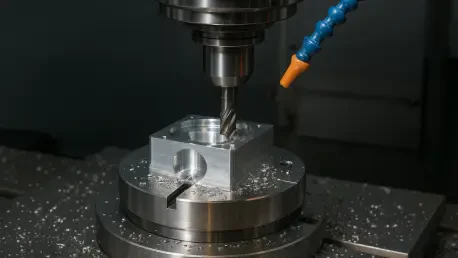
The infrastructure of a modern machine shop plays a vital role in overcoming technical hurdles through the use of high-end multi-axis CNC machines and hybrid systems. By utilizing five-axis milling, manufacturers can complete complex parts in a single setup, which effectively eliminates the tiny cumulative errors that occur when a part is manually moved between different workstations. This precision is essential for components with compound curves and intersecting internal channels, such as those found in orthopedic implants or cardiovascular housings. Furthermore, many facilities have now successfully integrated hybrid manufacturing models, combining subtractive CNC processes with additive technologies like metal 3D printing. This versatility allows medical innovators to choose the most efficient path for their specific hardware, whether they are creating a one-off functional prototype or a large-scale production run for a global market. The ability to print a complex near-net-shape part and then use CNC machining to achieve a mirror-like surface finish represents the pinnacle of current manufacturing capability. These technological advancements have drastically reduced lead times for custom-fitted devices, such as patient-specific cranial plates or spinal cages, allowing surgeons to provide more personalized care. As these machines become more autonomous and integrated with real-time data monitoring, the potential for human error continues to decrease, further solidifying the role of precision machining as the gold standard for medical quality.
Reliability Through Systematic Quality Assurance
Regulatory Compliance: Maintaining Standards and Traceability
Quality in the medical sector is defined by more than just the physical dimensions of a finished part; it is also heavily dependent on documentation and procedural consistency. Specialized manufacturers must adhere to strict ISO 13485 standards and maintain full traceability for every single component they produce. This means providing a detailed “pedigree” for each batch, including original material certifications, heat treat logs, and comprehensive inspection reports. If a device ever fails in the clinical field, this paper trail allows health authorities and Original Equipment Manufacturers (OEMs) to trace the issue back to its specific source, ensuring accountability and facilitating continuous improvement. This level of transparency is not merely a legal requirement; it is a fundamental part of the trust between the manufacturer and the patient. In 2026, the use of blockchain and digital ledgers has further enhanced this traceability, creating an unalterable record of a part’s journey through the supply chain. Every operator, every machine, and every inspection tool is recorded, ensuring that the final assembly is as safe as humanly possible. By maintaining such a high standard of administrative excellence, CNC shops provide medical companies with the confidence they need to navigate the complex global regulatory environment. This systematic approach to quality assurance ensures that reliability is built into the process from the very beginning, rather than being checked for only at the end.
Clinical Integrity: Verifying Life-Saving Hardware
These rigorous quality standards are put to the test across a wide variety of life-saving applications every day. In the world of cardiovascular hardware, for instance, components for stent delivery systems must have a zero-defect surface finish to interact safely with the human bloodstream. Any irregularity could trigger blood clotting or damage the delicate vessel walls, leading to severe patient complications. Similarly, fluidic manifolds used in modern anesthesia equipment require perfectly smooth internal channels to maintain consistent pressure and flow for life-sustaining gases. To verify that every part meets these exact specifications, machinists utilize advanced metrology tools like Coordinate Measuring Machines (CMM) and high-resolution 3D optical scanners. These systems allow for the non-destructive testing of complex internal features that would be impossible to measure with traditional calipers or gauges. By capturing thousands of data points in a matter of seconds, quality control teams can verify that a part matches the original CAD model with sub-micron accuracy before it ever reaches a hospital. This commitment to verification ensures that the hardware used in critical care environments is consistently reliable, regardless of the production volume. In an industry where “good enough” is never acceptable, the ability to prove total compliance with design specifications is what defines clinical integrity.
The Strategic Outlook for Healthcare Manufacturing
Supply Chain Agility: Strengthening Global Innovation
For global medical device companies, the ability to iterate quickly and respond to market shifts is a significant competitive advantage in the 2026-2028 window. Rapid prototyping services allow researchers to test functional metal or plastic parts within days, drastically shortening the time required for clinical trials and subsequent regulatory approval. By offering “bridge production” capabilities, where low volumes of parts are manufactured without the need for high minimum orders or expensive permanent tooling, CNC partners help startups bring new ideas to life without the need for massive initial capital investments. This flexibility is key to keeping the medical supply chain agile and responsive to emerging healthcare challenges, such as localized disease outbreaks or shifts in surgical trends. Furthermore, having a localized manufacturing partner reduces the risks associated with international shipping and geopolitical instability, ensuring a steady flow of components to hospitals and clinics. This proximity also allows for better collaboration between design engineers and production staff, leading to faster problem-solving and more innovative manufacturing techniques. As the global demand for advanced healthcare continues to grow, the companies that can bridge the gap between a digital design and a physical product with speed and accuracy will be the ones that define the future of the industry.
Moving Forward: Strategic Implementation and Future Best Practices
The industry successfully transitioned toward a model where precision was no longer a luxury but a fundamental requirement for clinical viability. To maintain a competitive edge, organizations moved beyond simple manufacturing and adopted integrated quality management systems that prioritized data-driven decision-making. Future success in the medical hardware space necessitated a focus on material science and the adoption of hybrid manufacturing processes that combined the best of additive and subtractive methods. Stakeholders who invested in high-precision metrology and automated inspection found themselves better equipped to navigate the tightening regulatory landscape. Moving forward, the integration of real-time monitoring and adaptive machining became the new standard for producing the next generation of life-saving devices. By aligning technical capabilities with clinical needs, the manufacturing sector proved that it could keep pace with the rapid acceleration of medical innovation. Those looking to lead the market ensured that their production lines remained agile, scalable, and fully transparent to satisfy the demands of both regulators and patients alike. It was clear that the organizations which treated their machining partners as strategic extensions of their own engineering teams achieved the highest levels of quality and reliability. Ultimately, the synthesis of advanced software, robust materials, and skilled craftsmanship provided the necessary framework to redefine what was possible in the realm of medical quality.