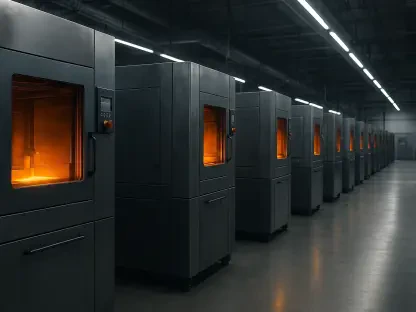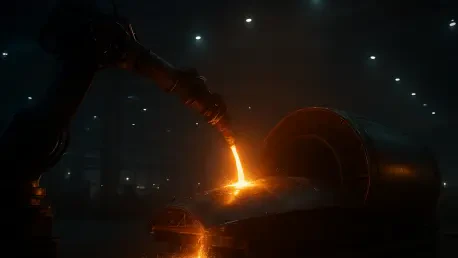

The steady hum of high-precision robotic arms in Bristol now signals a definitive departure from the era of slow-moving foundries and antiquated metallurgical techniques. This transformation, beginning eighteen months ago, turned a localized startup venture into a high-octane production hub that services the world’s most demanding industrial sectors. While traditional heavy industry often pauses between shifts, this facility has adopted a 24/7 operational cycle that merges robotic precision with metallurgical expertise.
The expansion represents a fundamental pivot in how the United Kingdom approaches the fabrication of critical infrastructure components. By utilizing more floor space for automated systems, the site has moved away from sporadic manufacturing toward a continuous stream of output. This evolution is necessary to support a domestic supply chain that requires immediate access to complex metal structures without the delays inherent in offshore sourcing.
Navigating the Shift: From Traditional Forging to Wire Arc Additive Manufacturing
For decades, the production of large-scale metal components relied on the arduous and time-consuming processes of casting and forging. These methods frequently suffer from bottlenecked supply chains and massive material waste, often requiring months of lead time for a single specialized part. Wire Arc Additive Manufacturing (WAAM) has emerged as the solution to these legacy challenges, offering a way to print massive structures with structural integrity that rivals traditional methods.
As global industries face increasing pressure to modernize, the ability to produce large-format, flight-ready, or sea-worthy parts on demand has moved from a theoretical luxury to a strategic necessity. This shift toward additive technologies allows for the creation of geometries that were previously impossible to forge. Consequently, national defense and energy security initiatives are increasingly looking toward these flexible manufacturing routes to maintain operational readiness.
Technical Integration: The Scale of Bristol’s New Production Capabilities
The expanded facility now houses an ecosystem of advanced manufacturing tools designed to handle every stage of the production lifecycle under one roof. Central to this growth is the deployment of additional robotic units and the proprietary Rollerbot 2.0, a hybrid machine that represents the absolute cutting edge of additive technology. By integrating high-precision CNC machining equipment directly into the workflow, the site can now take a component from a raw digital design to a finished, machined part without it ever leaving the building.
This expansion also sees a significant diversification of the material library, allowing for the fabrication of components using super duplex, nickel-aluminum bronze, and specialized aluminum alloys. These materials are essential for high-stress environments where corrosion resistance and strength are paramount. The ability to switch between varied alloys within the same facility ensures that the Bristol site remains a versatile asset for a wide range of engineering requirements.
Validating Safety: DNV Certification and Strategic Global Investment
The credibility of DEEP Manufacturing is anchored in its status as the only manufacturer to hold full DNV approval for the WAAM production of pressure vessels for human occupancy. This certification is considered the gold standard for safety, proving that 3D-printed metal can withstand the most extreme environments found under the ocean surface. It bridges the gap between experimental innovation and industrial trust, providing a verified pathway for marine and aerospace adoption.
Operational scaling in Bristol was mirrored by a massive $100 million investment in U.S.-based development hubs, cementing the company’s role as a transatlantic leader. These strategic investments across Houston and Florida created a network of expertise that accelerates the maturation of additive processes. Such milestones signaled to the global market that metal 3D printing had moved beyond the proof-of-concept phase into a certified industrial reality.
Implementing Integrated Production Workflows: Accelerated Lead Times
To capitalize on this technology, organizations adopted a consolidated supply chain strategy that prioritized speed without compromising on rigorous certification. By utilizing a single-site model for printing, machining, and testing, firms reduced their lead times by up to three times compared to conventional casting. The framework for success involved transitioning to a design-to-certification mindset where material selection and robotic pathing were optimized simultaneously.
This practical approach allowed manufacturers to bypass the need for multiple external vendors, which significantly reduced the logistical complexity and carbon footprint associated with heavy metal fabrication. Industry leaders recognized that the integration of automated finishing and real-time quality monitoring provided a sustainable solution for the future of large-scale parts. These advancements ultimately shaped a more resilient industrial landscape where high-performance components were delivered with unprecedented efficiency and precision.