
With a target price of $7.06 per share, Amaero’s public offering reflects its rapid evolution into a major player within the American additive manufacturing landscape. The Tennessee-based company recently finalized its strategic redomiciliation from Australia to Delaware, a move that signals a decisive pivot toward the United States’ domestic defense and aerospace supply chains. By filing with the Securities and Exchange Commission for a listing on the Nasdaq Global Select Market under the ticker symbol AMRO, the firm seeks to capitalize on the increasing demand for specialized materials and advanced manufacturing techniques. This initial public offering involves approximately 7.46 million shares of common stock, aiming to secure a gross value of roughly $52.6 million. Should underwriters choose to exercise their full purchase options, this figure could rise to $53.4 million, providing the necessary capital to bolster its Tennessee operations and fulfill critical military contracts that require high-performance alloy powders.
Industrial Expansion and Technical Infrastructure
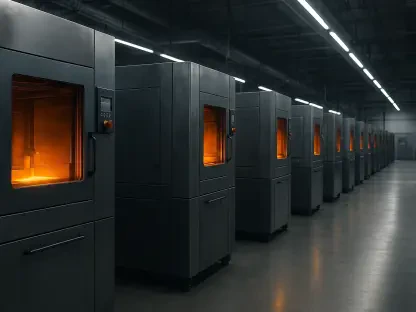
At the heart of this expansion is an AS9100D-certified facility located in McDonald, Tennessee, which serves as the primary hub for the company’s manufacturing initiatives. Currently, the site utilizes three advanced Electrode Induction Melting Inert Gas Atomization systems to produce refractory and titanium alloy powders. These systems are essential for creating the high-purity materials required by modern additive manufacturing processes in the aerospace and energy sectors. However, the existing infrastructure is only the beginning of a broader scale-up plan. A fourth atomizer is already scheduled for commissioning by June 2027, a development that will significantly push the boundaries of the firm’s production capabilities. This new equipment is expected to increase annual output from the current range of 680 to 720 tonnes to a much more robust 920 to 960 tonnes, ensuring that the company can meet the rising volume of orders from major domestic industrial partners.
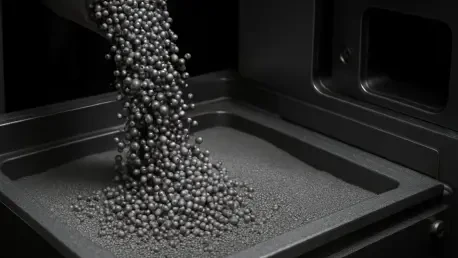
The focus on high-performance alloys like niobium and tantalum-based powders highlights a specialized niche that remains critical for the next generation of hypersonic flight and deep-sea exploration. Unlike traditional manufacturing methods, the use of atomization allows for precise control over particle size and spherical geometry, which is vital for the integrity of final components. By securing a domestic production line for these materials, the company effectively mitigates risks associated with global supply chain disruptions that have plagued the defense industry in recent years. This strategic positioning is further enhanced by the proximity to key defense contractors and research institutions, fostering a collaborative environment for rapid prototyping and material testing. As the industry moves toward more complex geometries and lightweight structures, the ability to provide consistent, high-quality feedstock becomes a significant competitive advantage in the current market.
Market Positioning and Vertical Integration Strategies
Financially, the company has entered a period characterized by aggressive scaling alongside substantial investment in physical assets. During the first half of 2026, revenues climbed to $7.4 million, marking a dramatic rise from the $1.2 million recorded during the corresponding period in 2025. While this growth is impressive, it has been accompanied by a widening net loss of $13.4 million, primarily due to the front-loaded costs of infrastructure and equipment acquisition. The proceeds from the Nasdaq listing are specifically earmarked to address these needs, with $17.5 million designated for new capital equipment. The remaining capital will likely support ongoing research and development efforts, general operating expenses, and potential acquisitions that could further diversify the company’s technological portfolio. This financial strategy reflects a long-term commitment to capturing a larger share of the additive manufacturing market by prioritizing infrastructure over immediate profitability.
The transition toward a vertically integrated model was most clearly demonstrated by the recent expansion into Powder Metallurgy Hot Isostatic Pressing. This capability allowed the firm to transform its proprietary powders into large, near-net-shape components that were difficult to manufacture using standard methods. By mid-2026, the company maintained active contracts with nine major customers, including a high-profile production agreement to support the United States submarine industrial base. Moving forward, stakeholders found that focusing on total supply chain control provided a more resilient framework for high-stakes government projects. Investors and industry leaders recognized that the path to sustainable growth involved moving beyond mere material supply to becoming a comprehensive engineering partner. This evolution suggested that future success depended on the successful integration of advanced atomization with large-scale component fabrication to meet the stringent standards of the Navy.