
The titanium industry has traditionally relied on energy-intensive batch production cycles that limit efficiency and inflate costs for manufacturers worldwide. For decades, the metallurgy sector remained locked in a cycle of heating and cooling, where high-strength metals were forged through stop-and-start processes. This legacy of intermittent manufacturing is finally being challenged by the validation of the GenX platform in Virginia. The facility proved that a continuous stream of high-quality metal is no longer a laboratory dream but a tangible industrial reality.
Breaking the Batch Bottleneck in Titanium Manufacturing
The metallurgy industry has long been constrained by the batch-cycle paradox, where high-demand materials like titanium are produced through processes that consume massive amounts of energy and time. Recent breakthroughs from the IperionX research facility suggest this limitation is finally being dismantled. With the successful validation of the GenX platform, the industry is witnessing a shift from intermittent production to a streamlined, continuous flow that could fundamentally alter the availability of high-performance metals.
This evolution signifies more than just a faster way to make metal; it represents a departure from the traditional thermodynamic constraints that have defined titanium since its inception. By moving toward a continuous model, manufacturers can avoid the thermal variance and quality fluctuations that often plague batch runs. This stability is essential for ensuring that every kilogram of material maintains the same high-standard properties required by heavy industry.
Why the Shift to Continuous Processing Matters for Modern Industry
Titanium is the backbone of aerospace, medical implants, and advanced defense systems, yet its traditional production is notoriously carbon-intensive and expensive. The reliance on legacy methods created a supply chain bottleneck that struggled to meet the growing demand for sustainable, low-carbon materials. As global industries pivot toward green manufacturing and domestic resilience, the ability to produce high-grade titanium without the inefficiencies of traditional furnace cooling cycles becomes a critical economic imperative.
Furthermore, the rising cost of raw materials and energy has made the old way of doing things increasingly unviable. Continuous processing allows for a more predictable and stable supply chain, reducing the vulnerability of critical sectors to price spikes. By modernizing the foundation of primary production, the industry can better support the rapid prototyping and deployment of next-generation technologies.
Decoding the GenX Platform: A Technical Leap Forward
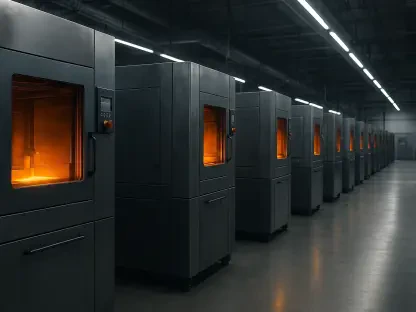
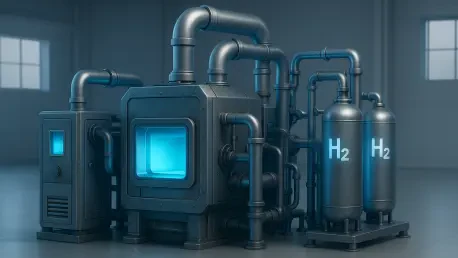
The foundation of this technology lies in the patented Hydrogen Assisted Metallothermic Reduction process. Unlike traditional methods, GenX enables this chemical reduction to occur in a steady state, eliminating the need to power down and reheat furnaces between runs. Recent validation campaigns demonstrated the platform’s industrial readiness, processing over 500 kilograms of material across 41 hours of operation while maintaining a consistent throughput of 12 kilograms per hour.
Chemical integrity remains the ultimate test for any new production method, and testing confirmed that the powder produced by GenX meets strict oxygen limits. The material successfully achieved the benchmarks required for ASTM Grade 5 and Grade 23 classifications, making it suitable for surgical devices and aircraft components. This ability to maintain high-purity standards while running continuously marks a significant technical achievement for large-scale manufacturing.
Quantifying the Impact: Efficiency Gains and Sustainability
The move to continuous processing yielded remarkable resource efficiency compared to standard batch operations. By maintaining constant thermal levels, the system achieved a 75% reduction in power requirements per kilogram, alongside a 60% decrease in hydrogen use and a 45% drop in magnesium consumption. These metrics represent a significant departure from the resource-heavy footprints of previous generations, offering a more sustainable path for metal production.
Because the GenX furnace design is modular, it provides a blueprint for rapid industrial expansion. CEO Taso Arima highlighted that achieving continuous primary production allows for a sixfold increase in throughput. This transformation made the goal of a low-carbon, recycled titanium supply chain commercially viable for companies looking to de-risk their material sourcing while meeting strict environmental targets.
Navigating the Path to Industrial-Scale Implementation
The transition toward a full powder production line successfully integrated economic evaluations to determine the site of the first industrial facility. This strategy aligned with a $99 million defense contract that transitioned continuous processing milestones into finished titanium components. This move ensured that the technical successes seen in the laboratory were translated into real-world applications for national security and advanced engineering.
Optimization efforts through 2026 refined the furnace for maximum yield and domestic capacity. These advancements established a commercially viable model for a low-carbon, recycled titanium supply chain. The project successfully identified the necessary infrastructure for scaling these operations across multiple production lines. By securing these primary production capabilities, the industry established a foundation for self-sustaining mineral independence.