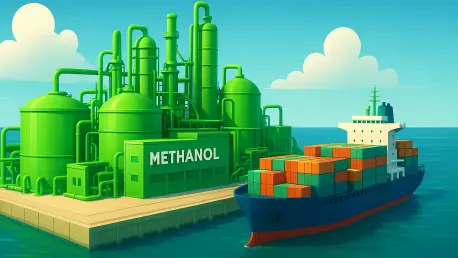

The massive expanse of the Deendayal Port in Gujarat is currently undergoing a radical metamorphosis as it transitions from a traditional shipping hub into the global epicenter of sustainable marine fuel production. This evolution is not merely a localized infrastructure upgrade but a foundational shift in how the nation engages with the international maritime economy. By pivoting toward e-methanol, India is effectively positioning itself to serve as the refueling station for a new generation of low-carbon vessels. This endeavor signifies a bold departure from being a fuel-dependent importer to becoming a primary architect of the green maritime corridor.
The urgency of this transition is underscored by the shifting dynamics of global trade, particularly along the high-traffic Asia-Europe International Trade Corridor. As international maritime regulations become increasingly stringent, the shipping industry faces a mandatory requirement to move away from heavy fuel oils that have dominated the seas for decades. Consequently, the demand for “green molecules” has surged, creating a strategic vacuum that the current project aims to fill. By integrating environmental necessity with industrial foresight, the nation is carving out a role that balances ecological preservation with robust economic expansion.
The ₹2,300 Crore Bet on the Future of Marine Fuel
The commitment to this green transition is backed by a substantial ₹2,300 crore investment, signaling a long-term belief in the viability of alternative propulsion systems. This project is much more than a simple manufacturing facility; it represents a comprehensive overhaul of the energy value chain at Gujarat’s Deendayal Port. While many global ports are still in the conceptual phase of decarbonization, the tangible progress at Kandla demonstrates a proactive approach to capturing the early-mover advantage in the renewable fuel market. This financial commitment ensures that the necessary infrastructure is in place to meet the demands of global shipping giants as they overhaul their fleets.
The scale of this investment allows for the development of sophisticated facilities that can manage the complexities of green energy synthesis at volume. By focusing on a port-based model, the project eliminates the logistical hurdles and costs associated with transporting hazardous fuels over long distances inland. This strategic localization at one of the country’s most active maritime gateways ensures that the fuel is available exactly where it is needed most. The investment also acts as a catalyst for ancillary industries, fostering a localized ecosystem of technology providers and maintenance services specialized in green hydrogen and carbon capture.
Why E-Methanol Is the Linchpin of Decarbonization
E-methanol has emerged as the frontrunner for clean marine propulsion due to its high energy density and the relative ease with which it can be stored and transported compared to hydrogen. The production process involves synthesizing green hydrogen with captured biogenic carbon dioxide, resulting in a fuel that is chemically identical to traditional methanol but possesses a neutral carbon footprint. This versatility makes it an ideal “drop-in” solution for modern shipping engines, many of which are already being built with dual-fuel capabilities. As the maritime sector seeks scalable alternatives to fossil fuels, e-methanol provides a realistic bridge toward achieving zero-emission voyages.
Furthermore, the environmental benefits extend beyond the reduction of greenhouse gases to include a significant decrease in sulfur oxide and nitrogen oxide emissions. This improvement in air quality is particularly critical for coastal regions and busy port cities that have historically suffered from the heavy pollution generated by traditional shipping activities. The adoption of e-methanol thus addresses both the global challenge of climate change and the local challenge of environmental health. By securing a reliable supply of this green fuel, the industry can maintain its logistical throughput without compromising the ecological integrity of the oceans or the atmosphere.
A Strategic Blueprint for Port-Based Energy Production
The inaugural facility at Kandla is a result of a sophisticated collaboration between the Deendayal Port Authority and Assam Petro-Chemicals Ltd., bridging the energy potential of the Northeast with the maritime infrastructure of the West. This partnership leverages a 76:24 equity structure, ensuring that the port authority maintains a significant stake in the operational success of the venture. The project utilizes 75 acres of high-value land, where it integrates renewable energy inputs and desalinated water to create a truly circular production model. This level of regional cooperation serves as a blueprint for how diverse industrial strengths can be unified to achieve a common national goal.
To ensure stability and market entry, the development is being executed through a two-stage rollout. Phase I is set for completion by January 2027, establishing an initial capacity of 50 tonnes per day to test the logistics and supply chain integration. Following this, Phase II will rapidly expand the output to 150 tonnes per day by March 2027, allowing the facility to scale up in alignment with the growing international demand. This phased approach mitigates the risks associated with large-scale industrial projects while providing a clear timeline for international shipping lines to plan their bunkering schedules.
Breaking the Price Barrier: Competitive Advantages and Expert Projections
Economic viability remains the most significant hurdle for the widespread adoption of green fuels, yet the Kandla plant is engineered to disrupt the global pricing structure. While the current international market price for green methanol is approximately $1,300 per tonne, the operational efficiency of this new facility is projected to bring production costs down to nearly $750 per tonne. This dramatic reduction is achieved through the use of low-cost renewable energy and the strategic utilization of port infrastructure. By offering a price point that is competitive with traditional fuels, the project removes the primary barrier to the decarbonization of the global merchant fleet.
Industry experts suggest that this price advantage is the “missing piece” of the energy transition puzzle, as it makes the choice for green fuel an economic one rather than just a regulatory one. Major shipping corporations, such as Maersk, are already looking toward Indian production hubs to secure the fuel needed for their new container vessels. This demand ensures that the facility will have a steady stream of off-takers from day one, solidifying India’s position as a dominant exporter in the green energy market. The ability to undercut established global competitors while maintaining high environmental standards is a powerful combination that will likely reshape maritime logistics.
A Framework for Replicating the Green Shipping Hub Model
The successful implementation of the e-methanol facility required a comprehensive strategy that extended beyond fuel production into the realms of shipbuilding and workforce development. It was essential that the nation moved toward becoming one of the top five ship-owning nations by 2047 by fostering greenfield shipbuilding clusters in regions like Porbandar. These clusters were designed to integrate fuel supply, container manufacturing, and vessel repair into a single, cohesive ecosystem. This holistic approach ensured that the green maritime transition was not just about the fuel in the tanks, but the entire lifecycle of the vessels and the logistics they supported.
In the final stages of the project’s initial deployment, the focus shifted toward ensuring that the local economy could sustain the technical requirements of this high-tech value chain. This meant that the regional development plans included specialized training programs to create thousands of jobs in green energy management and maritime technology. The transition proved that the integration of sustainable energy into port operations could serve as a powerful engine for local economic growth. By the time the facility reached full capacity, the framework had already provided a clear path for other major ports to adopt similar models, ensuring that the nation’s coastline remained at the forefront of the global energy revolution.