
GKN Aerospace’s reduction of lead times from nine months to four weeks demonstrates how additive manufacturing can achieve massive material waste reductions in ring production. This dramatic shift highlights a broader industry trend where the focus has moved beyond the mere capability of printing complex geometries toward the delivery of certified, high-performance components within a fragmented global economy. As the sector matures toward 2035, the transition is being defined by a fundamental paradigm shift from hardware-centric benchmarks to an era of industrial integration, regional resilience, and rigorous economic qualification. The industry is effectively leaving behind the “one-size-fits-all” machine model in favor of specialized production cells that are specifically engineered to thrive in a multipolar world. In this new landscape, regional hubs are prioritizing defense requirements, material security, and sovereign manufacturing capabilities over the traditional global supply chain models that dominated the early 2020s. The primary inquiry for the next decade has transitioned from technical feasibility to industrial utility, questioning whether a part can be delivered repeatedly, economically, and to a certified standard within a local ecosystem.
Advanced Evolution of Printing Technologies
Specialization Within Powder Bed Fusion
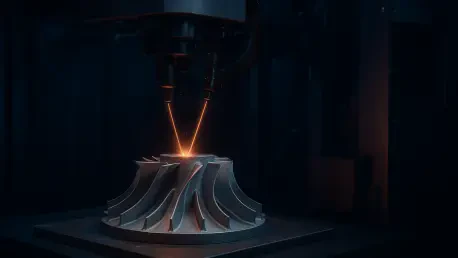
The initial decades of Powder Bed Fusion development were largely characterized by a fierce race for hardware dominance, with manufacturers focusing almost exclusively on increasing laser power, expanding build volumes, and multiplying the number of energy sources. However, as the industry moves toward 2035, this technology is bifurcating into highly specialized systems that are tailored to the unique demands of specific industrial sectors. For instance, the system architecture required to produce high-volume titanium consumer electronics is fundamentally different from the one needed for nickel superalloy aerospace combustors. Future production cells will prioritize thermal stability, powder handling efficiency, and integrated real-time inspection over simple laser counts. This specialization ensures that each machine is optimized for the metallurgy and the performance requirements of its target application, reducing the overhead associated with general-purpose systems that often carry unnecessary features for specific tasks.
As these systems continue to scale, the industry is increasingly adopting “qualified output over time” as the primary metric for success, moving away from the simplistic measure of cubic centimeters per hour. This new standard accounts for total equipment effectiveness, including downtime, scrap rates, and the complexity of post-processing. While Laser PBF and Electron Beam PBF will continue to coexist, their roles are becoming more defined by their specific process physics. Electron Beam PBF remains the superior choice for high-temperature alloys and reactive materials where residual stress is a critical failure point, primarily due to its vacuum environments and high process temperatures. Conversely, Laser PBF is dominating the market for precision components and large-format versatility. The challenge for multi-laser architectures now lies in managing the exponential complexity of control and calibration, necessitating a shift toward automated gas flow management and overlap zone monitoring that exceeds the capabilities of manual human oversight.
Integration and Hybridization of Directed Energy Deposition
Directed Energy Deposition is following a distinct trajectory that emphasizes deep integration with existing industrial assets rather than functioning as a standalone “printer” in a lab setting. Its primary value proposition in the coming decade lies in its ability to add high-value material to existing substrates, such as large-scale forgings, heavy plates, or worn industrial components. This capability has turned the technology into a critical pillar of “hybrid” manufacturing, where deposition, machining, and heat treatment function as a single, continuous, and automated workflow. By treating the deposition head as just one tool in a multi-axis machining center, manufacturers are able to combine the speed of traditional subtractive processes with the material efficiency of additive manufacturing. This approach is particularly effective for large-scale aerospace components and marine repair operations, where the goal is to reach a near-net shape as quickly as possible before finalizing dimensions through precision milling.
The success of this technology is less about the machine architecture and more about the end-to-end certification and production planning that surrounds the process. Whether the system utilizes wire-laser, wire-arc, or powder-fed plasma mechanisms, each application is being meticulously tailored to meet regional industrial needs, such as ship repair in coastal hubs or the creation of graded-material tooling for localized automotive manufacturing. The true innovation is found in the software that manages the transition between additive and subtractive phases, ensuring that the thermal history of the part is tracked and that the metallurgical integrity remains consistent throughout the build. As we progress toward 2035, the industry is seeing the emergence of mobile or modular deposition units that can be deployed directly to a repair site or integrated into a shipyard, effectively bringing the factory to the component rather than transporting massive parts across the globe.
Strategic Materials and Computational Infrastructure
Innovation in Alloy Design: Custom Solutions for Additive Processes
For years, the metal additive manufacturing industry relied on “borrowed” alloys that were originally developed for casting or welding, which often resulted in metallurgical challenges due to the rapid solidification and unique thermal gradients of the 3D printing process. The industry has now firmly entered a phase of computational alloy design, where materials are engineered from the atomic level specifically for additive manufacturing. These new alloys are designed to handle the high cooling rates of laser melting without cracking or forming undesirable phases. A prominent example of this progress is the development of oxide-dispersion-strengthened nickel alloys that can withstand extreme temperatures in rocket engines that would traditionally melt or deform standard materials. By using computational thermodynamics and high-throughput testing, researchers are rapidly identifying new elemental combinations that offer superior strength-to-weight ratios and better oxidation resistance, tailored precisely for the additive environment.
Beyond the technical performance of these materials, alloy development is increasingly being influenced by the realities of geopolitical supply chain risks. As elements such as cobalt, niobium, and certain rare-earth metals become subject to trade restrictions or extreme price volatility, manufacturers are pivoting toward the creation of regionalized alloy portfolios. In the coming decade, the “best” material for a specific application will not be defined solely by its theoretical mechanical properties, but by its reliable availability within a regional industrial ecosystem. This shift is leading to the rise of cobalt-free, corrosion-resistant steels and alternative superalloys that utilize more abundant elements without compromising the integrity of the final part. This strategic approach to metallurgy ensures that production can continue unabated even during periods of global supply chain instability, making material science a key component of national and regional economic security strategies.
Impact of Artificial Intelligence and DatThe Digital Backbone
In the current landscape of 2026 and beyond, computational power has evolved from a simple engineering tool into essential industrial infrastructure. Artificial Intelligence is being applied to solve the most labor-intensive aspects of metal additive manufacturing, including the development of process parameters for new materials and the real-time detection of anomalies during a build. While AI does not replace the expertise of a trained metallurgist, it significantly accelerates the “time-to-market” for new parts by reducing the trial-and-error cycles that previously defined the industry. Advanced algorithms can now analyze thousands of data points from sensors within the machine to identify sub-visual defects or predict the final properties of a part before it ever leaves the build chamber. This level of insight is becoming critical for regulatory qualification, especially in the medical and aerospace sectors where a comprehensive “digital birth certificate” for every component is increasingly mandatory.
Looking toward the mid-2030s, the future of additive manufacturing software lies in its ability to connect previously disconnected silos into a unified digital production system. Advanced production planning tools are now capable of comparing multiple manufacturing routes—such as additive versus casting or forging—against a complex matrix of variables including lead time, material cost, carbon footprint, and machine availability. This digital maturity is creating a clear divide between organizations that leverage manufacturing data for real-time decision-making and those that merely collect data without a strategy for its application. The most successful operations are those that use this digital backbone to automate the qualification process, allowing them to iterate designs and move to full-scale production with a speed that was previously unimaginable. This integrated software environment essentially acts as a nervous system for the factory, ensuring that every laser pulse and every powder layer is accounted for and optimized.
Market Shift Toward Outcome-Based Production
Regionalization: Trusted Production Networks
The move toward regionalization is being driven by a combination of defense policy, data security concerns, and the need for more resilient supply chains in a multipolar world. Rather than relying on a centralized global production model, the market is shifting toward “trusted production networks” where manufacturing capacity is distributed geographically but connected digitally. This decentralized approach allows for the production of critical parts closer to the point of need, whether that is a forward-deployed military base, a remote mining operation, or a specialized medical center. To support this, the industry is developing niche machines that are highly optimized for specific sectors, such as dedicated platforms for medical implants or propulsion systems, which makes the equipment less interchangeable but far more efficient. This fragmentation of the general Powder Bed Fusion category ensures that each regional hub can specialize in the industries that are most relevant to its local economy.
In this environment, the ability to provide a “reusable body of production data” has become one of the most valuable competitive assets a company can possess. Organizations that have already invested in the qualification of specific material-process combinations are finding that they can outcompete those who only offer raw machine capability. This is because the economic value has shifted from the hardware itself to the “recipe” and the data-driven evidence of quality. As Directed Energy Deposition becomes a standard feature in hybrid machining centers, the technology is losing its status as a standalone novelty and is being viewed as just another reliable tool in the broader manufacturing toolkit. The focus for companies over the next few years will be on building these certified capacities, ensuring that they can provide high-reliability parts on demand without the need for extensive re-qualification every time a new machine is added to the fleet.
Commercial Evolution: The Invisibility of the Machine
By the mid-2030s, the commercial landscape for metal additive manufacturing will have matured to the point where the hardware itself is largely “invisible” in the transaction. Customers are no longer looking to purchase a specific brand of printer; instead, they are buying “certified capacity” or “approved components” that meet rigorous industry standards. The printer is eventually seen as just one component of a much larger and more complex system that includes automated powder handling, integrated heat treatment, and digital quality assurance. This shift toward outcome-based production means that the value of the transaction is tied to the performance and reliability of the final part rather than the technical specifications of the laser or the build volume. The industry has reached a point of stability where the focus is on the seamless delivery of value, much like the traditional casting and forging industries that have existed for centuries.
Ultimately, the long-term success of metal additive manufacturing depended on its ability to compete directly against decades of established expertise in subtractive and transformative manufacturing. To achieve this, the sector had to solve real-world industrial problems by focusing on material efficiency, regional independence, and the radical shortening of lead times. The measure of progress in 2035 is not the complexity of the internal lattice structures being printed, but the repeated and reliable delivery of qualified parts that satisfy the stringent demands of modern power generation, transportation, and healthcare. As the industry consolidated, the survivors were those who successfully bridged the gap between scientific research and industrial scale-up, turning the promise of 3D printing into a robust and boringly reliable pillar of modern manufacturing infrastructure.
Strategic Directions for Industrial Implementation
The transition through the late 2020s and into the 2030s required a radical shift in how industrial leaders approached capital allocation and process qualification. Those who successfully navigated this period moved away from a “wait and see” hardware strategy and instead focused on the development of proprietary, data-backed material and process combinations. They recognized that the true barrier to entry was not the cost of the machine, but the cost of the data required to prove that the machine could produce a flight-critical or life-saving part every single time. By prioritizing software-centric qualification and investing in regional production hubs, these early adopters transformed their manufacturing operations from rigid, fragile systems into flexible, resilient networks that could respond to geopolitical shifts in real time.
The path forward for the remaining years of this decade involved a disciplined focus on solving specific industrial pain points rather than chasing the “hype” of new hardware releases. Companies achieved the best results by integrating additive manufacturing into a broader hybrid workflow, using technology like Directed Energy Deposition to enhance existing forgings and reduce material waste. Actionable strategies focused on building internal “digital thread” capabilities, ensuring that every step of the manufacturing process—from initial alloy design to final inspection—was captured and analyzed. This commitment to data integrity and process control allowed the industry to finally challenge the dominance of traditional casting and forging, offering a more sustainable and responsive alternative for the high-performance components of the future. Metal additive manufacturing emerged as a mature technology because it stopped trying to replace every process and instead focused on becoming the most reliable solution for the world’s most difficult manufacturing challenges.