
For companies operating in the aerospace and medical sectors, maintaining a seamless digital record is a mandatory regulatory requirement rather than an operational luxury. This shift represents a fundamental maturation of additive manufacturing, where the physical output of a 3D printer is no longer the sole metric of industrial success. Instead, the digital thread—a continuous stream of data connecting every phase of a product’s lifecycle—has become the primary catalyst for scaling production. In the current landscape of 2026, manufacturers are recognizing that the information surrounding a part is often as valuable as the part itself. By integrating design specifications, material provenance, and machine sensor data into a single narrative, organizations can finally move beyond the siloed environments of the past. This evolution bridges the gap between disparate spreadsheets and proprietary machine logs, creating a unified framework that ensures repeatability and trust in every layer of the build process.
Workflow Optimization: Mastering Material Traceability and Powder Genealogy
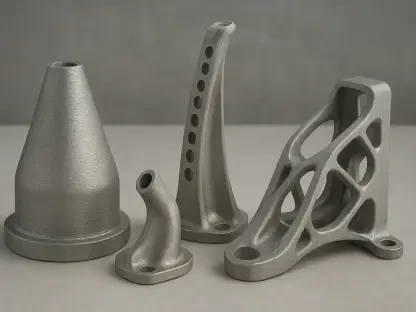
The intricacies of metal additive manufacturing present unique challenges that traditional subtractive methods never encountered, particularly regarding raw material management. Unlike a solid billet of titanium or steel, metal powder is a dynamic medium that is sieved, blended, and reused across dozens of production cycles. Each time the material passes through the machine, its chemical and physical properties can undergo subtle transformations that might impact the fatigue life or tensile strength of the finished component. To mitigate these risks, the digital thread incorporates the concept of powder genealogy, which provides a granular history of every batch of material. By automating the tracking of powder as it moves through various containers and machines, software solutions allow manufacturers to maintain a strict chain of custody. This level of traceability is essential for proving the provenance of flight-critical parts, ensuring that no recycled material falls outside of the established safety parameters.
Beyond the mechanical and chemical variables, the digital thread serves as a vital repository for human expertise and institutional knowledge. Historically, the specific nuances required to achieve a successful build—such as the subtle adjustment of support structures or the optimization of gas flow—remained locked in the minds of individual technicians. This reliance on personal experience created a significant vulnerability; if a key engineer left the organization, their specialized know-how often vanished with them, leading to production inconsistencies. Modern digital systems address this by integrating manual data entry and decision-tracking directly into the production workflow. By recording the rationale behind every technical choice, these platforms convert individual expertise into a durable corporate asset. This transition not only protects the company against the loss of talent but also facilitates more effective training programs for new engineers, ensuring that high-quality production standards are maintained across diverse facilities.
Strategic Collaboration: Strengthening Supply Chain Resilience
The realization of a truly universal digital thread is not an achievement that any single manufacturer or software vendor can claim in isolation. It requires a high degree of industry-wide collaboration and the establishment of standardized protocols that allow for interoperability between different hardware brands. Recent partnerships with national accelerators have focused on breaking down the proprietary barriers that often hinder data flow in complex manufacturing environments. By participating in these technical committees, industry leaders are developing common standards for data formats and communication interfaces, ensuring that information captured by a sensor on one machine can be interpreted correctly by analysis software from another provider. This collaborative approach is essential for establishing standardized qualification protocols, which reduce the time and cost associated with certifying new parts. As these frameworks become more robust from 2026 to 2028, the entire ecosystem will benefit from increased transparency and a more rapid adoption of advanced production technologies.
This digital transformation also addresses the inherent fragility of traditional, centralized supply chains by enabling the transition toward distributed manufacturing. By leveraging a secure digital thread, companies can print critical spare parts closer to the point of need, whether on an offshore oil rig or at a remote military outpost. This capability significantly reduces lead times and minimizes the need for massive inventories of physical components. However, such a model is only viable if there is absolute certainty that the locally produced part meets the exact specifications of the original design. High-fidelity data records provide this assurance, allowing for the rapid certification of components that would otherwise take months to approve. Furthermore, the integration of artificial intelligence is now being used to organize dark data from unstructured sources like emails and chat logs. By synthesizing this information into the project history, AI helps build a more complete picture of development, further accelerating the journey from a digital concept to a certified part.
Industrial Strategy: Implementing Data Integrity for Future Production
The journey toward a fully realized digital thread demonstrated that the future of high-tech production depended on the masterful management of information. While previous years focused heavily on the speed of laser systems and the variety of printable alloys, the industry eventually recognized that administrative bottlenecks were the true constraints on growth. Consequently, the most successful organizations moved away from hardware-centric thinking and adopted a strategy that prioritized data integrity from the outset. For manufacturers who looked to remain competitive, the logical next step involved auditing existing data silos and investing in software that bridged the gap between design and quality assurance. Leadership teams focused on creating a culture where data entry was viewed as a core part of the engineering process rather than a secondary task. By ensuring that every part’s history was created simultaneously with the component, companies met the rigorous demands of regulators and unlocked new levels of operational efficiency.
As manufacturing evolved, the integration of real-time monitoring and verification systems became the standard for ensuring data immutability. Companies that successfully implemented these digital strategies found that they could respond to market disruptions with far greater agility than those relying on traditional documentation methods. The ability to instantly recall the entire history of a component—from the initial powder batch to the final inspection report—became a significant competitive advantage. Leaders observed that the focus shifted toward autonomous quality control, where the digital thread fed directly into machine-learning algorithms to adjust parameters in real-time. This proactive approach reduced scrap rates and enhanced the sustainability of additive processes across the board. Ultimately, the transition to an information-centric model was the most critical step in moving 3D printing from a prototyping tool to a cornerstone of modern industrial infrastructure during this period.