
Achieving scientific accuracy in the search for organic molecules on Mars depends entirely on the exclusion of terrestrial biological matter during the initial construction process. The assembly of modern spacecraft is an intricate feat of engineering that requires environments significantly cleaner than a typical hospital operating room. These specialized facilities, known as clean rooms, are indispensable because human presence is fundamentally “dirty” in the context of high-precision manufacturing. Every minute, a person sheds over 100,000 particles, including skin cells and oils, which can compromise hardware worth billions of dollars. Consequently, these rooms are designed to mitigate microscopic risks, ensuring the longevity and scientific success of missions destined for the vacuum of space. As the industry moves through 2026, the reliance on these ultra-sterile zones has only intensified, forming the critical foundation upon which every successful extraterrestrial exploration mission is built.
Environmental Control and Filtration Standards
To maintain such high standards, clean rooms utilize advanced infrastructure to create controlled ecosystems where atmospheric conditions are kept under constant surveillance. Air is continuously purified through High-Efficiency Particulate Air (HEPA) and carbon filters to remove nearly every trace of microscopic debris before it can settle on sensitive instruments. Facilities are categorized by particle density; for example, a “class 10,000” room allows no more than 10,000 tiny particles per cubic foot of air, making it roughly 50 times cleaner than a standard office or residential setting. These environments manage humidity, temperature, and pressure differentials to ensure that no external air can leak into the workspace. The precision required for modern sensors means that even a minor fluctuation in air quality could lead to microscopic structural defects that would only manifest once the spacecraft experiences the extreme pressure changes of a launch or the harsh temperatures of deep space.
Human interaction with spacecraft hardware requires a rigorous protocol involving specialized garments often referred to as “bunny suits.” These outfits act as a final barrier, preventing skin cells, hair, and biological oils from entering the clean room workspace and contaminating the build. The process of “gowning up” is meticulous, often involving air showers that blast away loose particles before a technician ever steps onto the manufacturing floor. In 2026, these suits are designed with advanced synthetic fabrics that do not shed fibers of their own, ensuring that the act of protection does not inadvertently introduce new contaminants. Furthermore, personnel must undergo extensive training to minimize movements that could stir up settled particles. By controlling the biological output of the workforce, aerospace companies ensure that the internal components of a rover or satellite remain as pristine as the vacuum they will eventually inhabit, protecting the massive investment of time and resources.
Protecting Scientific Integrity and Optical Performance
One of the most vital reasons for these sterile environments is the preservation of scientific data, particularly for missions searching for life on other planets. When rovers analyze extraterrestrial soil for organic molecules, the presence of even a single flake of human skin could result in a “false positive.” Such an error would mislead the global scientific community into believing they had found alien microbes when they had actually detected terrestrial contamination from the laboratory. This risk is particularly acute for missions targeting Mars or the icy moons of the outer solar system, where the signature of life may be faint and easily obscured. Strict cleanliness protocols ensure that the data returned from deep space is accurate and completely untainted by the biology of the people who constructed the machine. This level of purity is necessary to maintain public trust in scientific discoveries and to justify the immense costs associated with planetary exploration.
Beyond biological concerns, clean rooms are essential for protecting the sensitive optics of modern space telescopes. Materials like plastics, adhesives, and human oils can release volatile organic compounds through a process called “outgassing” once they reach the vacuum of space. These molecules often recondense on cold surfaces, creating a thin, oily film that fogs up lenses and mirrors, effectively blinding the instrument. By assembling hardware in a contaminant-free environment, engineers prevent these oils from ever reaching the spacecraft, ensuring that billion-dollar telescopes do not lose their vision shortly after launch. For instance, instruments designed to detect infrared light are exceptionally sensitive to such thermal noise and surface contamination. Maintaining pristine surfaces from the moment of manufacture through to final integration is the only way to guarantee that the light from distant galaxies can be captured with the clarity needed for breakthrough astronomical research.
Ethical Standards and Thermal Processing
There is a significant ethical responsibility known as “forward contamination” that governs how humanity explores the solar system. Certain Earth-based bacteria, known as extremophiles, can survive the harsh radiation, extreme cold, and vacuum of space for years. If these organisms were accidentally transported to a potentially habitable moon or planet, they could potentially outcompete and destroy indigenous microbial ecosystems before we even have a chance to study them. To prevent such a biological invasion, spacecraft are kept ultra-sterile through every phase of their development. This commitment to planetary protection is so absolute that some spacecraft are intentionally crashed into gas giants at the end of their missions to avoid any risk of accidentally impacting a protected celestial body. By adhering to these rigorous cleaning standards, space agencies fulfill their role as responsible explorers, ensuring that our search for knowledge does not cause the destruction of extraterrestrial life.
The clean room also plays a critical role during the “bake-out” phase of pre-flight testing, which is a mandatory step for ensuring mission longevity. Before a craft is cleared for launch, it is heated to extreme temperatures in a thermal vacuum chamber to evaporate any remaining moisture or organic residue. If a component is excessively dirty before this process begins, the intense heat can essentially “cook” contaminants onto the surface, creating a permanent layer of grime that could damage hardware or interfere with thermal regulation. Maintaining an exceptionally clean environment ensures that this thermal processing functions as a final sterilization rather than a destructive event that bakes debris into the sensitive electronics. This process is particularly vital for missions operating from 2026 to 2030, where the complexity of the instruments requires the highest possible level of surface purity to prevent long-term degradation while the craft is millions of miles away from any possible repair.
Engineering Challenges in Microgravity Environments
Modern space observatories rely on complex moving parts that must operate with microscopic precision to achieve their mission goals. For instance, advanced telescopes use beryllium mirrors that flex and shift on tiny, high-precision gears to maintain focus as temperatures fluctuate in the void of space. Even a microscopic speck of dust can jam these mechanisms or interfere with their tight tolerances, rendering a critical system immobile and the entire mission a failure. The clean room is the only environment where these delicate mechanical adjustments can be made without the risk of interference from terrestrial debris. As engineers work on the next generation of deployable structures, the margin for error has shrunk to the width of a few molecules. This level of precision requires a constant battle against gravity-bound particles, ensuring that every hinge, motor, and actuator remains free from the grit and dust that are ubiquitous in any standard industrial manufacturing facility.
The behavior of dust in microgravity presents another severe risk to the mission’s electrical systems and overall spacecraft health. On Earth, dust eventually settles on the floor due to gravity, but in the weightlessness of space, it remains suspended and floats freely inside the spacecraft chassis for its entire operational life. If a single conductive metallic particle drifts into a high-voltage circuit board, it can cause a short circuit and a catastrophic failure of the entire mission. Building the spacecraft in a clean room ensures that no such “floating hazards” are trapped inside the electronic boxes during the assembly process. This risk is amplified in modern electronics, which utilize increasingly smaller components and tighter spacing between circuits. By eliminating the source of these particles during the build phase, engineers create a safer operating environment for the computers and power systems that must function autonomously for decades in the most hostile conditions known to humanity.
Legal Mandates and Strategic Mission Evolution
The necessity of clean rooms is also a matter of international law and formal treaty obligations. The Outer Space Treaty of 1967, specifically Article IX, dictates that all nations must conduct exploration in a way that avoids the harmful contamination of other worlds and celestial bodies. These legal mandates are supported by strict global guidelines established by the Committee on Space Research (COSPAR), which space agencies must follow to avoid diplomatic and legal repercussions. Adhering to these protocols is not just a matter of good engineering; it is a requirement for any nation that wishes to participate in the peaceful and responsible exploration of space. In the current geopolitical climate of 2026, maintaining these standards is also a way to build international trust and collaboration on large-scale projects. Failure to meet these cleanliness benchmarks could result in a mission being grounded or denied access to international launch facilities, making sterility a prerequisite for global space participation.
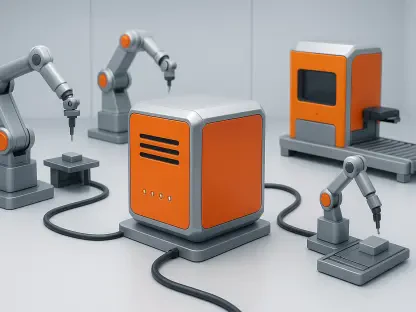
As we look toward the next several decades of exploration, the requirements for cleanliness are becoming even more stringent to accommodate more sensitive technologies. Upcoming missions designed to take direct images of Earth-like planets around distant stars will require a level of sensitivity that is at the very limit of current materials science and engineering. For projects planned from 2026 to 2040, such as the Habitable Worlds Observatory, engineers are no longer just fighting visible dust; they are now working at the atomic and molecular levels to ensure our view of the universe is not distorted by terrestrial residues. This evolution suggests that the clean rooms of tomorrow will be even more advanced, incorporating automated robotic assembly and real-time molecular monitoring. These facilities serve as the essential gateway for humanity’s next generation of discoveries, ensuring that the instruments we send into the dark are capable of detecting the faintest signals of life from across the vastness of the galaxy.
The implementation of advanced contamination control strategies provided the necessary security for the ambitious space missions of this era. By synthesizing rigorous filtration standards, strict gowning protocols, and legal compliance, aerospace organizations successfully protected both the financial investments of the public and the scientific aspirations of the global community. It was the careful management of these sterile environments that allowed for the detection of subtle cosmic signals without the interference of terrestrial noise. Moving forward, the industry adopted even more specialized molecular scrubbing technologies to address the challenges of next-generation deep-space probes. Ensuring the purity of hardware became a foundational pillar of mission design, rather than a final checklist item. This proactive approach to sterility guaranteed that the search for life remained credible and that the delicate mechanical systems of our most distant explorers continued to function flawlessly across the span of several decades.