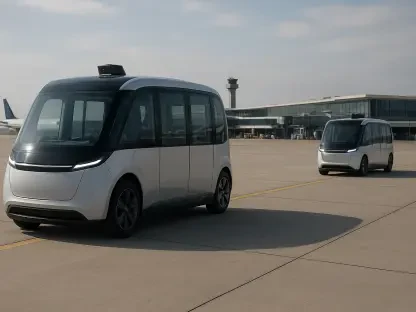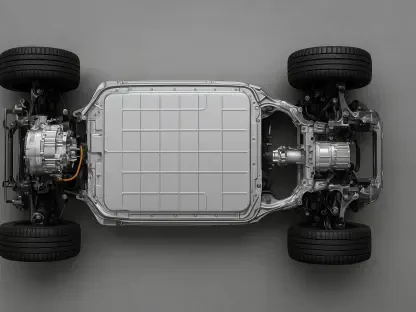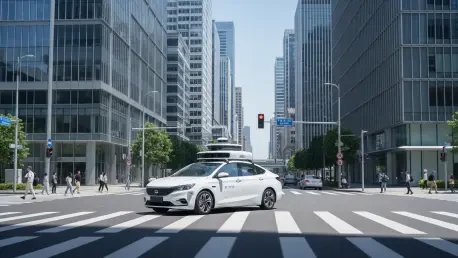

The widespread implementation of fully autonomous driving systems across the largest American metropolitan areas has fundamentally shifted the modern public conversation from abstract theoretical possibilities to rigorous, data-driven comparisons between machine logic and human intuition. As of 2026, Waymo has accumulated tens of millions of rider-only miles, providing a massive sample size that allows researchers to move beyond anecdotal safety claims and into the realm of statistical certainty. Recent comprehensive safety assessments indicate that the Waymo Driver is involved in significantly fewer police-reported crashes compared to human drivers when operating in identical urban environments. While humans remain inherently prone to lapses in judgment due to fatigue, secondary distractions, or chemical impairment, autonomous systems utilize a continuous loop of sensory input that never loses focus. This technological advantage is particularly evident in high-density traffic where variables can overwhelm a person.
Evaluating Safety Performance in Real-World Scenarios
Statistical Disparities: Measuring Collision Reductions
Quantitative analysis of recent fleet data reveals that autonomous vehicles exhibit an eighty-five percent reduction in crashes involving injuries when compared to benchmarks established by human-operated vehicles. This disparity is even more pronounced in severe collision categories, where machine precision effectively eliminates the high-speed errors typically associated with human recklessness or delayed reaction times. By analyzing millions of miles traveled throughout the current year, safety experts have noted that the autonomous system avoids the phantom braking issues of earlier years, instead favoring smooth, predictable movements that benefit the surrounding traffic flow. These improvements are not merely incremental; they represent a fundamental shift in road safety expectations. Unlike humans who may struggle with visibility during inclement weather, the latest sensor suites maintain high fidelity across diverse environmental conditions. This consistency ensures that the safety margin remains stable regardless of the time of day or traffic volume.
Sensory Superiority: Beyond the Human Biological Limit
The core of this safety advantage lies in a sophisticated fusion of LiDAR, radar, and camera arrays that provide a three-hundred-sixty-degree view of the environment with zero blind spots. Human drivers are physically limited by their biological field of vision and the time required to swivel their heads or check mirrors, creating inherent windows of vulnerability that autonomous systems do not possess. In 2026, the Waymo system processes thousands of data points every millisecond, predicting the trajectories of cyclists, pedestrians, and other vehicles with a level of accuracy that far exceeds human cognitive capacity. This predictive capability allows the vehicle to anticipate potential hazards before they become critical, often reacting several seconds faster than the quickest human professional. Furthermore, the system is immune to the emotional volatility that can lead to aggressive driving or road rage, ensuring that every maneuver is calculated solely based on safety protocols and legal traffic regulations.
The Technological and Behavioral Gap in Modern Transit
Urban Navigation: Mastering Social Dynamics on the Road
Integrating autonomous systems into the messy reality of urban ecosystems requires more than just obstacle avoidance; it necessitates a deep understanding of social cues and informal traffic patterns. As these vehicles navigate complex intersections and construction zones, they demonstrate an evolving ability to communicate intent to pedestrians through subtle changes in speed and positioning. This nuanced behavior helps bridge the gap between mechanical logic and the intuitive expectations of human road users, fostering a safer co-existence in shared spaces. Critics once pointed to edge cases—such as unconventional road debris or complex police hand signals—as the ultimate stumbling block for robotaxis, but modern machine learning models have largely mastered these scenarios through continuous cloud-based updates. When one vehicle learns to navigate a new type of obstacle, the entire fleet receives that knowledge instantly, creating a collective intelligence that no single human driver could ever hope to replicate in their lifetime.
Strategic Implementation: Future Paths for Autonomous Transit
The data collected throughout the initial rollout period confirmed that autonomous systems were capable of maintaining a superior safety profile compared to human-operated vehicles. This transition represented a massive shift in how public safety was managed in dense urban cores across the nation. Planners observed that the predictability of machine-driven fleets allowed for more efficient traffic management and a significant reduction in fatal accidents. Policy experts argued that the successful integration of this technology relied heavily on the continuous evolution of vehicle-to-everything communication. Ultimately, the industry moved toward a more integrated model that emphasized transparency and rigorous testing standards. This period established a new benchmark for roadway security, proving that automated logic could effectively mitigate the inherent risks of human driving. The focus eventually turned to expanding these networks to underserved suburban areas where infrastructure was less consistent.