
The South Korean textile sector, once the backbone of the nation’s rapid industrialization, currently faces an existential crossroads as labor shortages and rising operational costs threaten its global competitiveness. Specialized AI sensors can now detect minute surface defects in fabrics that are often missed by even the most experienced human quality control inspectors. This technological leap comes at a critical time when manufacturers in traditional hubs like Daegu are struggling to compete with lower-cost production centers across Southeast Asia. By integrating computer vision and deep learning algorithms, Korean firms are attempting to redefine the manufacturing landscape, shifting from labor-intensive models to high-precision, automated environments. The objective is to achieve a level of consistency and technical sophistication that manual labor cannot replicate. As the workforce ages, the digital transformation has moved from a luxury to a requirement for survival.
The Automation Revolution in Fiber Production
Precision Robotics in Garment Assembly
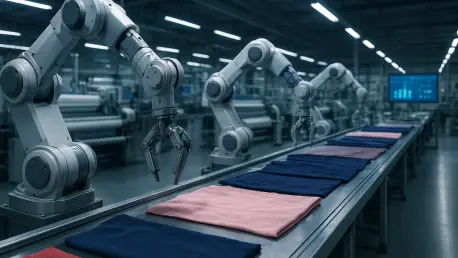
The primary hurdle in automating garment production has historically been the unpredictable nature of flexible materials, which robots have traditionally struggled to manipulate with the same dexterity as human hands. However, the latest generation of robotic arms equipped with high-frequency tactile feedback systems has begun to overcome these physical limitations. These machines use specialized grippers that can adjust their tension in real-time to handle various fabrics with precision.
In facilities across the country, autonomous sewing units are being deployed to handle repetitive tasks such as pocket attachment and sleeve joining. This shift does not just replace labor; it allows for a twenty-four-hour production cycle that remains unaffected by human fatigue or ergonomic constraints. By streamlining the assembly line through these advanced mechanics, South Korean manufacturers are successfully reducing the lead time for complex orders and ensuring higher output.
Advanced Quality Assurance through Machine Learning
Beyond the mechanical aspects of assembly, the integration of artificial intelligence into the weaving and knitting processes has significantly minimized the occurrence of costly material waste. Modern looms are now outfitted with edge-computing devices that monitor thread tension and vibration patterns to predict potential snags before they lead to structural failures. This proactive approach to maintenance ensures that downtime is kept to an absolute minimum for industrial machinery.
Furthermore, the data collected from these sensors is fed into centralized management systems that optimize the entire production flow based on real-time energy consumption and raw material availability. By utilizing predictive analytics, factory managers can now forecast production bottlenecks weeks in advance, allowing for strategic adjustments that keep the supply chain fluid. This level of digital oversight provides a transparent view of the manufacturing process for all stakeholders.
Strategic Shifts Toward Digital Integration
Sustainable Dyeing and Finishing Processes
Design and color management have also undergone a radical transformation through the application of generative algorithms and digital twin technology. Engineers have developed AI-driven platforms that can simulate how a specific dye will react with various fiber compositions under different environmental conditions, which reduces the need for physical sampling. This digital-first approach to finishing not only saves time but also significantly lowers the chemical and water footprint.
Designers now utilize these tools to create intricate patterns and textures that are automatically translated into machine-readable code for immediate production. The ability to move from a digital concept to a physical prototype within hours rather than days has given South Korean firms a significant edge in high-end technical textile markets. This convergence of creative design and algorithmic precision is fostering a new era where aesthetic value is linked to technological prowess.
Implementation Strategy: Predictive Supply Chains and Market Adaptation
The transition toward a fully digitized textile ecosystem required bold leadership and a willingness to overhaul legacy systems that had been in place for decades. Companies that successfully navigated this period of change focused on upskilling their remaining staff to manage complex software interfaces rather than manual machinery. This strategic pivot ensured that the human element remained central to the oversight of the automated systems, blending intuition with accuracy.
It was determined that the most effective path involved a combination of government-backed R&D initiatives and private sector agility. By establishing a robust infrastructure for data sharing and technical collaboration, the industry moved away from fragmented production models toward a unified, high-tech network. These actions demonstrated that technological adoption was not merely a reaction to economic pressure but a proactive strategy to secure a dominant global position in the textile market.