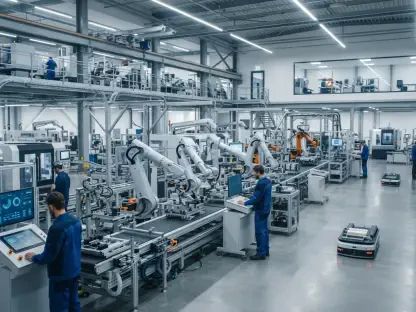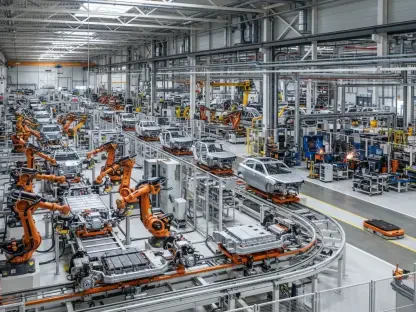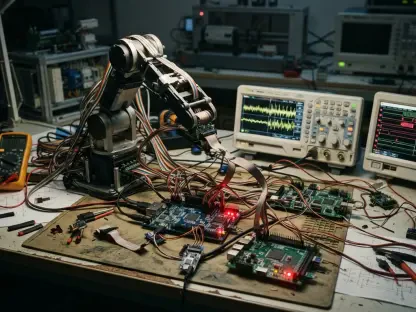

The manufacturing sector currently faces a profound shortage of specialized control engineers, a deficit that frequently results in expensive delays and rigid, unscalable production lines across the globe. For decades, the barrier to entry for advanced industrial automation remained tied to the mastery of complex, vendor-specific languages and rigid programming standards. However, the emergence of AI-native control systems like Interkey’s “Brain” represents a fundamental departure from this manual coding paradigm. Instead of laboring over line-by-line syntax, technicians can now define machine behaviors using plain language descriptions that interpret sensor data and safety parameters in real time. This shift effectively democratizes the ability to build sophisticated machinery, allowing individuals who understand the mechanical process but lack deep coding expertise to take the lead in system architecture. By moving the focus from “how” a machine is programmed to “what” the machine must achieve, the industry is witnessing a significant reduction in the technical friction that once defined the factory floor.
High-Performance Local Intelligence: Edge Computing and Control
Merging Hardware With Agentic AI
Transitioning from traditional logic controllers to modern AI-native systems requires substantial computational power that traditional PLCs simply cannot provide without significant external assistance. This specific technical challenge is addressed by integrating the NVIDIA Jetson Orin Nano Super directly into the control hardware, ensuring that the heavy lifting of artificial intelligence occurs at the edge. By utilizing a dual-processor architecture, the system separates critical real-time control functions from intensive AI workloads like machine vision and complex predictive logic. This local intelligence eliminates the latency and security concerns often associated with cloud-based AI, as all data processing remains confined to the machine’s internal circuitry. Consequently, manufacturers can deploy high-speed inspection and adaptive control loops without worrying about internet bandwidth or service interruptions. The agentic nature of this AI means it does more than just follow instructions; it actively interprets the physical environment to optimize performance continuously.
Consolidating Hardware for Scalable Infrastructure
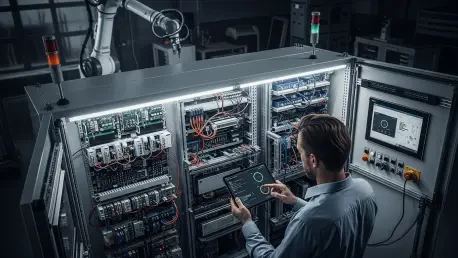
Building on this computational foundation, the system architecture simplifies the physical footprint of automation by consolidating the controller, power switching, and extensive input/output points into a single cabinet. This design approach can manage up to 220 I/O points, effectively replacing a tangled mess of wiring and disparate modules with a cohesive, plug-and-play solution. The integration of standard communication protocols such as Modbus and MQTT, provided without the burden of additional licensing fees, creates an open ecosystem that fosters innovation rather than vendor lock-in. For more experienced builders who require granular control, the platform offers a Python-based software development kit, allowing for the creation of bespoke modules that can be layered on top of the AI’s base logic. This dual-path strategy caters to both the non-programmer who needs rapid deployment and the power user who wants to push the boundaries of custom machine behavior. By centralizing these features, the engineering process becomes an exercise in configuration rather than a struggle with fragmented hardware components.
Data Sovereignty: Market Success and Field Implementation
Security Protocols and Hardware-Level Safety
As industrial facilities become increasingly interconnected, the protection of proprietary process data has become a non-negotiable requirement for modern manufacturing leaders. The “sovereignty by design” philosophy implemented in these AI-native systems ensures that sensitive operational information never leaves the local network unless specifically authorized. By supporting completely air-gapped operations and a “bring-your-own-key” model, the platform grants organizations total control over which AI models they run and how their data is handled. Security is further bolstered by a rigorous five-level permission structure that regulates access to various layers of the control logic. Parallel to these digital safeguards, the hardware incorporates independent physical watchdogs that function separately from the software environment. This ensures that emergency protocols remain operational and that the machine can enter a safe state even if the logic engine encounters an error. Such a multi-layered approach provides the peace of mind necessary for environments where data integrity and physical safety are paramount.
Actionable Insights: Preparing for an AI-Native Future
Industrial leaders who recognized the potential of this shift early on achieved a significant competitive advantage by prioritizing the retraining of their technical staff to act as system architects. The decision to move away from legacy code and toward descriptive AI-native environments effectively addressed the immediate talent gap while simultaneously lowering the cost of long-term maintenance. As organizations successfully integrated these controllers, the focus shifted toward maximizing the value of the data generated at the edge, rather than simply maintaining the code that produced it. To capitalize on this trend, industrial leaders began auditing their existing hardware fleets to identify where the upcoming 2027 gateway could be deployed to modernize aging assets. This proactive stance allowed companies to prepare for a more flexible production model where machine updates are handled through natural language updates rather than months of re-coding. By embracing these advancements, the industry established a new foundation for agility that reduced the risks associated with rapid technological change.