
The transition to sustainable logistics is no longer a distant aspiration but a rapidly unfolding reality that demands a perfect alignment between heavy-duty hardware and sophisticated software systems. Today, the trucking industry is witnessing a pivotal shift where traditional manufacturing giants and nimble technology developers are pooling their resources to overcome the limitations of human-driven transport. This collaboration between DAF, a renowned name in European truck manufacturing, and Einride, a specialist in autonomous electric shipping, seeks to address the critical shortage of drivers and the urgent need for decarbonization. By marrying DAF’s robust electric chassis with Einride’s advanced autonomous driving stack, the two entities are setting a new standard for Level 4 autonomy. This move is not just a technological experiment; it is a calculated effort to reshape the supply chain by introducing vehicles capable of operating independently within defined domains. As the industry moves away from fossil fuels, the integration of automation provides the necessary efficiency to make electric fleets commercially viable for long-haul operations while maintaining the highest safety standards required for the modern road.
Strategic Foundations and Automated Ambitions
Redefining Freight with Level 4 Autonomy
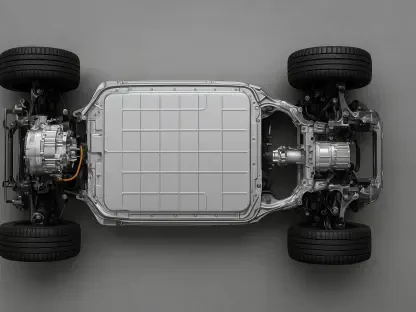
The centerpiece of this strategic alliance is the pursuit of SAE Level 4 autonomy, a designation that signifies a vehicle’s ability to perform all driving functions under specific conditions without human oversight. DAF provides the foundational hardware through its XD and XF Electric platforms, which have already garnered acclaim for their efficiency and reliability in regional distribution and long-haul tasks. These vehicles serve as the essential physical skeleton upon which the autonomous “brain” is installed, ensuring that the transition to self-driving does not compromise the structural integrity or safety of the cargo. Meanwhile, Einride is leveraging its unique vehicle-agnostic approach, demonstrating that its software architecture can be seamlessly integrated into various third-party manufacturing platforms. This strategy allows for a more versatile deployment of autonomous technology, as it does not tie the software to a single proprietary truck design. By focusing on high-tech, emissions-free logistics, the partnership aims to create a blueprint for the next generation of freight transport, where the mechanical precision of DAF meets the digital intelligence of Einride to revolutionize how goods are moved across continents efficiently and safely.
The Synergy of Hardware and Intelligence
Success in autonomous shipping requires more than just high-quality sensors; it demands a deep integration between the vehicle’s control systems and the software managing the route. The partnership emphasizes a software-first methodology that enables rapid iteration, allowing the system to learn from data collected in real-time and adapt to the nuances of European road networks. While DAF ensures that the braking, steering, and power management systems are responsive and durable, Einride focuses on the “Einride Driver” suite, which interprets sensor data to make split-second decisions. This synergy is crucial because it bridges the gap between traditional industrial manufacturing and the fast-paced world of artificial intelligence. By utilizing DAF’s established production lines, the project can scale more effectively than startups attempting to build trucks from the ground up. This collaboration allows both companies to concentrate on their core strengths, resulting in a product that is both technically advanced and production-ready for the global market. The goal is to move beyond the prototype phase and into a reality where autonomous electric trucks are a common sight, significantly reducing the carbon footprint of the logistics sector while increasing safety.
Technical Development and Global Integration
Validation Milestones: 2026 and 2027
The roadmap for this project is divided into distinct phases designed to ensure maximum safety and technical reliability. In 2026, the focus is entirely on interface validation, a process where engineers from DAF and Einride, in collaboration with the Dutch research institute TNO, verify that the digital commands from the autonomous system are accurately translated into physical actions. This phase is critical because any lag or error in communication between the “brain” and the truck’s “nervous system”—specifically the steering and braking actuators—could lead to catastrophic failure. TNO’s involvement provides an objective third-party perspective, ensuring that the protocols developed meet rigorous safety standards before the trucks are allowed to move under their own power. During 2026, the teams will conduct extensive testing in controlled environments to simulate various mechanical stresses and electrical interference scenarios. These tests confirm that the DAF electric platform can handle the constant adjustments required by an autonomous driver without suffering from premature wear. Establishing these links is the foundational step that makes the subsequent phases of the project possible. Once validated, the project will move into full software integration in 2027, commissioning the driver suite within the fleet for functional testing.
Strategic Implementation: Economic and Regulatory Paths
The ultimate success of autonomous electric trucks rested on the ability to present a compelling economic case to logistics operators and regulatory bodies across the globe. While the initial capital expenditure for such high-tech vehicles remained high, the long-term savings in labor and energy consumption offered a clear path to profitability for early adopters. The partnership recognized that for widespread adoption to occur, the technology had to deliver measurable improvements in operational efficiency and road safety. Consequently, the focus shifted toward developing service models that included maintenance and charging infrastructure support. Stakeholders determined that the most effective way to integrate these vehicles was through pilot programs on fixed routes, where variables could be tightly controlled and performance data meticulously analyzed. Moving forward, the industry needed to prioritize the standardization of autonomous communication protocols to ensure interoperability between different brands and regions. Companies were encouraged to invest in workforce training, preparing current staff to manage and maintain autonomous fleets rather than viewing the technology as a simple replacement. By taking these proactive steps, the sector ensured that the transition was a sustainable business evolution that addressed the logistical challenges of the modern era.