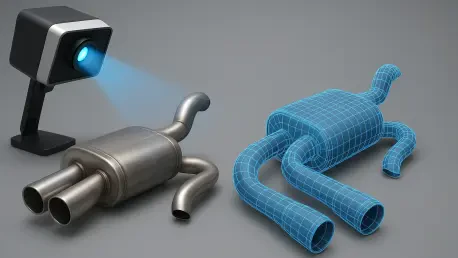

The portability of modern handheld scanners allows engineering teams to capture high-precision data from immobile and rare vehicles located in secure, climate-controlled facilities. For over twenty-five years, the automotive industry has leaned on specialized firms to push the absolute boundaries of exhaust engineering. These specialists cater to an elite clientele ranging from the high-pressure world of Formula One to the bespoke demands of hypercar manufacturers. In these arenas, the margin for error is essentially nonexistent, and every component must satisfy extreme requirements for weight, heat management, and spatial packaging. Historically, achieving such precision required painstaking manual measurements and the construction of physical prototypes directly on the vehicle, a process that was both slow and susceptible to minute variations. However, the current shift toward digital-first workflows has fundamentally redefined the landscape of high-performance fabrication. By integrating advanced handheld scanning technology, designers have moved away from labor-intensive manual protocols in favor of a sophisticated system of digital metrology. This transition ensures that every exhaust system provides a perfect fitment and optimized performance, even when the vehicle in question is thousands of miles away from the fabrication workshop.
Engineering Efficiency through Digital Integration
Data Acquisition: The Digital Twin Approach
The adoption of portable 3D scanners has introduced a “scan more than you need” philosophy that has drastically improved project flexibility and reduced overhead. By capturing the entire engine bay, surrounding chassis components, and existing mounting points in high resolution, engineering teams create a comprehensive digital twin of the vehicle. This methodology provides an exhaustive dataset that serves as a permanent reference throughout the design cycle. In the past, if a design modification necessitated a small change in a clearance point, a team might have had to return to a client’s facility to retake measurements, causing significant delays. In the current 2026 landscape, the availability of a complete digital environment means that any secondary or tertiary clearance issues can be addressed instantly by referring to the existing scan data. This foresight eliminates the logistical nightmare of repeat site visits and ensures that the design process remains continuous, fluid, and entirely uninterrupted by the physical distance between the car and the engineers.
Furthermore, this exhaustive data capture process allows for a level of environmental context that was previously impossible to achieve with tape measures and cardboard templates. When a designer can see the proximity of sensitive electronics, brake lines, and carbon fiber bodywork within a sub-millimeter accurate digital space, they can make informed decisions about thermal shielding and tube routing. This approach has transformed the initial phase of development from a reactive process into a proactive one. Instead of finding out during final assembly that a manifold bolt is inaccessible or that a pipe sits too close to a heat-sensitive sensor, these conflicts are identified and resolved in the virtual world. The resulting digital model acts as a single source of truth for the entire project, allowing different engineering departments to collaborate on the same vehicle architecture without needing the physical car to be present. This has proven particularly valuable for international projects where the vehicle remains in a private collection while the exhaust system is engineered on a different continent.
Design Virtualization: Optimizing the Fabrication Workflow
Moving the primary development process into a Computer-Aided Design (CAD) environment has turned a once-cumbersome manual workflow into a model of modern industrial efficiency. With the vehicle’s geometry safely stored as a digital model, intricate tube routing and manifold designs can be perfected at a computer workstation rather than on a garage floor. This shift optimizes the use of high-value resources by allowing skilled fabricators to focus on the actual production of components while engineers handle the spatial puzzles of the design. The ability to simulate various exhaust paths digitally allows for the optimization of exhaust gas flow and backpressure without the need for multiple physical iterations. This results in a final product that fits the vehicle perfectly the first time it is installed, drastically reducing the time spent on final adjustments and “fettling” during the installation phase. The precision of the digital model ensures that every bend, flange, and hanger is placed with absolute accuracy relative to the vehicle’s unique anatomy.
Beyond the technical benefits, these digital models serve as a powerful collaborative tool for communicating with clients and stakeholders. High-end automotive projects often involve discerning owners or team principals who require a clear understanding of how an aftermarket or racing system will integrate with their vehicle. By using the scan data to create detailed visualizations, firms can present the final assembly within the car’s architecture before a single piece of expensive Inconel or titanium is even cut. This transparency allows for client feedback early in the process, ensuring that aesthetic and functional expectations are met or exceeded. Additionally, the digital workflow facilitates the creation of precision-cut components via CNC machinery or 3D printing, which further enhances the consistency of the final build. The integration of scanning data directly into the manufacturing pipeline has created a seamless bridge between the initial concept and the finished high-performance component, establishing a new standard for quality in the exhaust industry.
Performance Validation and Asset Preservation
Heritage Restoration: Navigating Geometric Distortion
In the highly specialized field of classic car restoration and vintage racing, 3D scanning provides a critical solution to the common problem of absent original CAD data and the natural degradation of aging components. Original exhaust systems on heritage vehicles often warp or distort over decades of heat cycles and mechanical stress, making them unreliable templates for modern reproductions. Rather than scanning the old, damaged parts, engineers now focus on scanning the vehicle’s current mounting points and the available envelope of space within the chassis. This allows them to design a modern, performance-optimized system that fits the car as it exists today, rather than simply replicating the imperfections of a decades-old component that may have shifted over time. This methodology ensures that the new exhaust system not only performs better but also fits more securely than the original equipment ever could, respecting the car’s history while utilizing contemporary engineering standards.
This approach also enables the integration of modern performance enhancements into classic silhouettes without compromising the vehicle’s original aesthetics. For example, by using the 3D scan of a vintage engine bay, engineers can design equal-length headers that fit within the tight confines of a classic Ferrari or Porsche, even if the original factory design was compromised by the manufacturing limitations of its era. This allows owners to unlock the full potential of their engines while maintaining a period-correct appearance from the outside. Furthermore, the digital records created during this process serve as a permanent archive for the vehicle. If a restored car is involved in a racing incident or requires maintenance years later, the digital files can be used to recreate the exact components with pinpoint accuracy. This level of technical security is invaluable for collectors who wish to preserve the long-term viability of their investments in an era where replacement parts for rare models are increasingly difficult to source through traditional channels.
Strategic Implementation: Quality Assurance and Data Longevity
For high-stakes environments such as professional racing and Formula One, the emphasis of 3D scanning shifts from initial design to rigorous quality validation and performance consistency. In these sectors, where every gram of weight and every millimeter of clearance can impact lap times, the demand for precision is absolute. Using specialized inspection software, every finished exhaust component is scanned and compared against the original CAD master to identify any surface deviations or manufacturing variances. This process generates a transparent and detailed quality report for the client, providing empirical proof that the manufactured part matches the design intent perfectly. This level of scrutiny ensures that the aerodynamic and thermal properties of the exhaust system remain consistent across different production runs, which is a vital requirement for teams that operate multiple cars across a global racing season.
This data-centric approach extends beyond the components themselves to include the digitization of legacy physical assets, such as manufacturing jigs. Historically, these jigs were the only way to repeat a specific design, making a company’s intellectual property vulnerable to physical damage, wear, or loss. By creating high-precision digital versions of these tools, engineering firms protect their institutional knowledge and meet modern insurance requirements for data redundancy. This digital library ensures that even if a physical jig is retired or damaged, the ability to recreate it with absolute accuracy remains safely stored in the cloud. Ultimately, the transition to 3D digital measurement has evolved from a simple technical upgrade into a core strategic advantage. It has empowered firms to manage complex, high-value projects that were previously too logistically difficult to execute. The synthesis of traditional craftsmanship with cutting-edge metrology has demonstrated that digital technology does not replace the skill of the fabricator; instead, it provided a more stable foundation for modern repeatability and engineering excellence. By securing these digital workflows, the industry remained agile enough to meet the uncompromising standards of the world’s most advanced automotive sectors through 2026 and beyond.