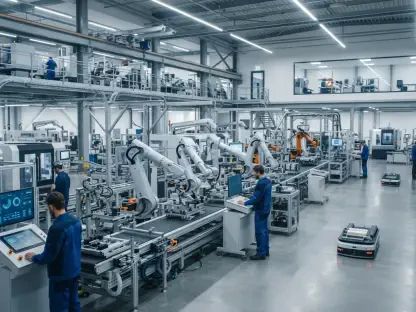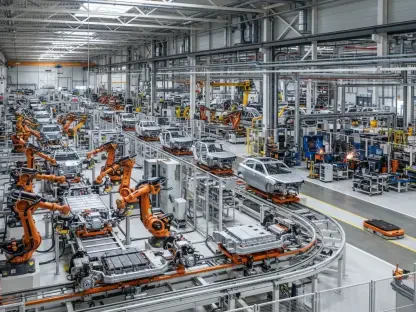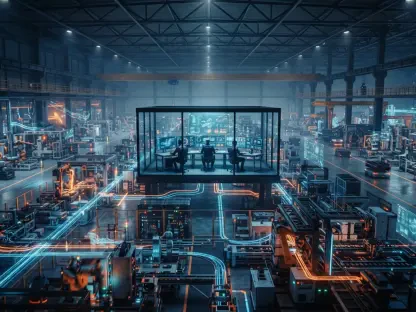

The manufacturing landscape has undergone a radical metamorphosis where the tactile intuition of seasoned machinists is now being augmented and often surpassed by the hyper-precise, data-driven insights of artificial intelligence. This shift is not merely an incremental improvement in software efficiency but a total reimagining of how metal interacts with cutting tools in high-stakes environments. Aluminum has emerged as the primary beneficiary of this intelligence surge because its inherent properties—such as exceptional thermal conductivity and a high strength-to-weight ratio—respond exceptionally well to the microscopic adjustments AI can provide in real time. In modern industrial settings, the combination of advanced milling techniques and machine learning algorithms allows for the production of components that were previously dismissed as physically impossible or economically unfeasible. As aerospace and automotive sectors demand increasingly complex geometries to satisfy aerodynamic and fuel-efficiency requirements, the reliance on manual programming has faded in favor of autonomous systems that can predict material behavior under stress. This technological convergence ensures that the traditional machine shop is evolving into a sophisticated center of digital innovation where every spindle turn is guided by trillions of data points.
The Synergy: Material and Intelligent Design
Maximizing Aluminum’s Mechanical Advantages
Aluminum’s dominance in the high-tech manufacturing sector is largely attributed to its unique physical properties, which serve as an ideal baseline for artificial intelligence to push the boundaries of engineering. The material’s low density, roughly one-third that of steel, provides a lightweight profile that is indispensable for the modern aerospace and electric vehicle industries, where every gram of weight reduction translates directly into energy savings and improved performance. AI models are specifically designed to analyze these mechanical traits, calculating how to maximize structural rigidity while utilizing the least amount of metal possible. By processing vast amounts of data regarding stress distribution and fatigue resistance, these intelligent systems can identify specific areas of a component where aluminum can be thinned out or reinforced. This results in parts that are not only lighter but also more resilient to the vibrational stresses common in high-speed machinery. The synergy between the metal’s predictability and the algorithm’s analytical speed has turned aluminum into a high-performance medium for the most demanding technical applications.
Beyond its weight advantages, the high thermal conductivity of aluminum makes it a complex material to handle at high speeds, a challenge that artificial intelligence is uniquely equipped to manage. When a CNC tool engages with an aluminum workpiece, the heat generated can cause the material to expand or the tool to become coated in softened metal, leading to dimensional inaccuracies or tool breakage. AI-driven systems now monitor these thermal variables with millisecond precision, adjusting cooling cycles and cutting speeds to maintain a stable temperature throughout the machining process. This capability allows manufacturers to utilize the metal’s ability to dissipate heat quickly, turning what was once a machining hurdle into a strategic advantage for high-speed production. By optimizing the metal’s natural properties through intelligent oversight, shops can maintain tighter tolerances over longer production runs, ensuring that the final output meets the rigorous standards required for advanced robotics and satellite components. This integration of material science and computational power represents the new foundation of industrial efficiency.
Generative Design: Redefining Geometry
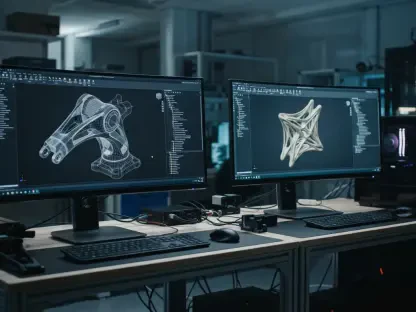
Generative design represents a seismic shift away from traditional, human-centric engineering by utilizing advanced algorithms to define part geometry based purely on performance requirements. Instead of an engineer drawing a part based on established conventions or historical templates, they now input a set of constraints—such as load points, attachment locations, and material limitations—into an AI-powered design environment. The software then iterates through thousands of potential configurations, “growing” a structure that satisfies all requirements with the most efficient use of material. This often results in organic, bionic-looking shapes that mimic the internal structures of bone or plant stems, providing maximum strength where it is needed while hollowing out non-critical areas. Because aluminum is so versatile and easy to mill, it is the perfect material for these complex, non-linear geometries. The resulting parts are frequently 30 to 40 percent lighter than their traditionally designed counterparts, a revolutionary improvement for industries where efficiency is the primary driver of innovation.
The implementation of generative design also bridges the gap between the design office and the production floor by incorporating manufacturing constraints directly into the creative process. In the past, a sophisticated design might be beautiful on a screen but impossible to manufacture on a standard 3-axis or 5-axis CNC mill. Modern AI systems solve this by running “manufacturability” checks simultaneously with the design iterations, ensuring that every curve and pocket created by the algorithm can actually be reached by a cutting tool. This eliminates the costly back-and-forth between designers and machinists, as the software understands the tool access limits and spindle clearances of specific machines. For aluminum machining, this means that highly complex heat sinks or structural brackets can be optimized for both weight and ease of production simultaneously. By synthesizing design intent with mechanical reality, AI is enabling the creation of high-performance aluminum components that are optimized for their entire lifecycle, from the initial chip removal to the final operational environment.
Revolutionizing the Production Floor
Real-Time Operational Enhancements
The impact of machine learning is most visible on the factory floor, where real-time toolpath optimization is fundamentally changing the physics of chip removal. Historically, CNC programs were static instructions that ran the same way regardless of whether the tool was brand new or nearing the end of its life, but modern AI-integrated controllers have changed this dynamic. These systems utilize high-frequency vibration sensors and acoustic emission monitors to “listen” to the cutting process, allowing the machine to detect the subtle sounds of tool chatter or material inconsistencies. If the AI detects that the tool is vibrating excessively or that the aluminum is hardening due to heat, it can instantly adjust the spindle speed and feed rate to compensate. This dynamic adjustment happens in microseconds, far faster than any human operator could respond, ensuring that the machine is always operating at its peak physical limit without crossing into the “danger zone” where tools break or workpieces are scrapped.
Building on these sensory inputs, the use of digital twins has provided a virtual mirror for every physical operation occurring in the machine shop. A digital twin is a high-fidelity virtual model that receives constant data streams from the physical CNC machine, allowing AI to run simulations in the background while the actual part is being cut. This is particularly valuable when machining aluminum alloys that are prone to thermal expansion, as the AI can predict exactly how much the part will grow as it heats up and then adjust the tool offsets in real time to maintain a perfect dimension. This level of precision was historically only possible through frequent manual measuring and pausing of the machine, which wasted valuable time. Now, the feedback loop between the digital twin and the physical hardware allows for continuous, high-precision machining even during aggressive material removal phases. This technology ensures that the first part in a production run is identical to the thousandth, eliminating the “warm-up” period that used to plague high-volume aluminum manufacturing.
Transitioning: Zero-Downtime Maintenance
The manufacturing sector is rapidly transitioning toward a zero-downtime philosophy enabled by predictive maintenance algorithms that treat machine failure as a preventable event rather than an inevitability. By constantly analyzing spindle loads, motor torque, and axis alignment data, AI can identify the “fingerprint” of a failing component weeks before it actually breaks. For example, a slight increase in the power required to move the X-axis might indicate a bearing is beginning to wear or that the lubrication system is failing. In an aluminum-heavy production environment where machines run at high speeds for long shifts, these subtle warnings are the only way to prevent catastrophic failures that could stop an entire assembly line. By moving from a reactive “fix it when it breaks” model to a proactive, data-driven schedule, facilities can plan maintenance during natural lulls in production, ensuring that the machines are always available when they are needed most.
This predictive capability extends beyond the machine itself and into the management of the cutting tools, which are often the most expensive consumable in CNC machining. AI models can now predict the remaining useful life of a milling bit by analyzing the force required to cut through a specific aluminum alloy over time. As the tool dulls, the friction increases, and the AI tracks this progression against a database of millions of previous cuts to determine the exact moment the tool should be replaced to avoid a surface finish defect. This prevents the common practice of discarding tools too early “just to be safe,” which saves significant costs over the course of a year. It also ensures that a tool never fails mid-cut, which could ruin an expensive aluminum workpiece that has already undergone hours of machining. The economic impact of this reliability is profound, as it allows shops to offer more competitive pricing and tighter delivery schedules, knowing their production flow is protected by an invisible layer of digital foresight.
Precision Control and Final Assurance
Data-Driven Selection: Alloys and Materials
Navigating the complexities of aluminum alloys has become a data-driven discipline where AI helps engineers select the perfect material for highly specialized applications. Aluminum is not a monolithic material; the difference between a 6061 alloy and a 7075 alloy can be the difference between a part that lasts a decade and one that fails in a week. AI-powered selection tools analyze the specific environmental stresses a part will face—such as salt spray exposure, extreme temperature fluctuations, or high-cycle fatigue—and match those requirements against a massive database of metallurgical properties. This ensures that the material selected provides the optimal balance of weight, strength, and corrosion resistance for the specific job. By moving away from general “rules of thumb,” engineers can use AI to identify niche alloys that might offer superior performance at a lower cost, or perhaps a more sustainable recycled aluminum grade that maintains the necessary structural integrity for a non-critical component.
The selection process also accounts for the “machinability” of different alloys, which can vary wildly and affect the total cost of production. High-strength alloys like those in the 2000 or 7000 series are often more difficult to machine than the 6000 series, requiring different tool geometries and slower speeds that can drive up the price of a project. AI models can simulate the entire machining process for multiple different alloys to give a precise estimate of cycle times and tool wear for each. This allows a manufacturer to provide a client with a range of options, showing how choosing a slightly different aluminum grade could significantly reduce the cost without compromising the part’s function. In 2026, this level of transparency is essential for maintaining a lean supply chain. By optimizing material choice at the cellular level before a single chip is even cut, the industry is reducing waste and ensuring that every component is engineered to its exact functional requirements with no unnecessary bulk or expense.
Automated Inspection: Computer Vision Systems
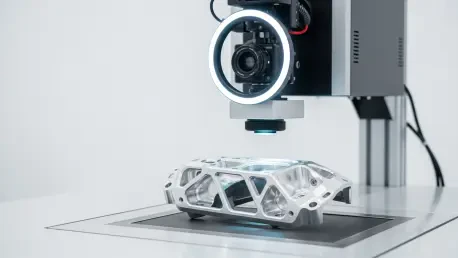
The final phase of aluminum production is being revolutionized by AI-powered computer vision systems that perform quality assurance inspections with a level of speed and detail that far exceeds human capabilities. These systems utilize high-resolution cameras and deep-learning neural networks that have been trained on millions of images to recognize microscopic defects in surface finishes, such as hairline scratches, pitting, or inconsistencies in an anodized layer. Because aluminum is a reflective material, manual inspection can often be difficult and prone to error as light tricks the human eye. Computer vision systems, however, use specialized lighting and polarized filters to see through these reflections, identifying flaws that are invisible to the naked eye. This ensures that every part leaving the facility meets the most stringent cosmetic and structural standards, which is particularly critical for components used in medical devices or high-end consumer electronics where appearance is as important as function.
Furthermore, these inspection systems are now being integrated back into the production loop to create a truly autonomous manufacturing environment. When a vision system detects a recurring defect—such as a specific pattern of roughness on the side of a milled pocket—it doesn’t just flag the part for rejection; it communicates directly with the CNC machine to identify the root cause. The AI might determine that the defect is caused by a slightly worn tool or an incorrect coolant pressure and then automatically adjust the machine settings for the next part in the queue. This “closed-loop” manufacturing reduces scrap rates to near zero, as the system can correct itself before a single bad part is even finished. By digitizing the quality control process, manufacturers can provide their clients with detailed inspection reports for every single part, creating a digital trail of accountability that is essential for aerospace and defense contracts. This high-speed, high-accuracy inspection marks the final step in the transformation of aluminum machining from a traditional craft into a modern, data-perfected science.
The industrial transition toward AI-integrated aluminum machining demanded a fundamental shift in how production teams approached material science and machine maintenance. Manufacturers who successfully navigated this era prioritized the implementation of robust data collection frameworks before attempting to deploy complex neural networks. Moving forward, the most effective strategy involved a phased integration of sensor-rich tool holders and the adoption of cloud-based digital twins to mirror physical operations. It was essential for stakeholders to invest in employee training that bridged the gap between traditional mechanical engineering and modern data science to ensure long-term competitiveness. By focusing on the high-strength aluminum alloys like 7075 and 6061, companies secured a foothold in the lucrative aerospace and electric vehicle markets while simultaneously reducing operational overhead through predictive maintenance. This evolution ensured that the precision of the cut was always matched by the intelligence of the code, creating a sustainable and highly efficient manufacturing ecosystem.