
Industrial-scale washing machines are now engineered with a hygienic design that minimizes bacterial accumulation and facilitates rapid daily cleaning cycles. This technological advancement serves as the backbone for the recent expansion at Pentz GmbH & Co. KG, a family-managed enterprise that is redefining its role within the German food sector. By establishing a dedicated production hall in Essingen, the company has transitioned from a traditional fruit and vegetable retailer into a high-capacity powerhouse for the fresh-cut market. The move addresses a critical shift in consumer behavior and professional culinary needs, where the demand for pre-washed and pre-cut salad blends has reached an all-time high. This evolution required a departure from manual labor toward a sophisticated, automated environment where precision and speed are paramount. The facility now functions as a hub of innovation, bridging the gap between raw agricultural harvesting and the immediate requirements of modern, fast-paced commercial kitchens across the region.
Technological Infrastructure: Industrial Scale Through Automation
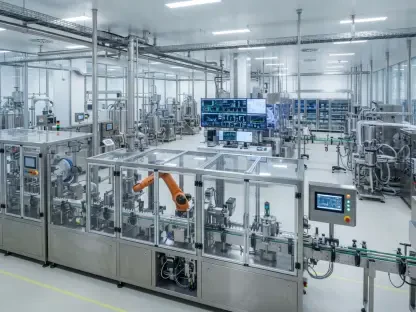
The heart of this modernization effort is a fully integrated KRONEN processing line that manages the heavy lifting of roughly 7,000 kilograms of leaf lettuce on a daily basis. This is not merely a collection of individual machines but a unified solution that connects every stage of production from the moment raw produce enters the building until it is sealed for delivery. Such a high-volume throughput requires a continuous workflow where every component is synchronized to prevent bottlenecks that could compromise the freshness of the leaves. By utilizing a series of specialized conveyor belts, the system maintains a steady material flow that eliminates the need for manual transport between stations. This automation allows the company to scale its output significantly without a proportional increase in physical footprint. Consequently, the transition from raw agricultural goods to a retail-ready product occurs within a highly controlled environment, ensuring that the final output meets the rigorous expectations of professional wholesalers.
Within this automated sequence, the HEWA washing systems play a pivotal role by providing a gentle yet thorough cleaning process that preserves the delicate structure of various lettuce varieties. Following the wash cycle, the produce is immediately transferred to a K650 drying system, which utilizes advanced centrifugal or air-drying techniques to remove excess moisture. This step is vital because residual water can drastically shorten the shelf life of fresh-cut salads by encouraging spoilage or wilting. The precision of the drying process ensures that the leaves maintain their crisp texture and vibrant appearance, which are the primary indicators of quality for end consumers. Furthermore, the integration of a KWT 16 weighing platform ensures that each package contains an exact portion, reducing product giveaway and maximizing profitability for the processor. This level of technical control allows the enterprise to handle a diverse range of products, from romaine to the most fragile spinach, with equal efficiency and care throughout the shift.
Hygiene Standards: Balancing Safety and Operational Versatility
In the high-stakes world of industrial food processing, hygiene is the foundational element that dictates both regulatory compliance and market reputation. The current machinery was selected specifically for its open, accessible design, which allows sanitation crews to perform deep cleans quickly and effectively during scheduled intervals. Because the production of salad mixes often involves multiple ingredient changes, the ability to switch between different produce types without cross-contamination is a significant competitive advantage. Modern engineering has moved away from complex, enclosed structures that trap debris, favoring instead smooth surfaces and easily removable parts that facilitate visual inspections. This focus on sanitary architecture means that bacterial risks are managed proactively rather than reactively, providing a level of safety that was previously difficult to achieve at such a high scale. For a fourth-generation business, maintaining these standards is essential for safeguarding the family brand.
Beyond the technical benefits of sanitation, the automated facility directly addresses the pressing labor shortages currently impacting the hospitality and catering sectors. By providing kitchen-ready products that have already been washed, dried, and portioned, the supplier allows hotels and restaurants to reallocate their staff to higher-value culinary tasks. This shift in the supply chain reduces the overhead costs for B2B clients, who no longer need to invest in their own large-scale preparation areas or deal with the waste management of raw produce trimmings. The flexibility of the system also means the company can respond to fluctuating market demands or seasonal availability with ease, offering custom salad blends that cater to specific menu requirements. This versatility is a hallmark of the 2026 food processing landscape, where the ability to provide diverse, high-quality ingredients on demand is a key differentiator. Ultimately, the modernization of the production line creates a more resilient supply chain that benefits both the processor and the professional end-user.
Strategic Implementation: Collaborative Innovation and Market Strategy
The successful deployment of this new technology was the culmination of a deep consultative partnership that prioritized long-term operational goals over simple equipment acquisition. Before the machinery was installed in the new hall, extensive factory acceptance tests were conducted to simulate the specific throughput and environmental conditions of the Essingen facility. This collaborative approach allowed for fine-tuning the mechanical settings and software interfaces, ensuring that the transition to the new site would be seamless and free of technical glitches. Such a rigorous vetting process is indicative of how modern food companies are mitigating the risks associated with large-scale capital investments. By participating in joint workshops, the production team gained a thorough understanding of the equipment’s capabilities long before the first batch of lettuce was processed. This pre-installation training proved invaluable for maintaining momentum during the initial startup phase and allowed the company to reach its targets faster.
From 2026 to 2028, the emphasis on resource-friendly technology and automated precision defined the evolution of the fresh-cut industry. Organizations that prioritized a one-stop-shop approach for their technology needs found that consolidated systems led to superior synchronization and lower maintenance costs. To maintain this momentum, industry leaders focused on integrating smart sensors and data-driven monitoring to further optimize water and energy consumption during the washing cycles. Adopting a modular mindset when designing production facilities facilitated easier upgrades, ensuring that the infrastructure remained competitive as new processing techniques emerged. The modernization in Essingen served as a definitive blueprint for how family-owned enterprises utilized strategic automation to solve contemporary challenges in labor and food safety. By investing in scalable systems, the company positioned itself to dominate the regional market while setting a new benchmark for excellence in fresh-cut production that established a long-term standard.