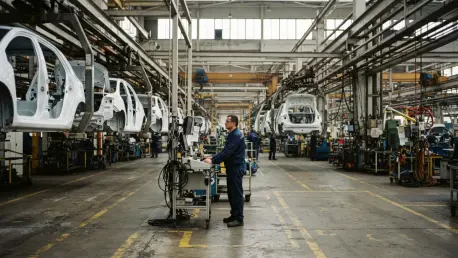

The integration of the Renault Boreal and preparations for the Dacia Striker reflect a €400 million investment aimed at expanding the plant’s production diversity and technological capability. This strategic move positions the Bursa facility not just as a local manufacturer but as a critical node in a global industrial network. Currently, the site operates with a precision that allows a new vehicle to leave the assembly line every 56 seconds, totaling an annual capacity of 390,000 units. Such high-output performance is essential for maintaining Renault’s market share in 2026, where consumer demand for both hybrid and internal combustion engines remains diverse. By functioning as an “industrial campus,” the facility bridges the gap between raw material procurement and final vehicle delivery. The result is a highly efficient export machine that directs more than 70% of its total volume toward international markets, strengthening the trade relationship between Türkiye and Europe while setting a benchmark for manufacturing speed.
Operational Excellence and Digital Integration
Production Dynamics: Multi-Model Integration
Achieving a consistent 56-second cycle time requires more than just raw speed; it demands a sophisticated level of flexibility to handle multiple vehicle architectures simultaneously on a single line. The current production mix includes the high-volume Renault Clio and the rugged Renault Duster, but the recent inclusion of the Boreal and the Striker adds a layer of complexity to the assembly floor. Each model brings unique technical requirements, from specific chassis reinforcements to distinct electrical harnesses, necessitating a line that can pivot instantly between different configurations. This agility is achieved through modular assembly stations that allow workers and machines to adjust their routines based on the specific vehicle identification number passing through their zone. By standardizing basic assembly sequences while allowing for high-level customization, the plant ensures that the introduction of new models does not create bottlenecks or degrade the overall quality of the fleet.
Building on this foundation of versatility, the facility utilizes a sophisticated sequencing system that aligns the arrival of parts with the exact moment of their installation. This process is vital because even a minor delay in the delivery of a specific dashboard or engine variant could halt the entire 56-second cadence. The plant’s logistics team manages a constant flow of thousands of distinct components, ensuring that the right part reaches the right robot or technician at precisely the right time. Furthermore, the integration of advanced ergonomics into the workstations allows human operators to maintain high levels of productivity without the physical strain typically associated with such a relentless pace. This synergy between human dexterity and mechanical precision allows the Bursa plant to transition between legacy internal combustion models and the latest hybrid iterations without requiring lengthy downtime for retooling, thereby maximizing the facility’s overall equipment effectiveness.
Technological Infrastructure: Smart Automation
The physical backbone of the Bursa plant’s efficiency is a dense network of over 800 industrial robots and 900 connected devices that operate in near-perfect synchronicity. To navigate the vast logistics requirements of the assembly hall, approximately 300 automated guided vehicles are deployed to transport parts directly to the workstations. These units eliminate the traditional chaos of manual carts, creating a silent and streamlined flow of materials that mirrors the movement of the vehicles on the overhead conveyors. This level of automation is not merely about replacing manual labor; it is about providing the consistency required for high-frequency output. Each robot is programmed to perform repetitive tasks with sub-millimeter precision, reducing the risk of fatigue-related errors that can occur in high-pressure manufacturing environments. Consequently, the plant maintains a rigorous standard of structural integrity and paint finish across every vehicle that rolls off the line.
Supporting this mechanical army is a massive digital operation that processes approximately 720 million data points every day. Every connected device on the factory floor feeds information into a cloud-based architecture, allowing for a level of operational visibility that was previously impossible. This big data approach enables predictive maintenance, where sensors detect slight variations in heat or vibration that might signal an impending equipment failure. By addressing these issues before a breakdown occurs, the plant minimizes unplanned downtime, which is critical when every minute of lost production represents more than one completed car. Quality control is similarly augmented by artificial intelligence, which analyzes over 100,000 images daily to catch surface defects or assembly misalignments. Managers use mobile tablets to monitor these metrics in real time, ensuring that the high-speed production beat is matched by a high-resolution understanding of every single component’s status.
Strategic Vision and Global Market Impact
Industrial Campus: Supply Chain Synergy
The “industrial campus” concept at the Bursa site represents a holistic approach to manufacturing where the boundaries between different production stages are blurred to increase efficiency. A vital element of this synergy is the proximity of the OYAK HORSE engine production facility, which serves as the primary source for the plant’s advanced powertrains. By manufacturing engines and transmissions within the same geographic cluster, the facility drastically reduces the environmental and financial costs associated with long-distance logistics. This setup is particularly advantageous for the production of hybrid vehicles, which require precise integration between internal combustion engines and electric motor systems. Having the engineering and procurement teams located on the same campus fosters a collaborative environment where design changes can be implemented more rapidly. This localized value chain ensures that the plant remains resilient against global shipping disruptions, as critical components are sourced and assembled within a single ecosystem.
While internal automation was highly advanced throughout 2026, the plant’s success remained fundamentally tied to the reliability of its external supply chain. Even with hundreds of automated vehicles and robots, the assembly process could not proceed if a single specialized component from an upstream supplier was delayed. The transition to a more diverse model lineup, fueled by the €400 million investment, necessitated a total recalibration of sourcing strategies. Each new vehicle, such as the Boreal, introduced hundreds of unique part numbers that had to be sequenced perfectly into the existing material flow. This required a digital handshake between the plant’s management systems and its logistics providers, ensuring that deliveries arrived exactly when they were needed. The challenge lay in managing this “just-in-sequence” delivery model across a growing list of international suppliers, highlighting that modern manufacturing excellence was as much about managing relationships as it was about managing machines.
Future Perspectives: Electrification and Export
The facility’s role as a primary bridge to the European market underscored its strategic importance to Renault’s global competitiveness during this period of industrial change. With 70% of its production exported, particularly to Germany, the plant had to adhere to the world’s most stringent environmental and safety regulations. The findings from this high-volume export model suggested that digital quality control was the only way to maintain such a scale without sacrificing precision. As the global automotive industry moved closer toward total electrification, the Bursa site served as a vital testing ground for integrating high-voltage battery assembly into existing lines. The leadership prioritized the feasibility of battery-electric vehicle production, recognizing that the logistical requirements for batteries differed fundamentally from traditional powertrains. This proactive approach ensured that the workforce and the infrastructure were prepared for the next seismic shift in automotive technology, maintaining the site’s relevance in a rapidly evolving global market.
Ultimately, the evolution of the Bursa facility demonstrated that modern automotive competitiveness relied on the seamless synchronization of physical labor and digital intelligence. The plant functioned as a comprehensive case study for Industry 4.0, where the “invisible web” of data and automated movements supported the physical reality of high-volume manufacturing. By integrating various stages of production into a single campus, Renault created a resilient model that balanced extreme automation with the necessity of human oversight. The project proved that maintaining a 56-second production rhythm was not just a mechanical feat but the result of a massive, coordinated effort across the entire value chain. Moving forward, the lessons learned from this digital transformation provided a roadmap for other global manufacturing hubs. The site’s ability to adapt to new models and technologies while maintaining peak output established a new standard for how the automotive industry could navigate the complexities of the mid-2020s and beyond.