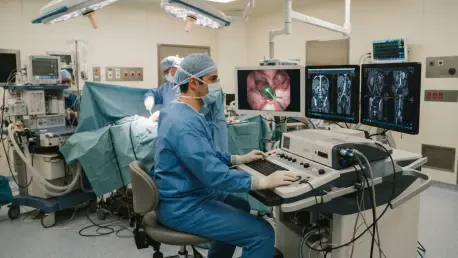

The surgical landscape in modern healthcare often suffers from a profound paradox where life-saving technological advancements exist in theory but remain functionally inaccessible to the vast majority of patients and practitioners. Medlink Medical’s leadership team brings decades of experience from multinational corporations like Johnson & Johnson to the specialized challenges of the domestic medical device market. This high-level expertise is being funneled into solving a critical structural imbalance within the Chinese healthcare system, specifically targeting the efficiency gap that persists in high-frequency, minimally invasive surgeries. While top-tier medical facilities in major urban centers boast cutting-edge tools, the broader medical network still struggles with outdated, high-risk traditional methods that often compromise patient safety and recovery times. By positioning itself as a strategic bridge between complex surgical techniques and reproducible clinical results, the company is fundamentally transforming how specialized care is delivered in the fields of urology and obstetrics. Through a combination of localized engineering and a disciplined approach to industrialization, the firm is ensuring that advanced medical outcomes are no longer a luxury of elite hospitals but a standard available to a much wider demographic of patients.
Streamlining Surgical Efficiency through Innovation
Addressing the Clinical Gap: Urology and OB-GYN
The core of the current medical strategy involves identifying specific surgical procedures where clinical capability exists but operational efficiency is severely lacking. In the field of urology, the focus is squarely on the 1.2 million benign prostatic hyperplasia surgeries performed annually, where a staggering ninety percent of cases still rely on traditional bipolar transurethral resection. These legacy methods are frequently plagued by prolonged operation times, significant intraoperative bleeding, and a host of postoperative complications that extend hospital stays. Conversely, advanced techniques like laser enucleation offer superior results but are hampered by a prohibitive learning curve that restricts their use to a small circle of elite surgeons. Similarly, in the obstetrics sector, postpartum hemorrhage remains a primary cause of maternal mortality during the eight million births recorded each year. There is a clear need for an intermediate solution that moves beyond invasive uterine packing or extreme measures like hysterectomies, providing clinicians with tools that are both highly effective and simple enough for the average surgeon to master during routine emergency interventions.
This pursuit of clinical efficiency is not merely about creating new tools but about refining the “intermediate zone” of medical practice where the highest volume of patient care actually occurs. By focusing on these high-frequency scenarios, the company addresses the structural contradictions inherent in a healthcare system that is rapidly modernizing but still tethered to antiquated surgical standards. The goal is to democratize high-quality outcomes by reducing the technical difficulty of the surgery itself, thereby allowing a broader range of hospitals to perform these procedures with the same level of safety and success as top-tier Class A institutions. This approach directly mitigates the risks associated with surgeon fatigue and the variability of manual skill, replacing them with standardized, device-led efficiency. Furthermore, by targeting the specific pain points of intraoperative bleeding and long recovery cycles, the innovation pipeline is designed to lower the overall economic burden on the healthcare system. This shift toward reproducible, high-efficiency surgery represents a significant step forward in making modern medical advancements truly scalable across diverse regional clinical settings.
Implementing a Sustainable Strategy: Two-Tier Architecture
To ensure long-term growth while maintaining immediate financial stability, a sophisticated two-tier product architecture has been implemented to balance mature consumables with disruptive innovation. The foundational “cash flow layer” is comprised of high-turnover medical consumables, including disposable and reusable resection loops, laser fibers, and specialized catheters. With over 160 different specifications, these products are designed to be compatible with a wide array of imported surgical units, allowing for rapid integration into existing hospital procurement systems. By emphasizing the transition to disposable options, the firm helps healthcare facilities eliminate the significant costs and hidden risks associated with repeated sterilization processes. This steady stream of operating income provides the necessary capital to “feed” the more ambitious development of complex technologies. This financial discipline distinguishes the company from typical medical device startups that rely solely on external venture capital, creating a resilient business model that can withstand the lengthy timelines and regulatory rigors of the clinical validation stage.
Building on this stable revenue base, the “innovation layer” focuses on developing flagship devices that target previously unaddressed gaps in the domestic market. These projects are not speculative; they are based on technical routes that have already demonstrated massive commercial and clinical success in international markets like the United States and Europe. By selecting these proven paths, the company effectively mitigates the risk of technical failure and focuses instead on the engineering challenges of localization and regulatory approval. This strategic layering allows the company to maintain a dual presence in the market: as a reliable supplier of essential everyday surgical tools and as a pioneer of the next generation of specialized medical implants. This balanced approach ensures that while the research and development teams work on long-term clinical trials for disruptive technologies, the manufacturing and sales arms are already generating value and establishing brand trust within the hospital network. Such a diversified portfolio creates a strong intellectual and financial moat, protecting the firm’s market position as it moves toward the full commercialization of its most innovative surgical solutions.
Engineering Localized Solutions for Global Problems
Developing Flagship Devices: Specialized Surgical Care
The current innovation pipeline is anchored by two primary flagship projects: a short-term prostatic implant stent and a postpartum negative pressure hemostatic catheter. The prostatic stent offers a revolutionary, noninvasive alternative for treating prostatic hyperplasia, specifically designed to be removed after only seven days. Unlike permanent implants that can cause long-term irritation, this temporary structure effectively relieves urinary obstruction while carefully preserving the patient’s sexual function—a major concern that often deters patients from undergoing traditional surgery. The engineering team has improved upon existing international designs by utilizing an integrally formed structure that eliminates welding points, significantly enhancing the safety and visibility of the device during endoscopic placement. This focus on mechanical integrity ensures that the stent can be deployed with high precision even in challenging clinical environments. By providing a middle ground between medication and major surgery, this device expands the treatment options available to millions of aging men seeking to improve their quality of life.
In the realm of emergency obstetrics, the postpartum negative pressure hemostatic catheter addresses the critical need for rapid intervention during life-threatening bleeding episodes. This tool functions by creating a controlled negative pressure environment within the closed uterine cavity, which facilitates rapid physiological hemostasis in as little as three minutes according to international clinical data. The localized version developed for the domestic market features an optimized drainage structure and a simplified operational mode, making it accessible to doctors in regional and community hospitals who may not have access to specialized surgical teams. This ease of use is vital for managing complications during childbirth, where every second counts toward saving a patient’s life. By translating complex negative pressure technology into a portable and intuitive format, the company provides a crucial safety net for maternal healthcare. These flagship devices represent a shift toward high-value, specialized care that prioritizes patient comfort and procedural speed, setting a new benchmark for what localized medical engineering can achieve in the specialized fields of urology and gynecology.
Navigating the Regulatory Landscape: Localization Logic
The strategy for localizing these advanced medical technologies goes far beyond simply replicating existing Western designs; it involves a deep process of engineering optimization and careful regulatory alignment. The leadership has deliberately chosen technical routes that have already seen multibillion-dollar mergers and acquisitions in the global market, thereby validating the commercial potential and clinical necessity of the technology before it even enters the domestic pipeline. By focusing on “execution risk” rather than “invention risk,” the company can streamline the path to market, ensuring that localized versions of these tools are better suited to the specific cost structures and clinical habits of domestic practitioners. This involves refining materials, improving ergonomic interfaces, and ensuring that the devices can be seamlessly integrated with the standard surgical equipment found in local hospitals. This pragmatic approach to innovation ensures that the resulting products are not just technologically advanced but are also economically viable and practical for wide-scale adoption across various healthcare tiers.
To further accelerate the path to final certification, the company has actively engaged with specialized regulatory pilot programs, such as the Zhejiang Province “research and review linkage” initiative. This participation allows for early and continuous communication with regulatory bodies regarding clinical trial designs, product classification, and safety standards, which significantly de-risks the entire development cycle. By establishing this collaborative relationship with health authorities, the firm can navigate the complexities of the approval process more efficiently than competitors who work in isolation. This regulatory foresight is a critical component of the company’s competitive advantage, as it allows them to bring innovative devices to the clinical validation stage with a clear understanding of the requirements for final market entry. The ability to harmonize international technological standards with domestic regulatory expectations ensures a smoother transition from the laboratory to the operating room. This disciplined navigation of the legal and technical landscape is essential for maintaining the momentum of the industrialization process and securing a leading position in the rapidly evolving medical device sector.
Strengthening Operational Foundations for Market Leadership
Leveraging Industrial Expertise: Infrastructure and IP
The operational viability of the company is underpinned by a robust industrial infrastructure and a team of seasoned professionals who bring a wealth of experience to the medical manufacturing sector. Operating out of a 5,200-square-meter facility located in the Tonglu medical manufacturing hub, the firm maintains high-grade Class 10,000 and Class 100,000 purification workshops that meet the most stringent international standards for medical device production. This manufacturing capability is matched by a strong commitment to intellectual property, with a portfolio that already includes 29 secured patents, eight of which are for foundational inventions. This intellectual property moat protects the unique structural designs of their prostatic stents and hemostatic catheters, ensuring that the company maintains a unique position in a competitive market. The combination of high-capacity manufacturing and protected innovation allows the firm to scale production rapidly as demand grows, while maintaining the rigorous quality control necessary for life-critical surgical tools.
Furthermore, the presence of a leadership team with deep roots in multinational corporations ensures that a culture of corporate discipline is applied even in a lean, high-growth startup environment. This expertise is evident in the synchronized management of research and development, manufacturing, and international sales strategies. The company’s status as a high-potential enterprise has also granted it access to specialized financial support, such as the Seedling Protection Loan from major banking institutions like ICBC. This financial backing, combined with a clear industrial roadmap, provides the stability required to manage the high costs associated with clinical trials and market expansion. The strategic choice of location in a dedicated medical hub also facilitates access to a specialized supply chain and a skilled workforce, further strengthening the company’s operational foundations. These elements combined create a powerful engine for growth, allowing the firm to transition smoothly from a specialized component manufacturer to a full-scale provider of innovative surgical platforms that can compete on the global stage.
Adapting to Industry Shifts: Decentralized Care Models
The current trajectory of the medical device industry indicates a significant shift toward the decentralization of high-quality care, a trend that is being actively shaped by efficiency-driven innovations. There is an increasing demand for tools that allow complex, high-risk procedures to be performed safely in a wider network of healthcare providers beyond traditional elite medical centers. By providing devices that simplify the surgical process and reduce the reliance on specialized manual techniques, the company is enabling regional and community hospitals to offer advanced treatments for conditions like prostatic hyperplasia and postpartum hemorrhage. This decentralization not only improves patient access to care but also helps to alleviate the extreme pressure on top-tier urban hospitals, creating a more balanced and efficient healthcare ecosystem. The move toward “domestic substitution” is also a major driver of this change, as high-quality, locally produced alternatives replace expensive imported products, making modern surgery more affordable for the general population.
In the final assessment of the strategic landscape, the focus shifted toward establishing a comprehensive platform model rather than relying on isolated product successes. This approach involved creating deep integration within hospital procurement systems by offering a suite of related products that cover entire clinical scenarios within urology and obstetrics. Practitioners found that having a unified source for both high-turnover consumables and disruptive flagship devices increased operational consistency and reduced administrative burdens. Moving forward, the industry consensus emphasized that the next wave of market leadership would belong to those who could turn complex engineering into operable clinical success. Stakeholders monitored the rhythm of hospital admissions and the speed of clinical data acquisition as the ultimate metrics of growth. By successfully navigating the transition from a supplier of consumables to a leader in surgical innovation, the company solidified its role as a pivotal player in the modernization of minimally invasive surgery, providing actionable pathways for the future of decentralized, high-efficiency healthcare delivery.