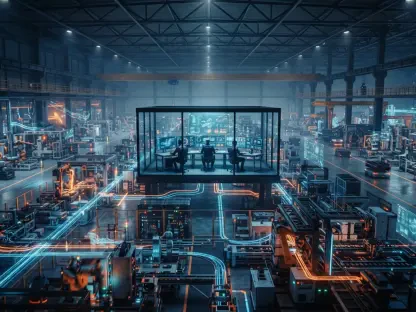

The transition to a circular economy means the era of rigid, unchanging production lines is ending, replaced by modular cells where every stage from drying to post-processing is synchronized. As international regulations tighten and consumer pressure mounts, the plastics industry is witnessing a paradigm shift where sustainability is no longer a peripheral marketing advantage but a fundamental operational requirement. Gone are the days when a molder could rely exclusively on high-purity virgin resins with guaranteed molecular uniformity. Instead, the modern production floor must navigate a complex landscape of recycled polymers, bio-based alternatives, and post-consumer regrind that often exhibit significant lot-to-lot variability. This shift necessitates a complete overhaul of traditional molding strategies, moving away from fixed-parameter manufacturing toward adaptive, data-driven systems that can interpret and respond to the specific nuances of every individual shot. The primary challenge lies in the fact that circular materials do not always behave like their fossil-fuel-based predecessors, requiring higher thermal stability in screws and more sophisticated venting to handle the outgassing common in recycled feedstocks. This evolution is not merely about changing the raw material; it is about redesigning the entire technological framework to ensure that sustainable does not equate to low quality or unreliable.
Navigating the Inconsistency: Managing Recycled Material Fluctuations
The predictability that once defined the plastics industry has largely evaporated as processors are forced to integrate increasingly high percentages of recycled content into their production streams. Historically, virgin resins provided a stable baseline where a molder could set a specific temperature profile and hold pressure, then walk away for days without significant deviation in part quality. Today, however, the introduction of post-consumer regrind introduces a host of variables, from inconsistent moisture levels to contaminants that alter the melt flow rate. These fluctuations can lead to catastrophic failures in thin-walled components or high-precision medical parts if the machine does not have the intelligence to compensate. Manufacturers have found that simply adding a recycling step at the end of the line is insufficient; instead, the entire molding process must be treated as a dynamic chemical event. This requires screws designed specifically for the higher abrasive wear of recycled glass fibers and barrels equipped with advanced heating zones that can manage the narrow processing windows of bio-plastics. Without these hardware adaptations, the promise of circularity remains hampered by high scrap rates and wasted energy, undermining the very environmental goals that the industry aims to achieve.
To address these material inconsistencies, the industry has turned to sensor-driven, closed-loop control systems that monitor the injection process in real-time. These advanced software suites, such as adaptive process control or intelligent weight monitoring, analyze the pressure curve during every single shot to detect even the slightest change in material viscosity. If a batch of recycled polypropylene is slightly more viscous than the last, the machine automatically adjusts the switchover point or the holding pressure to ensure the mold is filled precisely every time. This level of granular control was once a luxury reserved for the most expensive aerospace components, but it has now become a baseline requirement for anyone working with circular feedstocks. By utilizing high-resolution sensors within the mold cavity and the nozzle, processors can gather a wealth of data that allows for the creation of a digital fingerprint for every good part produced. This not only reduces waste by identifying defective parts before they even leave the mold but also provides the traceability required by modern supply chains that demand proof of material performance and sustainability. The move toward this proactive approach marks a significant departure from reactive quality control, where problems were often only discovered during post-production inspection, long after significant amounts of energy and material had been wasted.
Specializing Equipment: Transitioning to Rubbers and Elastomers
The push for a circular economy also involves a broader range of materials beyond traditional rigid thermoplastics, specifically focusing on elastomers, liquid silicone rubbers, and bio-based cross-linked polymers. Unlike thermoplastics, which can be repeatedly melted and solidified, these materials undergo a permanent chemical transformation known as curing or vulcanization during the molding process. This fundamental difference means that the injection molding machine must act as a chemical reactor as much as a mechanical press. Standard horizontal machines, while versatile, are often not the optimal choice for the complex geometries and delicate handling required by high-performance circular elastomers. Specialized vertical machine configurations have emerged as a superior solution, offering better accessibility for complex over-molding and insert molding applications. These vertical designs allow operators or robotic systems to place inserts into the bottom half of the mold with gravity-assisted stability, ensuring that circular components consisting of multiple material types are bonded perfectly without the risk of displacement during the high-pressure injection phase. This precision is critical for the automotive and consumer electronics sectors, where durable, multi-material circular designs are replacing single-use components.
Furthermore, the hardware required for processing circular elastomers must account for the unique thermal profiles of these substances. While thermoplastics are injected into a cold mold to freeze their shape, elastomers are injected into a heated mold to trigger the curing reaction. This requires a sophisticated temperature management system that prevents premature curing in the nozzle—known as scorching—while ensuring rapid and uniform cross-linking within the mold cavity. Modern vertical machines have integrated highly responsive thermal control units and cold-runner technology to minimize material waste during this stage. By using cold runners, manufacturers can ensure that only the material forming the actual part is cured, leaving the material in the feeding channels uncured and ready for the next cycle. This level of material efficiency is a cornerstone of circular manufacturing, as it drastically reduces the volume of thermoset waste that cannot be easily reprocessed. Additionally, the ergonomic advantages of vertical presses allow for faster cycle times and easier maintenance, which helps offset the higher energy costs associated with the chemical curing process. As circular materials become more diverse, the ability to match the machine architecture to the specific chemical nature of the resin has become a defining factor for operational success.
The Total Cell Philosophy: Integrating Production Ecosystems
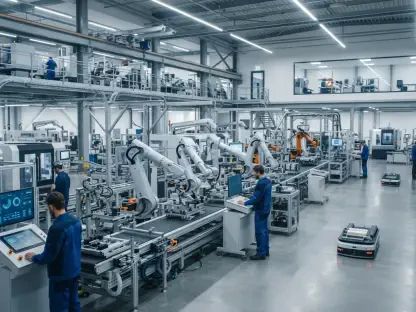
Achieving true circularity requires manufacturers to look beyond the primary injection molding machine and adopt what is known as a total cell philosophy. This approach views every piece of auxiliary equipment—from desiccant dryers and gravimetric blenders to robotic pick-and-place units—as a single, interconnected organism. In a traditional setup, these components often operated in silos, with little communication between the blender and the press. However, when working with circular materials that are highly sensitive to moisture and contamination, even a minor discrepancy in the drying time or the blend ratio of regrind to virgin material can compromise the entire production run. Modern production cells now utilize unified control interfaces and communication protocols like OPC UA to ensure that the entire system is synchronized. If the dryer detects an unexpected spike in moisture levels, it can immediately alert the molding machine to slow down the cycle or adjust the injection speed to prevent the formation of splay or structural voids. This holistic integration ensures that the material is perfectly prepared before it ever reaches the screw, creating a stable environment that mitigates the inherent volatility of sustainable feedstocks.
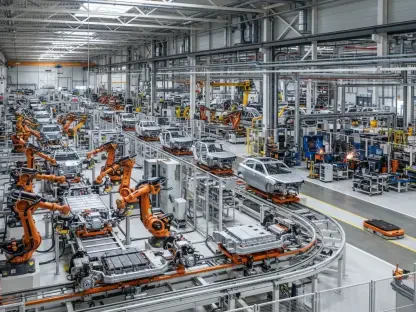
The role of integrated automation within these total cells is equally vital for maintaining the economic viability of circular manufacturing. Automated systems are no longer just about replacing labor; they are about providing the consistency and repeatability that human operators cannot match over a twenty-four-hour shift. High-speed, six-axis robots and linear cartesian systems are now deeply integrated into the molding cycle, performing tasks such as precision insert loading, part removal, and immediate gate cutting. This tight coordination prevents the mold from being open longer than necessary, which is crucial for maintaining the thermal equilibrium required for sensitive bio-plastics or recycled blends. Moreover, advanced automation enables the immediate sorting of parts based on real-time quality data gathered by the machine’s internal sensors. Parts that fall outside the acceptable tolerance for weight or dimensions are automatically diverted to a granulator for immediate reprocessing, ensuring that no waste leaves the production cell. This closed-loop approach to material handling turns the production floor into a micro-circular economy, where every gram of polymer is tracked and utilized to its maximum potential. By removing the variables associated with human handling and disjointed equipment, manufacturers have created a robust framework capable of handling the most demanding sustainable materials.
Future-Proofing Operations: Aligning Technology with Sustainability
The successful transition to circular materials depended on the industry’s ability to move away from purely hydraulic systems toward high-precision all-electric and hybrid molding machines. All-electric series have proven to be the ideal choice for processing circular materials due to their superior repeatability and energy efficiency. Because these machines utilize independent servo motors for every movement—clamping, injection, and recovery—they provide a level of synchronization that hydraulic systems simply cannot achieve. This precision is especially important when dealing with the reduced structural integrity often found in low-grade recycled plastics, where even a slight over-pressurization can cause flash or part deformation. Furthermore, the energy savings associated with all-electric machines aligned perfectly with the broader environmental goals of circularity, as these units only consume power during movement and offer a significantly lower carbon footprint. By prioritizing equipment that combined high-resolution feedback loops with low energy consumption, the industry established a production model that remained profitable even as the costs of sustainable feedstocks fluctuated. This technological alignment was not just a trend but a necessary evolution to bridge the gap between environmental responsibility and high-volume industrial performance.
Ultimately, the transformation of the injection molding sector was achieved through a multi-faceted strategy that combined advanced sensor technology, specialized machine architecture, and a unified approach to automation. The industry realized that the only path forward was to embrace the inherent complexity of circular materials rather than attempting to force them into outdated production models. Manufacturers who invested early in modular, data-driven cells discovered that they could not only meet strict recyclability mandates but also improve their overall operational efficiency. It became clear that success in this new era required a deep understanding of the relationship between material science and machine physics, leading to a closer collaboration between polymer chemists and equipment engineers. By implementing real-time process monitoring and ensuring that auxiliary systems were perfectly synchronized with the molding press, the sector successfully minimized waste and maximized the utility of every material source. These strategic actions transformed the production floor from a site of linear consumption into a highly intelligent, circular hub that remained resilient against the challenges of a changing global market. The lessons learned during this transition provided a clear blueprint for future industrial progress, proving that sustainability and high-performance manufacturing were never mutually exclusive goals.