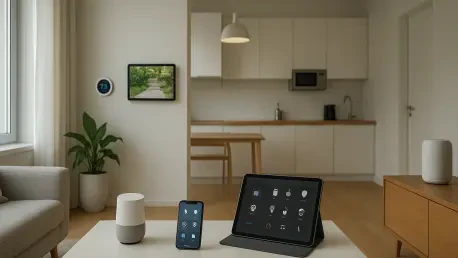

The partnership utilizes Apple’s HomeView and HomePod systems to provide real-time chimes and visual feedback whenever someone approaches the front door. This integration signals a fundamental transformation in the residential landscape, moving away from fragmented gadgets toward a cohesive, proactive environment. LG Electronics and Apple have transitioned from mere compatibility to a deep-stack partnership that constructs the Zero Labor Home from the foundation up. This philosophy envisions a living space that anticipates human needs, performing routine tasks autonomously without requiring constant manual input. By merging LG’s hardware engineering with Apple’s software architecture, the two companies eliminated the friction that previously hindered smart home adoption. This current initiative focused on creating a unified infrastructure where every sensor and appliance communicated through a standardized language, ensuring that the technology remained invisible yet functional for every member of the modern household.
High-Fidelity Security: Redefining Residential Surveillance
A primary challenge in modern home security has been the prevalence of notification fatigue, where false alerts lead users to ignore critical warnings. The new LG and Apple camera suite addressed this by implementing 2.5K resolution sensors paired with sophisticated on-device intelligence. Unlike older systems that struggled with grainy images, these devices distinguished between people, pets, vehicles, and shifting shadows in real time. By processing this data locally, the system ensured that homeowners only received relevant notifications, drastically increasing the utility of the security network. The indoor, outdoor, and floodlight variants functioned as a singular defensive perimeter, utilizing adaptive lighting to illuminate specific areas only when significant motion was detected. This intelligent filtering transformed the security system into an active guardian that respected the user’s attention while providing clear evidence of any activity, ensuring that the smart home remained a source of peace rather than distraction.
Privacy served as the cornerstone of this expansion, moving beyond software encryption to include physical safeguards that guaranteed peace of mind. The LG Indoor Cam Plug-In introduced a mechanical privacy tilt mechanism that allowed users to physically obscure the lens whenever they were home. This hardware-level control ensured that no remote hack could compromise the sanctity of the private living space. Furthermore, the collaboration prioritized data sovereignty by supporting local storage options alongside the end-to-end encrypted iCloud storage. This dual-layered approach meant that visual data remained inaccessible to both the manufacturers and potential intruders, reinforcing the trust required for deep domestic integration. By offering a 160-degree field of view and ruggedized builds for outdoor units, the companies provided comprehensive coverage without the traditional compromise of personal data safety, ensuring that every captured frame remained the sole property of the resident.
Advanced Access: Integrating Biometrics and Environmental Control
Modern delivery trends necessitated a change in how homeowners monitored their entryways, particularly regarding the persistent issue of blind spots. The LG Video Doorbell Wired responded to this by incorporating a dual-camera configuration, featuring a high-resolution front lens and a dedicated downward-facing sensor. This design allowed for simultaneous monitoring of visitors and packages resting on the porch floor, effectively eliminating the gaps where theft typically occurs. When integrated with the Apple Home ecosystem, the device provided immediate visual confirmation across all connected screens, from iPads to Apple Watches. This synchronization ensured that residents remained aware of their surroundings without having to reach for a specific remote or open a slow-loading application. The hardware was designed to withstand diverse environmental conditions while maintaining the aesthetic standards expected of high-end electronics, merging utility with a sleek, durable design.
The introduction of the Smart Deadbolt Lock revolutionized the experience of entering one’s own home through the strategic use of Ultra-Wideband technology. By leveraging the spatial awareness capabilities of the iPhone and Apple Watch, the lock recognized the precise proximity of an authorized user. This enabled a truly hands-free entry experience where the door unlocked automatically as the resident approached, removing the need to fumble for keys. For situations requiring alternative access, the lock maintained support for NFC tapping, PIN codes, and physical keys, ensuring that technology never became a barrier to entry. This multi-modal approach catered to varying household needs, from children without smartphones to guests requiring temporary access codes. The reliability was bolstered by the deep integration with Apple Home Key, which provided a secure and standardized way to manage digital credentials, making the entry process both secure and effortless for all family members.
Strategic Implementation: Navigating the Autonomous Home Era
Environmental management reached a new level of precision through the smart thermostat and remote sensor array developed in this collaboration. By utilizing Apple’s adaptive temperature features, the system managed micro-climates within different rooms based on occupancy. Instead of heating an entire house to a single set point, the LG sensors allowed the system to focus resources where residents were actually located. This proactive adjustment improved energy efficiency while maintaining comfort that adjusted automatically as people moved between rooms. Humidity control was also integrated into this logic, ensuring the indoor atmosphere remained optimal regardless of external weather. The Zero Labor aspect was realized as the thermostat learned the patterns of the household, eventually operating in the background without the need for manual scheduling. This evolution ensured that the home environment was always perfect without user intervention, reducing the daily burden of climate management.
Homeowners who successfully transitioned to this integrated ecosystem prioritized a phased approach to their domestic automation. They initially focused on the core security and entry points, utilizing 2.5K camera systems and UWB-enabled locks to establish a reliable safety perimeter. By ensuring primary access points were secured with hands-free technology, they eliminated common daily friction points. These early adopters also evaluated their network infrastructure to ensure compatibility with the Matter over Thread protocol, which proved vital for maintaining low-latency performance. They verified that their Apple devices were updated to take full advantage of the Home Key and adaptive temperature functionalities. This strategic planning allowed them to scale their smart home setup without encountering the connectivity hurdles of previous generations. This approach resulted in a resilient and truly autonomous living environment that fulfilled the vision of a proactive household.