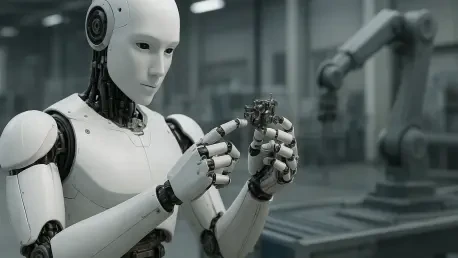

Intel is positioning its latest processors to handle the complex task synchronization required for humanoid robots to perform delicate object manipulation in factories. This ambition represents a fundamental shift in the global semiconductor landscape, moving away from a primary focus on digital content generation toward the rigorous demands of physical execution. As industrial environments become increasingly autonomous, the need for silicon that can bridge the gap between abstract reasoning and mechanical motion has never been more critical. Intel is addressing this challenge by championing “Physical AI,” a paradigm where intelligence is embedded directly into machines that perceive, decide, and act within three-dimensional space. By centering its strategy on real-world agency rather than just large language models, the company is attempting to redefine the utility of the central processing unit in an era previously dominated by specialized graphics accelerators. This strategic realignment acknowledges that while generative AI can write code or create images, Physical AI must navigate the unpredictable and often hazardous variables of the factory floor and the logistics warehouse.
Hardware Foundations: The Era of Heterogeneous Computing
Central to this technological shift is the Core Ultra Series 3 processor, which utilizes a sophisticated system-on-chip architecture designed to meet the high-concurrency needs of modern robotics. This design embraces the concept of heterogeneous computing by integrating a high-performance central processing unit, a versatile graphics processing unit, and a dedicated neural processing unit onto a single piece of silicon. This specific configuration allows for a more intelligent distribution of workloads, where the CPU maintains its role as the primary coordinator for system safety and real-time operational control. Meanwhile, the GPU handles the heavy mathematical lifting required for complex spatial computations, and the NPU optimizes the efficiency of neural network tasks. By consolidating these diverse functions into a single semiconductor, Intel aims to significantly lower the total cost of ownership for global manufacturers by reducing overall power consumption and simplifying the underlying hardware requirements for complex robotic systems.
This integrated approach is particularly vital for maintaining what industry experts call “time determinism” within dense industrial settings. In the world of high-stakes robotics, raw processing speed is secondary to extreme predictability; a control system must be able to complete its assigned tasks within a strictly defined and unwavering window of time to ensure operational safety. For instance, an autonomous robot navigating a shared human workspace must be able to process a sensor-driven stop command in a matter of milliseconds to avoid catastrophic accidents. Intel is drawing on its extensive history in factory floor control and industrial automation to ensure that its current Physical AI solutions prioritize this type of mechanical synchronization over simple compute power. This focus on reliability ensures that the transition to fully autonomous manufacturing is not hindered by the latency issues or unpredictable processing lags that often plague general-purpose computing platforms adapted for physical tasks.
Strategic Hubs: Cultivating the South Korean Robotics Ecosystem
Intel has identified South Korea as a premier global hub for its Physical AI ambitions, citing the nation’s world-class manufacturing infrastructure and its deep reservoir of precision engineering talent. By hosting major events such as the Robotics Workshop in Seoul, the company is signaling its intent to embed its technology within the very heart of the Asian industrial corridor. Collaboration with local innovators is proving that Intel’s hardware can serve as the reliable backbone for increasingly complex mechanical applications. A prominent example of this synergy is the partnership with Movensys, a firm specializing in industrial motion control software. Together, they have demonstrated systems that integrate high-level artificial intelligence computation and low-level robot motion control on a single, unified platform. This technical achievement effectively eliminates the communication latency issues that traditionally occur when these two critical functions are separated across different hardware modules or isolated circuit boards.
The collaborative strategy extends beyond established industrial giants to include the vibrant Korean startup scene and prestigious academic institutions. The robotics startup Circulus, for instance, has begun utilizing Intel’s Panther Lake processor family to power humanoid robots designed for sophisticated object manipulation and human interaction. These machines rely on the processor’s ability to handle multi-modal data streams from cameras and sensors simultaneously while maintaining a stable center of gravity. Furthermore, Intel is actively engaging with the Korea Advanced Institute of Science and Technology to bridge the gap between high-level academic research in robotics and commercial deployment. These deep-rooted partnerships ensure that the company’s technology is not just a component in a box, but a fundamental part of the practical development of autonomous mobile robots and humanoid machines that will define the industrial landscape from 2026 to 2030.
Open Standards: Software Strategy and Ecosystem Advantages
A major pillar of the current strategy is a firm commitment to an open software environment, which positions Intel as a flexible and accessible alternative to more restrictive proprietary platforms. Through the deployment of the OpenVINO Physical AI platform and the Physical AI Studio, the company allows developers to utilize the AI models, coding tools, and simulation environments they are already familiar with, rather than forcing them into a locked ecosystem. This “train anywhere, deploy on Intel” philosophy is meticulously designed to lower the barrier to entry for emerging robotics companies, making it substantially easier to transition from high-fidelity digital simulations to real-world deployment. By removing these traditional friction points, the company is fostering a diverse developer community that can innovate across multiple hardware generations without the need for extensive code rewrites or expensive proprietary licensing fees.
These software tools are also specifically engineered to support imitation learning, a process where robots are trained by observing and then mimicking human demonstrations in real-time. This intuitive approach allows domain experts—such as veteran factory floor managers or logistics specialists who may not be specialized AI engineers—to customize and refine robot behavior for highly specific industrial tasks. By focusing on accessibility and interoperability, the aim is to become the preferred infrastructure for developers who prioritize operational flexibility and rapid deployment in diverse environments. This strategy recognizes that the future of robotics will not be a one-size-fits-all solution, but rather a fragmented landscape of specialized machines that require a common, open language to communicate and operate efficiently within the broader industrial internet of things framework that is currently expanding across the globe.
Operational Readiness: Market Projections and Automation Trends
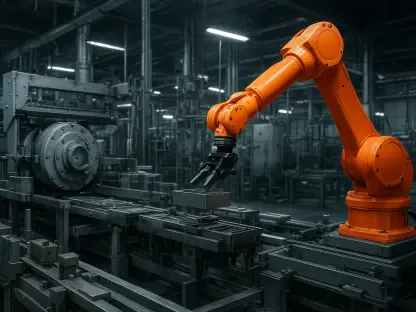
Recent industry data suggests a massive surge in the adoption of automation, with a clear majority of global organizations planning to operate significant robot fleets within the next several years. However, a critical gap remains in the development of comprehensive human-robot collaboration strategies, as many firms struggle to integrate autonomous agents into existing workflows safely. Intel views this strategic vacuum as a prime commercial opportunity, focusing its efforts on autonomous mobile robots and manufacturing arms that can safely and intelligently work alongside human employees. By deploying these advanced solutions in actual factories today, the company and its partners are collecting the high-quality, real-world datasets necessary to refine the next generation of AI models. This feedback loop between physical performance and digital optimization is essential for creating machines that can handle the nuanced variability of human environments.
The success of these initiatives relies on the fundamental belief that the next major technological revolution will not take place on screens or in virtual spaces, but on factory floors and in logistics centers where machines move and act in the physical world. As companies seek to mitigate labor shortages and improve production efficiency, the demand for Physical AI that is both powerful and predictable will continue to grow. Intel’s shift toward this specialized sector represents a holistic effort to move beyond the constraints of traditional digital AI and establish a new standard for industrial intelligence. By combining high-performance hardware, open-source software, and strategic local partnerships in high-growth markets like South Korea, the company is positioning itself as the indispensable foundation for a fully automated global economy that is capable of scaling to meet the production demands of the next decade.
Actionable Frameworks for an Automated Global Economy
The strategic pivot toward Physical AI successfully demonstrated that the future of the semiconductor industry was inextricably linked to the physical movement of machines. By focusing on the integration of CPU, GPU, and NPU technologies, the initiative provided a blueprint for reducing hardware complexity while increasing operational safety through time-deterministic processing. The collaborations established in South Korea proved that localized ecosystems were essential for the rapid scaling of humanoid and autonomous mobile robots. These partnerships facilitated a direct pipeline from academic research to industrial application, ensuring that the technology remained grounded in practical utility. The emphasis on open software standards like OpenVINO further empowered developers to create flexible, interoperable systems that avoided the pitfalls of vendor lock-in. This movement highlighted the necessity for a unified approach to hardware and software that prioritized real-world interaction over digital abstraction.
Moving forward, organizations must prioritize the implementation of sensor fusion and real-time synchronization to ensure the safety of human-robot collaborative environments. The shift toward imitation learning suggested that training the next generation of robotic workers would require a mix of high-level AI expertise and traditional domain knowledge from the factory floor. Investing in edge computing infrastructure became a critical step for companies looking to minimize latency and maximize the responsiveness of their autonomous fleets. Furthermore, the adoption of open-source frameworks allowed for a more resilient supply chain of ideas and technological improvements. As the industry moved toward a more automated future, the ability to collect and analyze high-fidelity physical data remained the primary differentiator for success. Stakeholders were encouraged to embrace these open standards and collaborative models to foster a more inclusive and efficient global manufacturing landscape that leveraged the full potential of Physical AI.